Eating healthy is about more than just choosing nutritious foods; it’s about combining them strategically to unlock their full potential. Imagine getting more out of every bite you take! The way we pair certain foods can dramatically enhance how our bodies absorb vital vitamins, minerals, and antioxidants. This powerful synergy can lead to improved energy, stronger immunity, and overall better health.
In this guide, we’ll reveal 8 powerful food pairings that can supercharge nutrient absorption, helping you maximize the benefits of your healthy eating efforts. Get ready to transform your meals from good to great by understanding the science behind smart nutrition.
The Science of Synergy: Why Food Pairings Matter
Our bodies are incredibly complex, and the way they process nutrients is influenced by many factors. One key concept is bioavailability, which refers to the proportion of a nutrient that is absorbed from the diet and used for bodily functions. While some nutrients are readily absorbed, others require specific conditions or companion compounds to be fully utilized.
Certain food components can act as absorption enhancers, working together to increase the bioavailability of specific nutrients. Conversely, some combinations can inhibit absorption. By understanding these interactions, we can consciously make food choices that amplify the nutritional punch of our meals, ensuring we get the most benefit from our healthy diet.
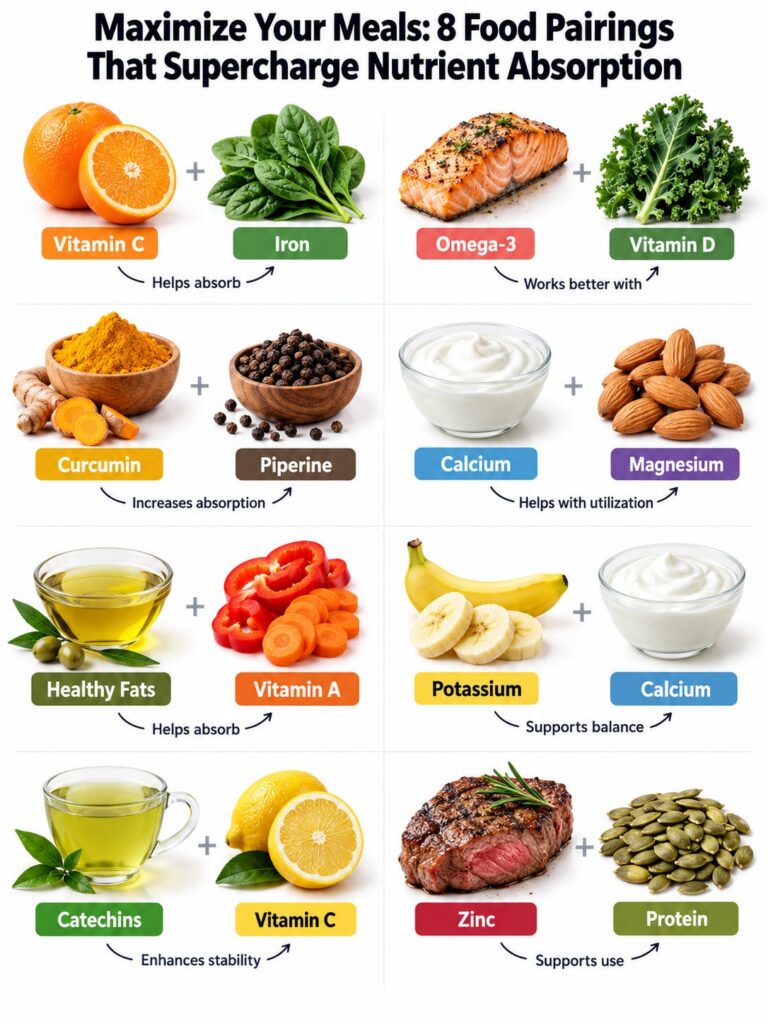
8 Powerful Food Pairings to Supercharge Your Health
1. Plant-Based Iron & Vitamin C
Iron is essential for oxygen transport and energy production, but the non-heme iron found in plant foods (like spinach, lentils, and beans) is less readily absorbed than heme iron from animal sources. This is where Vitamin C comes in. Ascorbic acid (Vitamin C) can convert non-heme iron into a more absorbable form, significantly boosting its uptake.
- Try it: Combine a spinach salad with a citrus vinaigrette, or add bell peppers and tomatoes to your lentil soup. Enjoy a side of strawberries or an orange with your plant-based meal.
2. Calcium & Vitamin D
Calcium is vital for strong bones and teeth, and Vitamin D plays a crucial role in its absorption. Vitamin D helps regulate calcium levels in the blood, ensuring that calcium from your diet is properly absorbed in the gut and deposited into your bones.
- Try it: Pair calcium-rich foods like yogurt, fortified milk, or leafy greens with sources of Vitamin D such as fatty fish (salmon, mackerel) or fortified cereals. Spending time in natural sunlight also helps your body produce Vitamin D.
3. Turmeric & Black Pepper
Turmeric, a popular spice known for its anti-inflammatory properties, contains a powerful compound called curcumin. However, curcumin has low bioavailability, meaning it’s poorly absorbed into the bloodstream. Black pepper contains piperine, a natural compound that can enhance curcumin absorption by up to 2,000%.
- Try it: Always add a pinch of black pepper when cooking with turmeric, whether it’s in curries, soups, or a soothing golden milk latte.
4. Fat-Soluble Vitamins & Healthy Fats
Vitamins A, D, E, and K are fat-soluble, meaning they require dietary fat to be properly absorbed and transported in the body. Consuming these vitamins with a source of healthy fats ensures you’re getting their full benefit.
- Try it: Enjoy carrots, sweet potatoes, or kale (rich in Vitamin A and K) with a drizzle of olive oil, a handful of nuts, seeds, or a slice of avocado.
5. Lycopene & Healthy Fats
Lycopene is a powerful antioxidant found in red fruits and vegetables, most notably tomatoes. Like fat-soluble vitamins, lycopene absorption is significantly enhanced when consumed with healthy fats. Cooking tomatoes can also further improve lycopene’s bioavailability.
- Try it: Make a homemade tomato sauce with olive oil, or add cooked tomatoes to a salad with avocado or a light vinaigrette.
6. Green Tea Catechins & Lemon/Citrus
Green tea is packed with health-promoting antioxidants called catechins, particularly epigallocatechin gallate (EGCG). While beneficial, EGCG can degrade in the stomach’s acidic environment. Adding citrus juice, like lemon, can stabilize these catechins, making them more available for absorption.
- Try it: Always add a squeeze of fresh lemon, lime, or orange juice to your green tea.
7. Zinc & Protein
Zinc is a crucial mineral for immune function, wound healing, and DNA synthesis. Consuming zinc-rich foods with protein sources can help improve its absorption. Certain amino acids found in protein can bind to zinc, facilitating its uptake in the intestines.
- Try it: Pair legumes (like lentils or chickpeas) with nuts or seeds in your meals. Lean meats also provide zinc and protein, which can be combined with whole grains for a balanced meal.
8. Magnesium & Vitamin B6
Magnesium is involved in over 300 biochemical reactions in the body, from muscle and nerve function to blood glucose control. Vitamin B6 (pyridoxine) can play a supportive role in magnesium’s absorption and cellular uptake, helping the body utilize this vital mineral more effectively.
- Try it: Combine magnesium-rich foods like almonds, spinach, or pumpkin seeds with sources of Vitamin B6 such as bananas, potatoes, or chickpeas.
Final Thoughts
By consciously combining foods, you can elevate your nutritional intake without making drastic changes to your diet. These eight food pairings are simple yet powerful ways to optimize nutrient absorption and support your overall well-being. Start integrating these synergies into your daily meals and experience the difference smart nutrition can make for your health and vitality.
Medical Disclaimer
The information provided in this article is for general knowledge and informational purposes only, and does not constitute medical advice. Always consult with a qualified healthcare professional before making any decisions about your health or diet, especially if you have a medical condition or are taking medication.