Eggs are a true superfood, packed with protein, vitamins, and minerals that are essential for our well-being. From breakfast scrambles to dinner frittatas, they’re a versatile and affordable staple in many kitchens. But have you ever stopped to consider how your preferred method of preparing eggs might affect their nutritional goodness?
It’s true! The way you cook your eggs can actually influence how your body absorbs their valuable nutrients. Let’s dive into the different preparation methods and discover which one might align best with your health goals.
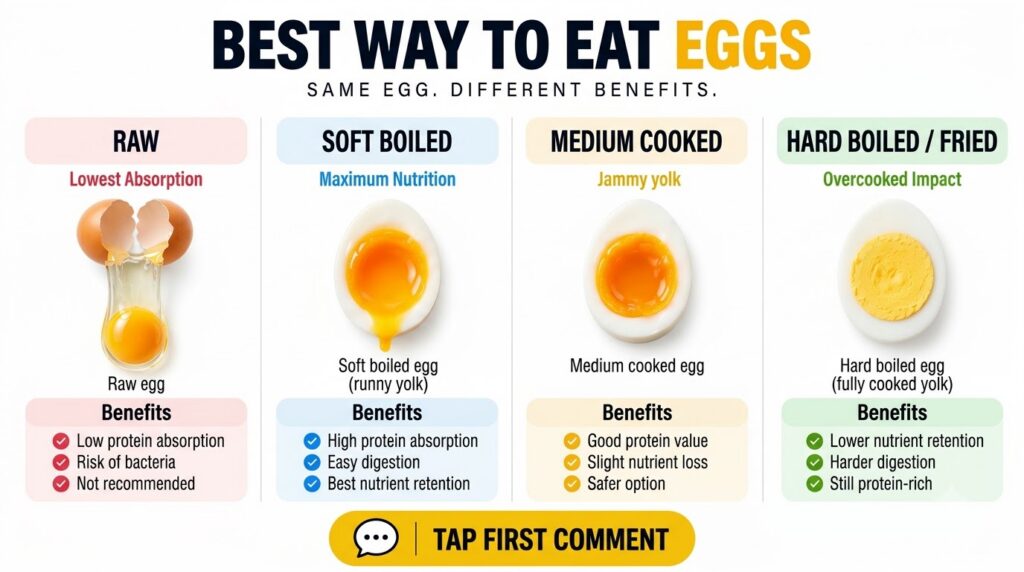 Understand how different egg cooking methods impact their nutritional value.
The Nutritional Powerhouse: What Eggs Offer
Before we explore cooking methods, let’s briefly recap why eggs are so good for us:
- High-Quality Protein: Essential for muscle repair, growth, and overall body function.
- Vitamins: Rich in B vitamins (B2, B5, B12), vitamin D, and vitamin A.
- Minerals: A good source of selenium, phosphorus, and iron.
- Choline: Important for brain health, nerve function, and metabolism.
- Antioxidants: Lutein and zeaxanthin support eye health.
Exploring Egg Preparation Methods and Their Impact
1. Raw Eggs: The Controversial Choice
Some people opt for raw eggs in smoothies or drinks, believing it preserves all nutrients. However, this method comes with considerations.
- Potential Drawbacks: The main concern is the risk of salmonella contamination, which can cause food poisoning. Raw egg whites also contain avidin, a protein that can bind to biotin (a B vitamin) and prevent its absorption. Cooking denatures avidin, making biotin available.
- Digestibility: Raw egg protein is less digestible than cooked egg protein. Studies suggest that cooking improves protein absorption significantly.
2. Soft-Boiled and Poached Eggs: Gentle and Nutritious
These methods involve cooking the egg just enough to set the whites while leaving the yolk wonderfully runny. This gentle cooking is a favorite for many.
- Benefits: Minimal heat exposure helps preserve heat-sensitive nutrients, and the protein is still highly digestible. The runny yolk is also packed with nutrients like choline and antioxidants. The risk of salmonella is significantly reduced compared to raw eggs, especially if whites are fully set.
- Ideal for: Those seeking maximum nutrient retention with good digestibility and a delicious texture.
3. Medium-Cooked Eggs: Balanced Goodness
This category includes eggs cooked over easy, sunny-side up, or lightly scrambled. The whites are fully set, and the yolks are slightly firm but still soft or runny.
- Benefits: Offers a great balance of safety and nutrient preservation. The proteins are well-cooked and easily digestible, and the yolk’s nutrients are still highly bioavailable.
- Ideal for: Everyday enjoyment, offering a good compromise between taste, texture, and nutrition.
4. Hard-Boiled and Fried Eggs: Fully Cooked & Convenient
These methods involve cooking the eggs completely, resulting in firm whites and yolks. Fried eggs (like omelets or frittatas) often use a little oil.
- Benefits: Maximum safety due to thorough cooking, making them excellent for meal prepping, salads, and quick snacks. The protein is fully denatured and very easy to digest.
- Considerations: While still highly nutritious, some water-soluble vitamins may be slightly reduced by longer cooking times. Frying with excessive oil can add extra calories, so choose healthy oils and moderate amounts.
- Ideal for: Convenience, meal prep, and those who prefer a firmer texture with guaranteed safety.
Which Method is Best for You?
There isn’t a single ‘best’ way to cook an egg; it truly depends on your personal preferences and health goals.
- For nutrient preservation and digestibility: Soft-boiled, poached, or lightly scrambled eggs are excellent choices.
- For convenience and safety: Hard-boiled or thoroughly fried eggs are perfect.
- For adventurous palates (with caution): If consuming raw eggs, ensure they are from a very reliable source, such as pasteurized eggs, to minimize risks.
No matter how you enjoy them, eggs remain a fantastic addition to a healthy, balanced eating pattern. Experiment with different styles and find what works best for you and your family!
What’s your favorite way to enjoy eggs? Share your go-to recipe or cooking tip in the comments below!