Are you looking at your sprouted potatoes, wondering if they’re still safe to eat? Knowing when to keep them or when it’s essential to toss them is vital for your health. This guide provides clear, practical steps to assess your sprouted potatoes and protect yourself from potential toxins.
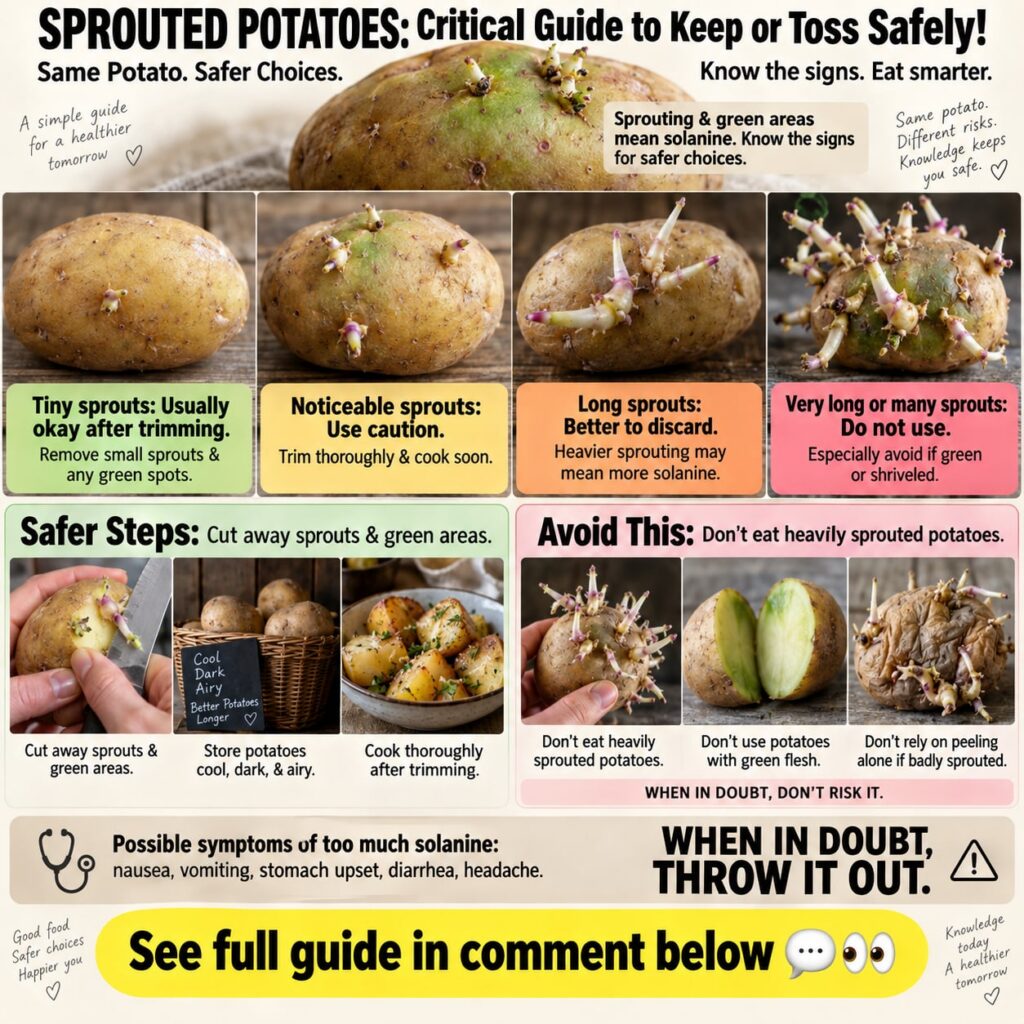
Quick Guide to Sprouted Potatoes
This quick guide helps you determine the safety of your sprouted potatoes at a glance.
- Prep time: 5 minutes for assessment
- Best for: Ensuring food safety and preventing glycoalkaloid toxicity
- Use type: Informational guide for home food storage
- Main considerations: Sprout size, potato color, potato texture
Key Signs to Look For
Understanding these visual and tactile cues is crucial when assessing your sprouted potatoes.
- Small, short sprouts: Thin, light-colored sprouts (less than an inch) may indicate less immediate concern.
- Firm potato texture: The potato should still feel firm to the touch, not soft or wrinkly.
- No green discoloration: The potato skin should be its natural color, without any noticeable green areas. Green skin indicates a higher concentration of solanine, a glycoalkaloid.
- No strong bitter taste (if tasting a tiny piece): While not recommended for assessment, a very bitter taste is a strong indicator of high glycoalkaloid levels.
How to Safely Assess Your Sprouted Potatoes
Follow these steps to make an informed decision about your sprouted potatoes.
- Observe the sprouts: Check the length and color of the sprouts. Small, pale sprouts are generally less concerning than long, dark, or numerous sprouts.
- Inspect the potato’s skin color: Look for any green patches, especially under the sprouts or near the skin. Green is a warning sign.
- Feel the potato’s texture: Gently squeeze the potato. If it’s firm, it’s a better sign. If it’s soft, shriveled, or mushy, it’s likely gone bad.
- Consider the potato’s age: Potatoes that have been stored for a long time are more likely to have higher glycoalkaloid levels, especially if they’ve also sprouted significantly.
When to Keep and When to Toss
Making the right choice protects your health and minimizes waste.
When to Keep (with caution):
If potatoes have only small, short sprouts and remain firm, you can often save them. Simply cut off the sprouts deeply and remove any green parts. Ensure you peel the potato thoroughly before cooking. Cooking doesn’t always destroy all glycoalkaloids, so thorough removal is key.
When to Toss:
Discard potatoes if they exhibit any of these signs:
- Large, numerous, or dark sprouts.
- Significant green discoloration on the skin.
- Soft, shriveled, or wrinkled texture.
- A strong, bitter smell or taste (do not taste a large piece).
- Signs of mold or decay.
Understanding Glycoalkaloids and Your Health
Potatoes naturally produce compounds called glycoalkaloids (like solanine and chaconine) as a defense mechanism against pests and disease. While normally present in safe, low levels, these levels can increase significantly when potatoes are exposed to light, get damaged, or begin to sprout.
Consuming high levels of glycoalkaloids can lead to symptoms such as nausea, vomiting, diarrhea, stomach cramps, headaches, and in severe cases, neurological problems. Protecting yourself involves vigilant assessment and proper storage.
What to Expect from Safe Practices
By carefully assessing and preparing your sprouted potatoes, you can continue to enjoy this versatile vegetable safely. You’ll gain confidence in your food handling skills and reduce food waste while ensuring your family’s well-being.
Safety Notes
- Always discard if signs are severe: When in doubt, it’s always safer to throw out a questionable potato.
- Never eat heavily green or soft potatoes: These are strong indicators of high toxin levels.
- Peel thoroughly: Glycoalkaloids are concentrated in and just below the skin.
- Remove sprouts deeply: Don’t just pick off the sprouts; cut out the area around them.
- Proper storage is key: Store potatoes in a cool, dark, and dry place to minimize sprouting and greening.
- Avoid eating raw sprouted potato: Always cook potatoes thoroughly.
- Consult a medical professional: If you experience severe symptoms after eating sprouted potatoes, seek medical attention.
FAQ
Are all sprouted potatoes toxic?
Not necessarily. Potatoes with small, firm sprouts that show no greening or softness can often be safely consumed after removing the sprouts and peeling. The risk increases with larger sprouts, greening, and soft texture.
Can cooking destroy glycoalkaloids?
Cooking at high temperatures (like frying) can reduce glycoalkaloid levels to some extent, but it does not eliminate them entirely. Peeling and removing sprouts and green parts are the most effective ways to reduce exposure.
How should I store potatoes to prevent sprouting?
Store potatoes in a cool, dark, and dry place, such as a pantry or cellar. Avoid storing them near onions or in direct sunlight, as both can accelerate sprouting and greening.
Final Thoughts
Taking a few moments to properly assess your sprouted potatoes can make a significant difference in your home’s food safety. By understanding the key signs of potential toxicity and knowing when to keep or toss, you’re empowering yourself to make healthier choices for your family. Stay safe and smart in your kitchen!