Welcome, fellow garden lovers! Have you ever wondered how some gardens just seem to thrive, with vibrant plants, minimal weeds, and consistently healthy soil? Often, the secret lies in a simple yet powerful gardening practice: mulching! Choosing the right mulch can transform your garden, acting as a protective blanket that nurtures your plants and simplifies your gardening routine. Let’s dive into the wonderful world of mulch and discover how to select the perfect type for your green space.
Understanding Mulch: More Than Just Decoration
At its core, mulch is any material spread over the surface of your soil. But its benefits go far beyond aesthetics! A good layer of mulch can:
- Suppress Weeds: It blocks sunlight, making it harder for weeds to sprout and grow, reducing competition for your plants.
- Retain Soil Moisture: Mulch acts as an insulating layer, slowing down evaporation and keeping your soil moist, meaning you water less often.
- Regulate Soil Temperature: It helps keep soil cooler in summer and warmer in winter, protecting plant roots from extreme temperature fluctuations.
- Improve Soil Health: Organic mulches decompose over time, enriching your soil with valuable nutrients and improving its structure.
- Prevent Soil Erosion: It shields the soil from the impact of heavy rain and wind.
The Different Kinds of Mulch and Their Perfect Pairings
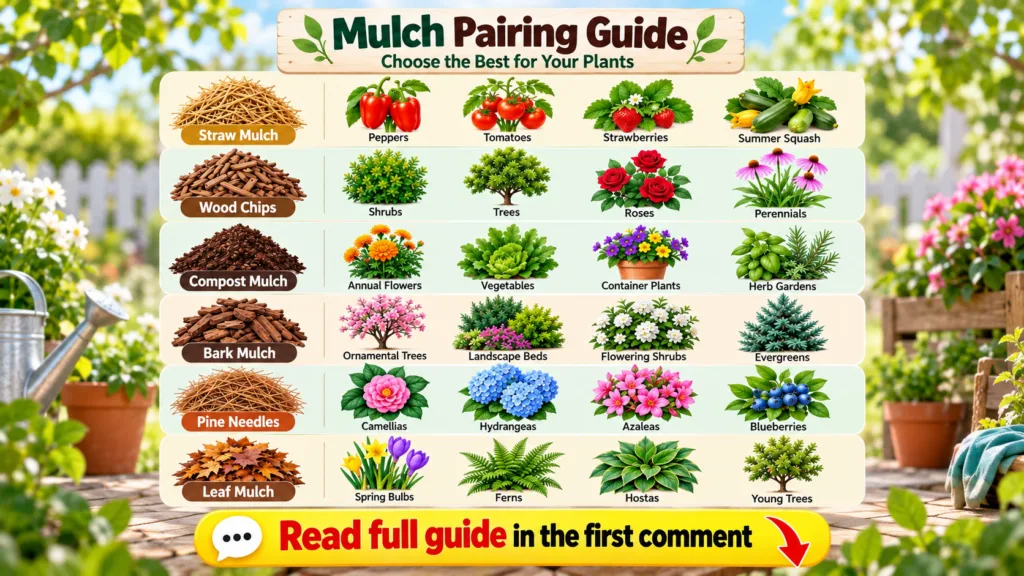
Choosing the right mulch depends on your garden’s specific needs and the types of plants you’re growing. Let’s explore some popular options:
1. Straw Mulch
Straw, often confused with hay, is excellent for vegetable gardens. It’s lightweight, breaks down relatively quickly, and provides good insulation.
- Benefits: Excellent for moisture retention, weed suppression, and adding organic matter as it decomposes. It’s also easy to spread and relatively inexpensive.
- Best for:
- Vegetable Gardens: Especially around tomatoes, squash, strawberries, and other edibles, keeping fruits clean and off the soil.
- New Seedbeds: Provides gentle cover and moisture for sprouting seeds.
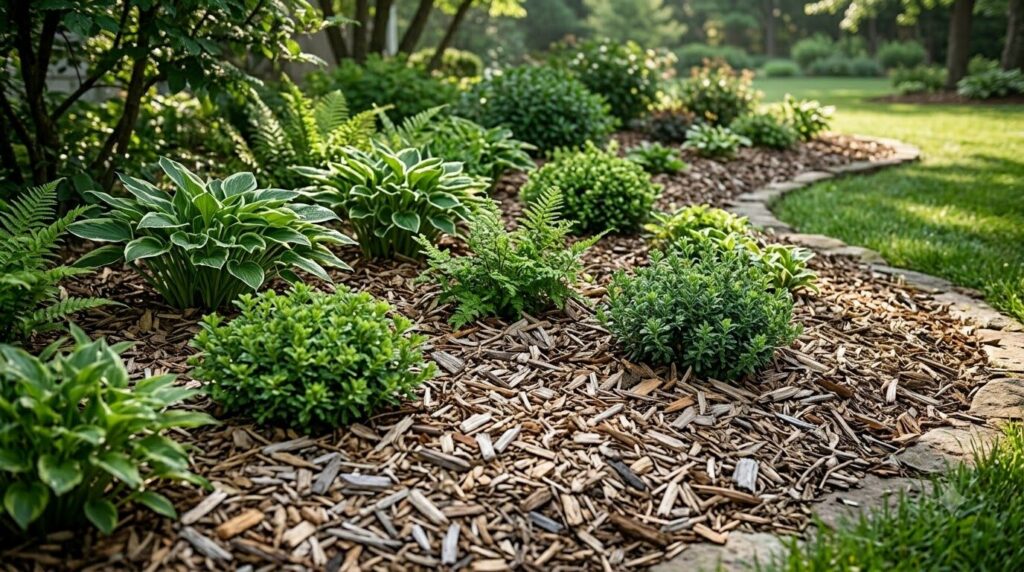
2. Wood Chip Mulch
Wood chips are a long-lasting, sturdy option, perfect for perennial beds and pathways. They decompose slowly, providing a consistent, slow release of nutrients.
- Benefits: Durable, great for long-term weed control, excellent moisture retention, and provides a natural aesthetic.
- Best for:
- Shrub and Tree Beds: Ideal for established woody plants that benefit from stable soil conditions.
- Perennial Borders: Helps suppress weeds and retain moisture for flowers and ornamental grasses.
- Garden Paths: Creates a soft, natural walkway.
3. Compost Mulch
Compost is a powerhouse of nutrients and beneficial microbes, making it a fantastic choice for boosting soil health while mulching.
- Benefits: Enriches the soil, improves soil structure, introduces beneficial microorganisms, and provides slow-release nutrients, essentially feeding your plants while mulching.
- Best for:
- Annual and Perennial Flower Beds: Gives flowering plants a nutrient boost.
- Vegetable Gardens: Excellent for growing healthy, productive vegetables.
- Boosting Poor Soil: Revitalizes tired garden beds.
4. Bark Mulch
Bark mulch, often from pine or cedar, comes in various sizes and offers a decorative touch alongside its practical benefits. It’s slower to decompose than wood chips.
- Benefits: Long-lasting, provides good weed suppression, excellent moisture retention, and a very attractive appearance, enhancing garden aesthetics.
- Best for:
- Ornamental Shrubs and Trees: Its decorative quality makes it perfect for visible landscape areas.
- Permanent Plantings: Where long-term weed control and a neat look are desired.
5. Pine Needle Mulch
Pine needles, or pine straw, are a popular choice for plants that prefer acidic soil. They interlock, forming a stable mat that doesn’t easily blow away.
- Benefits: Adds acidity to the soil as it decomposes (beneficial for acid-loving plants), excellent for weed control, and has a unique, attractive texture.
- Best for:
- Acid-Loving Plants: Azaleas, rhododendrons, blueberries, hydrangeas, and conifers thrive with pine needle mulch.
- Sloping Areas: The interlocking nature helps prevent erosion.
6. Leaf Mulch
Gathering fallen leaves in autumn provides a free and effective mulch. Shredded leaves decompose into a rich, dark humus, greatly improving soil.
- Benefits: Free, enriches soil with organic matter, excellent for moisture retention, and creates a natural habitat for beneficial soil organisms.
- Best for:
- Perennial Beds: Provides winter protection and enriches the soil for spring growth.
- Vegetable Gardens: Adds valuable organic matter over the off-season.
- Around Trees and Shrubs: Mimics natural forest floor conditions.
How to Apply Mulch for Best Results
Even the best mulch won’t perform optimally if not applied correctly. Here are a few key tips:
- Clear Weeds First: Always apply mulch to a weed-free bed for maximum effectiveness.
- Water the Soil: Ensure the soil beneath is adequately moist before applying mulch.
- Apply the Right Depth: Aim for a 2-4 inch layer of mulch. Too little won’t be effective; too much can suffocate plants or encourage pests.
- Keep it Away from Stems and Trunks: Create a small donut shape around the base of plants, leaving an inch or two of space. Piling mulch directly against stems or trunks can lead to rot and pest problems.
- Replenish as Needed: Organic mulches decompose, so check your mulch layer annually and top it up to maintain the ideal depth.
Choosing Your Mulch: Factors to Consider
When selecting your mulch, think about:
- Your Plants’ Needs: Do they prefer acidic soil? Are they heavy feeders?
- Garden Aesthetic: Do you want a uniform look or something more natural?
- Longevity: How often do you want to reapply?
- Availability and Cost: What’s readily available in your area and within your budget?
Unlock Your Garden’s Full Potential
Mulching is a game-changer for any gardener, from beginner to expert. By understanding the different types of mulch and how to use them effectively, you can cultivate a healthier, happier, and more beautiful garden with less effort. So go ahead, give your plants the gift of a good mulch, and watch your garden flourish!
What’s your favorite type of mulch to use in your garden? Share your tips and experiences in the comments below!