Welcome, fellow garden lovers and pet parents! We all adore the beauty and tranquility that houseplants bring to our homes. From vibrant foliage to delicate blooms, greenery truly brightens our living spaces. But for those of us sharing our homes with furry friends, the joy of gardening comes with a crucial question: Are these plants safe for my pets?
Ensuring your beloved cats, dogs, and other pets are safe from harmful plants is paramount. That’s why we’ve put together this comprehensive guide, expanding on our popular ‘Pet Plant Guide’ infographic, to help you create a beautiful and worry-free indoor oasis.
Understanding Plant Toxicity Levels
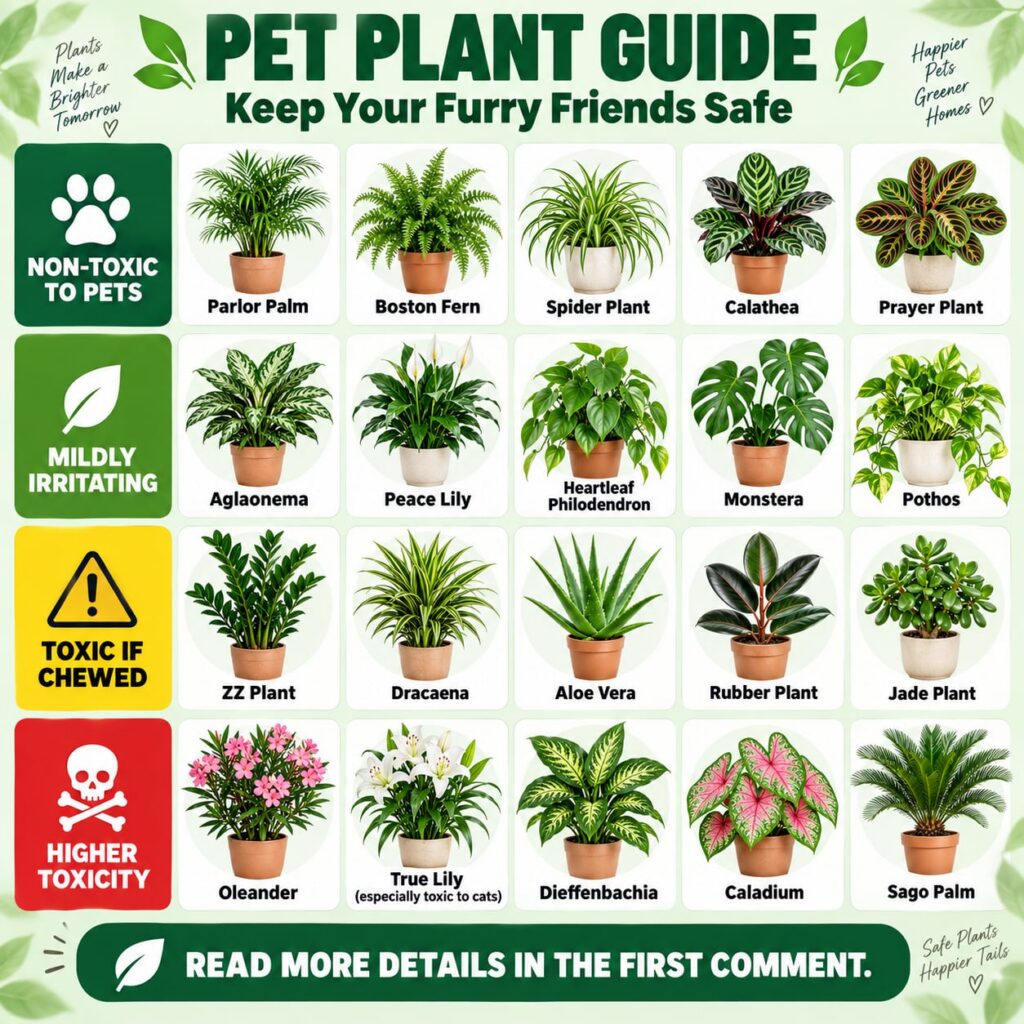
Our infographic categorizes plants into four distinct levels of toxicity to help you make informed decisions. Let’s delve deeper into what each category means for your pets.
Non-Toxic to Pets (Green with Paw Print)
These are the champions of pet-friendly gardening! Plants in this category are generally considered safe for pets, meaning ingestion is unlikely to cause any severe harm. They are perfect for homes with curious chewers or playful paws.
- Examples: Spider Plant (Chlorophytum comosum), Boston Fern (Nephrolepis exaltata), African Violet (Saintpaulia), Christmas Cactus (Schlumbergera), Prayer Plant (Maranta leuconeura), Areca Palm (Dypsis lutescens), and many orchids.
- Why they’re great: You can place these beauties almost anywhere without constant worry. They add lush greenery and air-purifying benefits to your home, making both you and your pets happy!
Mildly Irritating (Green with Leaf Icon)
Plants in this group might cause some mild discomfort if ingested, usually in the form of oral irritation, mild stomach upset, or skin irritation. While not life-threatening, it’s still best to minimize access.
- Examples: Pothos (Epipremnum aureum), Philodendron (various species), Peace Lily (Spathiphyllum), ZZ Plant (Zamioculcas zamiifolia). These plants contain calcium oxalate crystals that can cause a burning sensation in the mouth and throat.
- What to do: If your pet chews on these, they might experience drooling, pawing at their mouth, or vomiting. Offer fresh water and observe them closely. Consider placing these plants out of easy reach or in rooms your pets don’t frequent alone.
Toxic if Chewed (Yellow with Exclamation Mark)
This category includes plants that can cause more significant health issues if a pet chews or ingests a notable amount. The effects can range from severe gastrointestinal distress to more serious organ damage, depending on the plant and the quantity consumed.
- Examples: Sago Palm (Cycas revoluta), Aloe Vera (Aloe barbadensis miller), Jade Plant (Crassula ovata), Schefflera (Schefflera actinophylla).
- What to do: These plants require careful placement. If you suspect your pet has ingested any part of these plants, contact your veterinarian immediately. Early intervention can make a significant difference.
Higher Toxicity (Red with Skull and Crossbones)
These plants pose a severe risk to pets and can be life-threatening even in small amounts. They contain potent toxins that can affect the heart, kidneys, nervous system, or other vital organs, leading to grave consequences.
- Examples: Lilies (various species, especially true lilies like Easter, Tiger, Asiatic lilies are highly toxic to cats), Oleander (Nerium oleander), Foxglove (Digitalis purpurea), Castor Bean (Ricinus communis).
- What to do: It is strongly recommended to avoid keeping these plants in a home with pets. If you have them outdoors, ensure they are in areas your pets cannot access. In case of ingestion, this is a veterinary emergency. Seek immediate professional help.
Creating Your Pet-Friendly Plant Paradise
Now that you know the different toxicity levels, here are some practical tips to help you cultivate a beautiful garden that’s safe for all your household members:
1. Choose Wisely
When selecting new plants, always research their toxicity before bringing them home. Opt for plants in the ‘Non-Toxic’ category whenever possible.
2. Strategic Placement
For plants that are mildly irritating or toxic, place them in areas that are inaccessible to your pets. This might mean high shelves, hanging baskets, terrariums, or rooms with pet-proof barriers. Remember that cats are excellent climbers!
3. Provide Alternatives
Sometimes pets chew on plants out of boredom or curiosity. Offer them safe alternatives like catnip, cat grass (wheatgrass, oat grass), or pet-safe chew toys to redirect their attention.
4. Supervise and Train
Keep a watchful eye on your pets, especially when introducing new plants. Gently discourage chewing by redirecting them or using positive reinforcement when they leave plants alone.
5. Know Your Plants
Always know the common and botanical names of your plants. This information is crucial if your pet ever ingests a plant and you need to consult a veterinarian or poison control.
6. Mind the Potting Soil and Fertilizers
Some pets are attracted to potting soil or fertilizers. Ensure your plants are in sturdy pots that can’t be easily knocked over, and consider using organic, pet-safe soil amendments.
What to Do in an Emergency
Even with the best precautions, accidents can happen. If you suspect your pet has eaten a toxic plant:
- Stay Calm: Panic can make it harder to think clearly.
- Identify the Plant: If possible, identify the plant your pet has ingested. Take a sample or a photo to show your vet.
- Contact Your Veterinarian or Pet Poison Control: Immediately call your vet or a pet poison control hotline (e.g., ASPCA Animal Poison Control Center or Pet Poison Helpline). They can provide expert advice and guide you on the next steps.
- Do Not Induce Vomiting Unless Instructed: Inducing vomiting inappropriately can sometimes cause more harm than good.
Cultivate a Happy, Healthy Home
Creating a pet-safe plant oasis is a rewarding endeavor that allows you to enjoy the best of both worlds: a lush, green home and happy, healthy pets. By being mindful of plant choices and placement, you can cultivate a beautiful environment where everyone thrives. Happy gardening!