Some remedies stay around because they are trendy. Others stay around because grandmothers, herbalists, and old home kitchens keep passing them along.
Cogon grass root, known botanically as Imperata cylindrica and commonly called cỏ tranh, belongs to that second group. In traditional East Asian medicine, the rhizome has long been used for diuretic support, “cooling” excess heat, and helping with symptoms tied to the urinary tract, including painful urination, blood in the urine, and heat-related urinary discomfort. Modern reviews of the plant still describe the rhizome as a traditional medicinal herb valued for diuretic, anti-inflammatory, and hemostatic uses.
That is probably why this herb keeps showing up in simple root decoctions. It is not flashy. It is not sweet. And it definitely does not promise instant miracles. But as a traditional urinary support tea, cogon grass root has a very clear place in herbal practice.
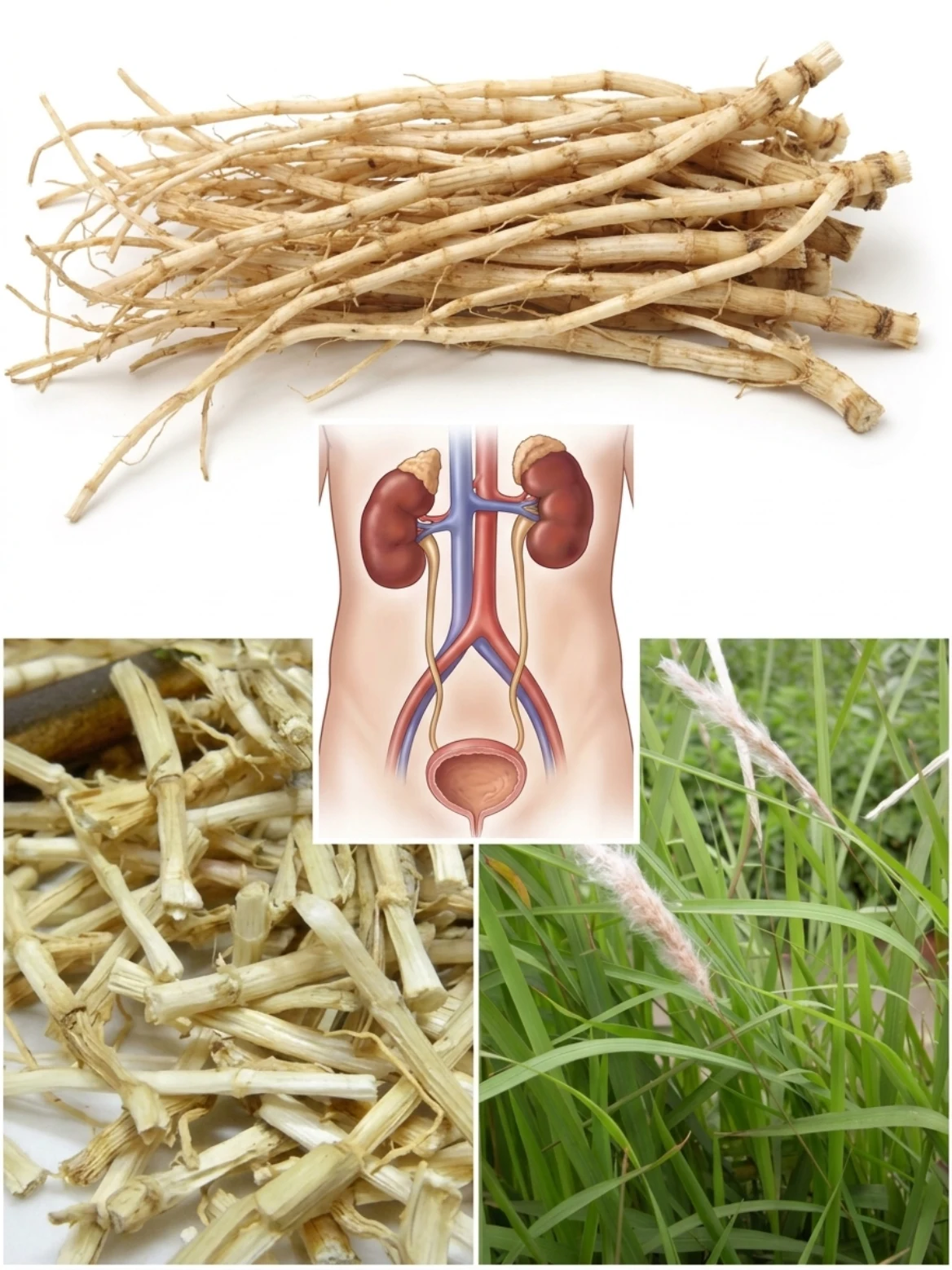
What Cogon Grass Root Is Traditionally Used For
In traditional use, Imperata cylindrica rhizome is usually connected with:
- urinary heat and irritation
- mild difficulty or burning with urination
- general “flushing” support
- blood in the urine in traditional medicine frameworks
- heat-related restlessness or internal excess heat
A recent MDPI review notes that in traditional Chinese medicine, the rhizome of Imperata cylindrica has been used to cause diuresis, reduce fever, and help with hematuria and inflammatory complaints. Another newer phytochemical study also describes the rhizome as traditionally used for hematuria, nephritis, and urinary tract infections associated with heat toxins.
That does not mean it is a cure for kidney disease. It means this herb has a long reputation for supporting the urinary system in a gentle, traditional way.
Ingredients
For a simple cogon grass root tea, you only need a few things:
- 10 to 15 grams dried cogon grass root
or a small handful fresh cleaned root pieces - 3 cups water
If the dried root is already chopped, it is easier to simmer evenly. If you are using fresh root, wash it very well because underground herbs tend to hold a lot of grit.
How to Prepare Cogon Grass Root Tea
This remedy is usually made as a decoction, not a quick steep.
Step 1: Clean the root
Rinse the root thoroughly. If using fresh root, scrub off any soil and cut it into shorter pieces.
Step 2: Add to water
Place the root in a small pot with 3 cups of water.
Step 3: Simmer gently
Bring it to a light boil, then reduce the heat and let it simmer for about 15 to 20 minutes.
Step 4: Let it rest
Turn off the heat and leave it covered for another 5 minutes.
Step 5: Strain and drink warm
Strain into a cup and drink while warm or slightly cooled.
The tea is usually pale golden to light brown, with a mild earthy taste. It is not a dramatic flavor, which is probably why people often think of it more as a functional herbal drink than a pleasure tea.
How to Use It
This is the kind of herb people usually use in small to moderate amounts, not all day long.
Many people would choose it:
- when the body feels “hot” and urine feels darker or more irritating
- during short periods of urinary discomfort
- in hot weather, when cooling herbs feel more appropriate
- as part of a traditional root tea routine, not as a daily forever habit
Quick relief timeline
If it suits you, what you may notice first is simple: a lighter feeling, more frequent urination, or a mild sense of cooling within the same day or over a couple of days. That is the realistic expectation. It is not the kind of tea that should be expected to fix kidney infections, stones, or severe urinary symptoms overnight. (MDPI)
Why It Works in Traditional Practice
Part of the appeal of cogon grass root is how clearly its traditional role has been described.
It is repeatedly characterized as a diuretic herb, and traditional references consistently place it in formulas for urinary complaints and “heat-clearing” actions. The Springer herbal reference lists the rhizome as diuretic and anti-inflammatory, while review papers also note flavonoids, lignans, and other compounds that may help explain its pharmacological activity.
There is also modern research interest beyond traditional use. Reviews describe Imperata cylindrica as a plant with a broad range of studied biological activities, including anti-inflammatory and liver-protective potential, although most of that evidence is still preclinical rather than strong human clinical proof.
So the strongest, most honest takeaway is this: the herb’s traditional urinary use is well established, and modern science finds it interesting, but that is still not the same thing as saying it is a proven medical treatment.
Who May Benefit Most
This tea makes the most sense for people who are looking for a traditional urinary support herb, especially when they want something simple and not overly strong.
It may appeal most to people who:
- enjoy traditional root decoctions
- want a gentle diuretic herbal tea
- feel drawn to East Asian or Southeast Asian herbal practices
- prefer simple one-herb remedies over complicated formulas
It is especially easy to understand why older home traditions keep it around. The root is plain, practical, and very clear in purpose.
Safety Notes
Even gentle herbs deserve some respect.
The available research on Imperata cylindrica focuses much more on pharmacology than on robust clinical safety data for frequent medicinal use, which means it is better not to treat it like unlimited everyday tea. Reviews support its traditional use, but they do not prove that larger or long-term use is risk-free for everyone.
A few basic precautions matter:
- avoid self-treating fever, severe burning urination, back pain, vomiting, or blood in the urine with herbal tea alone
- use caution if you have kidney disease, take prescription diuretics, or have chronic medical conditions
- stop if it causes any unusual discomfort
- be extra cautious during pregnancy or breastfeeding unless a qualified professional advises otherwise
If urinary symptoms are strong, persistent, or come with pain in the lower back or sides, that is not a simple tea situation. That needs proper medical care.
Final Takeaway
Cogon grass root tea is one of those quiet traditional remedies that makes sense once you know its role. It is not glamorous, but it has a long-standing reputation for diuretic support, urinary comfort, and heat-clearing use in traditional medicine.
Used thoughtfully, it can be a simple, grounding herbal drink for short-term support. Just keep expectations realistic. This is a traditional helper, not a miracle cure.
Related Source Science
Modern reviews of Imperata cylindrica describe the rhizome as traditionally used for diuresis, hematuria, nephritis, and urinary tract complaints, and phytochemical studies continue to examine its flavonoids, lignans, and anti-inflammatory potential. The clearest evidence supports its traditional role as a urinary support herb, while stronger clinical proof for major kidney or urinary diseases is still limited.