Dreaming of a vibrant garden but worried your sandy soil won’t cooperate? Many gardeners face the challenge of well-draining, fast-drying soil that seems to let nutrients slip away. While sandy soil can be tricky, it’s also an opportunity to cultivate a stunning, drought-tolerant landscape that requires less water and intervention once established. Instead of fighting your soil type, embrace it by choosing plants that naturally thrive in these conditions. Imagine a garden bursting with color and life, requiring minimal fuss, and resilient enough to withstand drier spells. Let’s explore ten fantastic plants that will turn your sandy patch into a thriving, beautiful oasis.
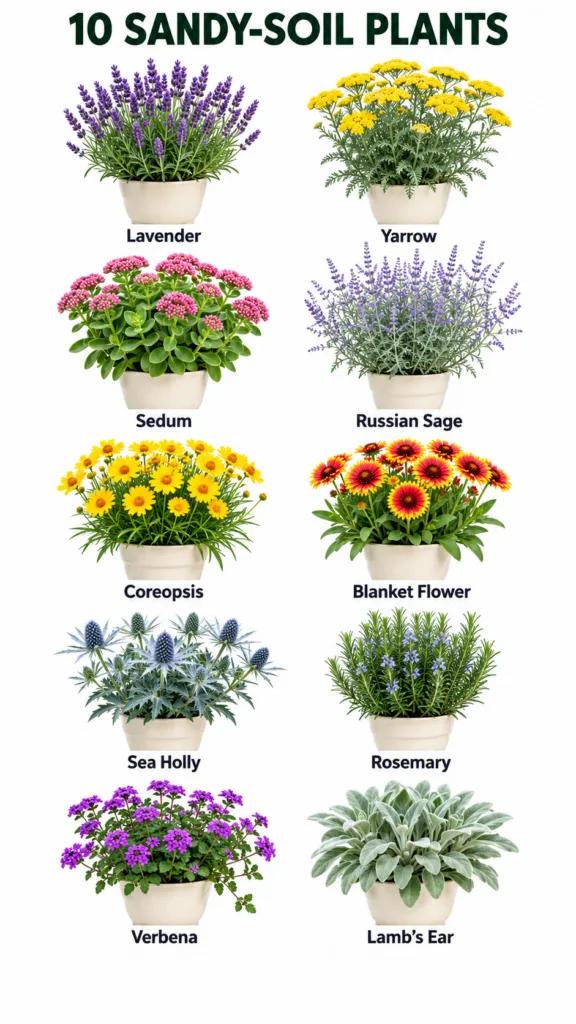 Turn sandy soil into a beautiful, low-maintenance garden with these resilient plant choices.
Understanding Sandy Soil: Your Garden’s Secret Advantage
Sandy soil is characterized by its large, gritty particles, which create ample pore spaces. This means water drains quickly, preventing root rot and allowing for good air circulation around roots. While excellent drainage is a benefit, it also means sandy soil struggles to retain water and nutrients, which can quickly leach away. The key to successful gardening in these conditions is selecting plants that are naturally adapted to dry, nutrient-poor environments and understanding how to replenish organic matter to improve its water and nutrient-holding capacity over time. These plants often have deep taproots, succulent foliage, or a natural resilience to drought.
Top 10 Resilient Plants for Sandy Soil Gardens
Here are ten garden favorites that will flourish in sandy conditions, bringing beauty and biodiversity to your landscape:
1. Lavender (Lavandula angustifolia)
A classic for a reason, English Lavender loves sandy, well-drained soil and full sun. Its fragrant purple blooms and silvery-green foliage are a delight for senses and pollinators alike.
- Hardiness: USDA Zones 5-9
- Plant type: Perennial shrub
- Exposure: Full sun (at least 6-8 hours daily)
- Height: 1-3 feet
- Spread: 1-3 feet
Care Tip: Prune lavender immediately after its first flush of flowers to encourage a second, smaller bloom and maintain a compact, bushy shape. Avoid cutting into old wood.
2. Yarrow (Achillea millefolium)
With its distinctive flat-topped flower clusters, yarrow is a tough perennial that thrives in poor, sandy soil and full sun. It’s a magnet for beneficial insects and comes in a range of colors from white to vibrant yellow, pink, and red.
- Hardiness: USDA Zones 3-9
- Plant type: Perennial
- Exposure: Full sun
- Height: 1-3 feet
- Spread: 1-2 feet
Care Tip: Deadhead spent flowers regularly to encourage continuous blooming throughout the summer and prevent aggressive self-seeding. Divide clumps every few years to maintain vigor.
3. Rosemary (Salvia rosmarinus)
This aromatic herb is not just for cooking; it’s a beautiful, evergreen shrub that demands excellent drainage and full sun. Rosemary can be a perennial in warmer climates and provides year-round texture and fragrance.
- Hardiness: USDA Zones 7-10 (as perennial); often grown as an annual or houseplant elsewhere.
- Plant type: Evergreen shrub/herb
- Exposure: Full sun
- Height: 2-6 feet (cultivar dependent)
- Spread: 2-4 feet
Care Tip: Avoid overwatering, especially in winter. Allow the soil to dry out completely between waterings. Prune lightly and often for culinary use and to maintain shape; avoid heavy pruning into old, leafless wood.
4. Coreopsis (Coreopsis spp.)
Known for its cheerful, daisy-like blooms, coreopsis (also called Tickseed) is a long-blooming perennial that tolerates sandy soil and drought. It brightens up any garden with its sunny yellow, orange, or pink flowers.
- Hardiness: USDA Zones 4-9 (species dependent)
- Plant type: Perennial (some annuals)
- Exposure: Full sun
- Height: 1-3 feet
- Spread: 1-2 feet
Care Tip: Consistent deadheading of spent blooms will encourage a much longer flowering season, often extending from early summer through fall. Consider a mid-season ‘shearing’ for a flush of new growth and blooms.
5. Sedum (Sedum spp. or Hylotelephium spp.)
Stonecrop sedums, particularly the upright varieties, are succulent perennials renowned for their ability to thrive in dry, poor soil. Their fleshy leaves store water, making them incredibly drought-tolerant, and their late-season blooms provide crucial nectar for pollinators.
- Hardiness: USDA Zones 3-9
- Plant type: Perennial succulent
- Exposure: Full sun to light shade
- Height: 1-2 feet
- Spread: 1-2 feet
Care Tip: Sedums are generally low-maintenance. Avoid rich soil and excessive water, which can lead to leggy growth or rot. For taller varieties, the ‘Chelsea chop’ (cutting back by half in early summer) can promote bushier growth and prevent flopping.
6. Sea Holly (Eryngium planum)
For unique architectural interest, Sea Holly is unmatched. Its metallic blue, thistle-like flowers and spiky bracts add a striking texture to the garden. This perennial thrives in full sun and very well-drained, sandy, or gravelly soil.
- Hardiness: USDA Zones 3-8
- Plant type: Perennial
- Exposure: Full sun
- Height: 2-3 feet
- Spread: 1-1.5 feet
Care Tip: Sea Holly resents transplanting due to its deep taproot. Choose its permanent spot carefully from the start. It’s an excellent choice for rock gardens or coastal areas.
7. Lamb’s Ear (Stachys byzantina)
Loved for its soft, silvery, velvety foliage, Lamb’s Ear forms a wonderful groundcover in sunny, well-drained spots. While it produces small purple flower spikes, its primary appeal is its tactile, silvery leaves that provide striking contrast.
- Hardiness: USDA Zones 4-8
- Plant type: Perennial
- Exposure: Full sun to partial shade
- Height: 6-12 inches (foliage); 1-2 feet (flower spikes)
- Spread: 1-2 feet
Care Tip: To maintain neatness and prevent aggressive spreading, remove flower stalks after they fade, especially if you prefer to emphasize the foliage. Ensure good air circulation to prevent fungal issues in humid climates.
8. Blanket Flower (Gaillardia pulchella or Gaillardia x grandiflora)
These vibrant, daisy-like flowers in fiery reds, oranges, and yellows bring a punch of color to sandy garden beds. Blanket flowers are tough, drought-tolerant perennials (some are annuals) that bloom profusely from summer into fall, attracting butterflies.
- Hardiness: USDA Zones 3-10 (perennial cultivars)
- Plant type: Perennial (some short-lived perennials or annuals)
- Exposure: Full sun
- Height: 1-2.5 feet
- Spread: 1-2 feet
Care Tip: Deadhead spent blooms regularly to encourage a continuous show of flowers. In zones where they are perennial, a light trim in late fall or early spring can help rejuvenate the plant.
9. Verbena (Verbena bonariensis)
Tall and airy, Verbena bonariensis offers delicate purple flowers on stiff, branching stems that seem to float above other plants. It’s a fantastic choice for adding vertical interest, attracting pollinators, and thriving in sandy, well-drained soil.
- Hardiness: USDA Zones 7-11 (perennial); often grown as an annual elsewhere.
- Plant type: Perennial (often self-seeds in cooler zones)
- Exposure: Full sun
- Height: 3-6 feet
- Spread: 1-3 feet
Care Tip: This verbena readily self-seeds in warmer zones, which can be a benefit or a challenge depending on your preference. Cut back hard in late winter or early spring to encourage fresh, vigorous growth.
10. Pincushion Flower (Scabiosa columbaria)
With its charming, intricate blooms resembling pincushions, Scabiosa offers delicate beauty in shades of blue, purple, and white. This long-blooming perennial prefers well-drained, neutral to alkaline soil, making it a good fit for sandy beds.
- Hardiness: USDA Zones 3-8
- Plant type: Perennial
- Exposure: Full sun
- Height: 1.5-2 feet
- Spread: 1-1.5 feet
Care Tip: Consistent deadheading is crucial for encouraging a continuous flush of these delightful flowers from late spring until fall. Provide good air circulation to prevent powdery mildew in humid conditions.
Cultivating Success in Sandy Soil: Beyond Plant Selection
While choosing the right plants is paramount, a few simple gardening tips can significantly improve your success with sandy soil:
- Incorporate Organic Matter: Regularly mix in compost, well-rotted manure, or other organic amendments. This improves the soil’s ability to retain moisture and nutrients without compromising drainage.
- Mulch Heavily: Apply a thick layer of organic mulch (like wood chips, straw, or shredded leaves) around your plants. Mulch helps retain soil moisture, regulate soil temperature, and break down to add organic matter over time.
- Strategic Watering: Although these plants are drought-tolerant, they still need regular watering until established. Once established, water deeply but infrequently, encouraging roots to grow deeper in search of moisture. Test the soil moisture a few inches down before watering again.
- Light Fertilization: Sandy soils often lack nutrients. Use slow-release granular fertilizers or compost tea to provide a steady, gentle supply of nutrients. Avoid heavy chemical fertilizers, which can easily leach away.
Common Mistakes to Avoid in Sandy Soil Gardens
Even with drought-tolerant plants, some common errors can hinder your garden’s success:
- Overwatering Established Plants: Paradoxically, overwatering can still be a problem. While sandy soil drains fast, established drought-tolerant plants prefer to dry out between waterings. Constant moisture can lead to root rot.
- Neglecting Soil Amendments: Relying solely on plant choice without any soil improvement can still lead to nutrient deficiencies and slower growth. Organic matter is key to a truly thriving sandy soil garden.
- Planting Too Deeply: Ensure the crown of the plant is at or slightly above the soil line, especially for plants that dislike ‘wet feet’.
- Ignoring Sunlight Needs: Even plants that love sandy soil need the right amount of sun. Most of the plants listed here require full sun to perform their best.
Regional Considerations for Sandy Soil Gardening in the U.S.
The specific timing for planting and the ultimate success of these plants can vary across the diverse climates of the United States:
- Zones 3-5 (Cold Winters): Many of these plants are fully hardy here, but ensure they are well-established before winter. Mulching can provide extra protection. Spring planting after the last frost is ideal.
- Zones 6-8 (Temperate Winters): Most of these perennials will thrive. Planting in spring or early fall allows roots to establish before summer heat or winter cold.
- Zones 9-11 (Warm Winters): Some plants like Rosemary, Lavender, and Verbena bonariensis will be evergreen perennials. Others, like Yarrow, might benefit from some afternoon shade in the hottest regions. Watch for extended dry periods and adjust watering accordingly.
Always consult your local extension office for specific planting dates and advice tailored to your microclimate, including average last and first frost dates and soil temperature guidelines for successful plant establishment.
Cultivate a Garden of Resilience and Beauty
Gardening in sandy soil doesn’t have to be a struggle; it’s an opportunity to create a resilient, beautiful, and low-maintenance landscape. By choosing plants like lavender, yarrow, and sedum that are naturally adapted to these conditions, you can enjoy a vibrant garden that conserves water and thrives with minimal fuss. Embrace your soil’s unique characteristics, add organic matter, and watch your sandy patch transform into a garden you’ll adore for years to come. Start planting your sandy soil dream garden today!