Kale is a nutritional powerhouse, a superstar in the garden that’s packed with vitamins and minerals. But like all plants, it can benefit from a little help from its friends! Companion planting is an age-old gardening technique that involves placing different plant species near each other to create a mutually beneficial environment. It’s a natural, organic way to enhance growth, deter pests, and even improve the flavor of your harvest.
If you’re looking to maximize your kale yield and keep those pesky garden invaders at bay without harsh chemicals, diving into the world of companion planting is a fantastic step. Let’s explore some of the best companions for your kale, turning your garden into a thriving ecosystem!
What is Companion Planting?
At its heart, companion planting is all about smart plant pairings. Certain plants, when grown together, can offer a range of benefits:
- Pest Deterrence: Some plants emit scents or compounds that repel common pests.
- Attracting Beneficial Insects: Flowers or herbs can draw in pollinators and predatory insects that feast on garden pests.
- Soil Improvement: Legumes, for example, can fix nitrogen in the soil, benefiting nutrient-hungry neighbors.
- Shade and Support: Taller plants can provide shade for sun-sensitive plants, while sturdy ones can offer physical support.
- Weed Suppression: Ground cover plants can help keep weeds down, conserving soil moisture and nutrients.
- Improved Flavor: Believe it or not, some companion plants are thought to enhance the taste of nearby crops!
Top Companion Plants for Kale
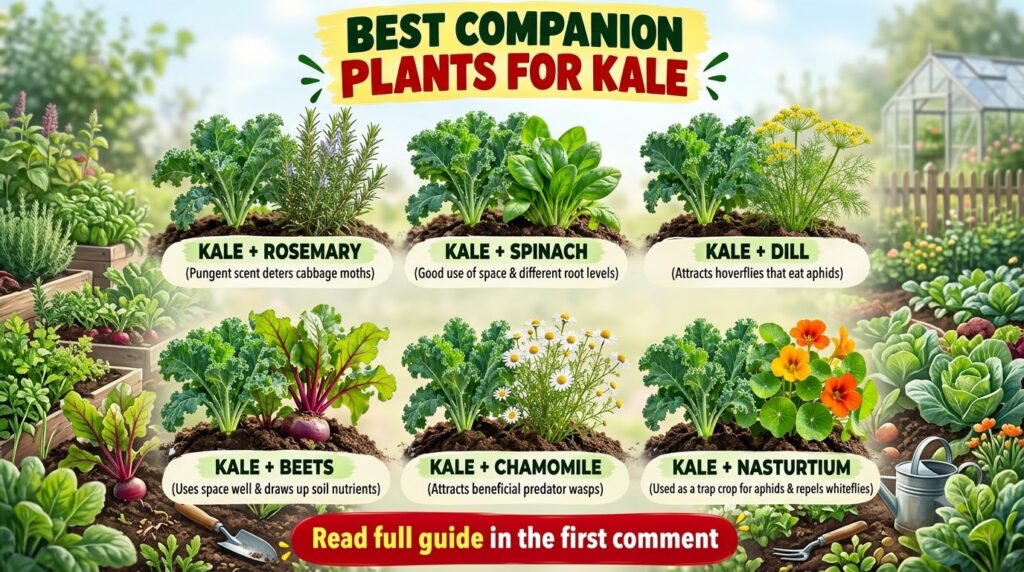
Kale is a relatively robust plant, but it certainly appreciates good neighbors. Here are some excellent choices:
Rosemary
- Benefit: Aromatic herbs like rosemary are fantastic for deterring common kale pests such as cabbage moths and flea beetles. The strong scent confuses pests, making it harder for them to find your kale.
- Tip: Plant rosemary strategically around your kale patch.
Spinach
- Benefit: Growing spinach around your kale can act as a living mulch. It helps retain soil moisture, keeps the soil cool, and suppresses weeds, creating a more stable environment for your kale.
- Tip: Spinach can also provide some ground cover, reducing soil splash on kale leaves.
Dill
- Benefit: Dill is a superstar for attracting beneficial insects like ladybugs, lacewings, and predatory wasps. These helpful garden allies are natural predators of aphids, cabbage worms, and other pests that love to munch on kale.
- Tip: Let some dill go to flower to maximize its attraction power.
Beets
- Benefit: Beets have deep taproots that help to loosen the soil, improving drainage and aeration. They also draw up nutrients from deeper in the soil, which can indirectly benefit kale by making more nutrients available in the root zone.
- Tip: Both the leaves and roots of beets are edible, giving you a double harvest!
Chamomile
- Benefit: Often referred to as a ‘plant doctor,’ chamomile is believed to improve the overall health and vigor of nearby plants. It can also deter some pests and attract beneficial pollinators. Some gardeners even claim it improves kale’s flavor!
- Tip: Plant a border of chamomile around your vegetable beds.
Nasturtium
- Benefit: Nasturtiums are excellent trap crops. Pests like aphids are often more attracted to nasturtiums than kale, diverting them away from your main crop. They also attract beneficial predatory insects. Plus, their flowers and leaves are edible!
- Tip: Plant nasturtiums a short distance from your kale, allowing them to draw pests away.
Plants to Avoid Near Kale
Just as some plants are great companions, others can hinder kale’s growth. Avoid planting kale near other members of the Brassica family (like broccoli, cabbage, cauliflower, and Brussels sprouts) as they attract the same pests and compete for similar nutrients, increasing the risk of disease and pest infestation.
General Companion Planting Tips
- Observe Your Garden: Pay attention to what works and what doesn’t in your specific microclimate and soil conditions.
- Variety is Key: A diverse garden ecosystem is generally more resilient to pests and diseases.
- Research Local Pests: Know what pests are common in your area and choose companions that specifically deter them or attract their predators.
- Don’t Overcrowd: While companion planting is beneficial, ensure plants still have adequate space, light, and airflow.
Start Companion Planting for a Healthier Kale Harvest!
Embracing companion planting for your kale is a simple yet powerful way to cultivate a healthier, more productive, and more resilient garden. By strategically pairing your kale with beneficial plants like rosemary, dill, spinach, beets, chamomile, and nasturtium, you’re not just growing food; you’re nurturing a vibrant, living ecosystem.
Give these pairings a try and watch your kale flourish! Do you have any favorite kale companion plants not mentioned here? Share your experiences and tips with us in the comments below!