When it comes to eggs, the age-old question often arises: should I eat the whole egg or just the egg white? This isn’t just a matter of preference; it’s a nutritional debate that can significantly impact your dietary choices and health goals. From calorie content to essential nutrients, whole eggs and egg whites offer distinct profiles.
In this article, we’ll crack open the facts to help you understand the differences between whole eggs and egg whites. We’ll explore their nutritional breakdowns, compare their benefits, and help you decide which option best fits your individual needs and lifestyle. Get ready to make informed choices for your healthy eating journey!
Nutrition Comparison Table
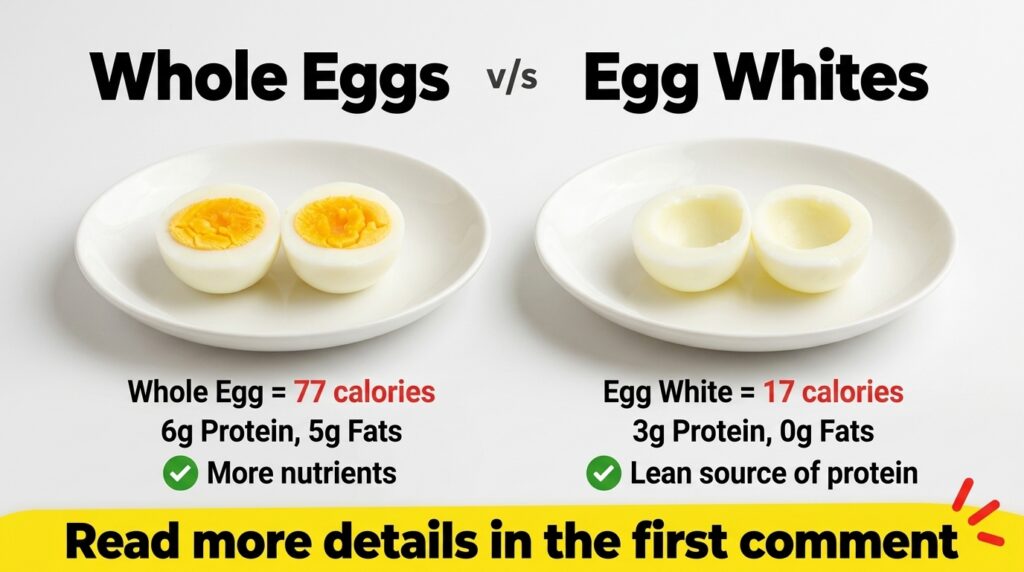
Let’s dive straight into the numbers to see how whole eggs and egg whites stack up against each other. Here’s a quick overview based on one large whole egg versus the white from one large egg:
| Nutrient | One Large Whole Egg (approx.) | One Large Egg White (approx.) |
|---|---|---|
| Calories | 70-80 kcal | 15-17 kcal |
| Protein | 6 grams | 3.6 grams |
| Fat | 5 grams | 0 grams |
| Carbohydrates | 0.6 grams | 0.2 grams |
| Fiber | 0 grams | 0 grams |
| Main Nutrients | Vitamins D, B12, A, Choline, Selenium, Iron | Riboflavin, Selenium, Potassium |
| Best Benefit | Complete nutrition, satiety | Low-calorie protein source |
Calories: Quantity vs. Density
The most immediate difference between whole eggs and egg whites is their calorie count. A large whole egg contains approximately 70-80 calories, with the majority coming from the yolk’s fat content. In contrast, the white from a large egg offers a mere 15-17 calories. This significant calorie difference is a primary reason why many individuals focusing on weight management or calorie restriction often opt for egg whites.
Protein: The Building Block
Both whole eggs and egg whites are excellent sources of protein, a macronutrient vital for muscle repair, growth, and overall bodily functions. A whole large egg provides about 6 grams of high-quality protein, containing all nine essential amino acids. The egg white alone contributes approximately 3.6 grams of protein. While the whole egg offers slightly more protein, egg whites are praised for being a ‘pure protein’ source, almost entirely devoid of fat and cholesterol.
Fat: Healthy Fats vs. No Fat
Here’s where the biggest distinction lies. The yolk of a whole egg is where all the fat resides, about 5 grams per large egg. This fat includes both saturated and unsaturated fats. Historically, the cholesterol in egg yolks raised concerns, but current research suggests that dietary cholesterol has less impact on blood cholesterol levels for most healthy individuals than previously thought. Egg whites, on the other hand, contain virtually no fat.

Carbohydrates & Fiber: Minimal Presence
Eggs, whether whole or just the whites, are not significant sources of carbohydrates or fiber. Both contain less than 1 gram of carbohydrates, making them excellent choices for low-carb diets. They provide no dietary fiber, so it’s important to pair them with other fiber-rich foods like vegetables or whole grains to ensure a balanced meal.
Vitamins: A Powerhouse in the Yolk
This is where the whole egg truly shines. The yolk is a treasure trove of vitamins, including fat-soluble vitamins like A, D, E, and K, as well as several B vitamins (B6, B12, folate, riboflavin). Notably, eggs are one of the few natural food sources of Vitamin D. Egg whites, while containing some riboflavin (Vitamin B2), lack the diverse vitamin profile found in the yolk.
Minerals: More Than Just Protein
Just like vitamins, most of the beneficial minerals in an egg are concentrated in the yolk. These include selenium, phosphorus, iron, and zinc. Choline, an essential nutrient important for brain health and cell function, is also found almost exclusively in the egg yolk. Egg whites contribute smaller amounts of minerals like selenium and potassium.
Taste & Versatility: Culinary Choices
Whole eggs offer a richer, more robust flavor and a creamier texture due to the fat in the yolk. They are incredibly versatile, used in everything from scrambled eggs and omelets to baking and custards. Egg whites have a milder flavor and a firmer, sometimes rubbery, texture when cooked on their own. They are often used for lighter preparations, in baking to add volume, or in dishes where a neutral flavor is desired.
Best For: Tailoring to Your Goals
- Whole Eggs are Best For: Those seeking a complete nutrient profile, healthy fats, and increased satiety. They are excellent for individuals looking to gain muscle, maintain a balanced diet, or ensure adequate intake of fat-soluble vitamins and choline.
- Egg Whites are Best For: Individuals on a strict calorie-controlled diet, those looking to maximize protein intake with minimal fat, or people who need to limit dietary cholesterol due to specific medical conditions. They are also popular among bodybuilders and athletes during cutting phases.
Which One Is Better? The Winner Depends on You!
There’s no single ‘winner’ in the whole eggs vs. egg whites debate. Both have their merits, and the ‘better’ choice depends entirely on your individual dietary needs, health goals, and taste preferences. If you’re looking for a nutrient-dense food packed with vitamins, minerals, and healthy fats, the whole egg is your champion. If your primary goal is to consume pure protein with minimal calories and no fat, then egg whites are an excellent option.
Many people find a balance, perhaps having whole eggs some days and egg whites on others, or combining them in recipes to get the best of both worlds.
Practical Tips for Incorporating Eggs
- Mix and Match: Try making an omelet with one whole egg and two egg whites to get some yolk benefits with fewer calories.
- Pair Wisely: Always pair egg whites with healthy fats (like avocado) and vegetables to add missing nutrients and enhance satiety.
- Smart Snacking: Hard-boiled whole eggs make a fantastic, portable, and satisfying snack.
- Baking Savvy: Use whole eggs for richness and structure in baking, and egg whites for aeration and lightness in meringues or soufflés.
- Read Labels: If buying liquid egg products, check the labels for added ingredients like sodium or preservatives.
FAQs About Whole Eggs and Egg Whites
Q1: Are egg yolks bad for my heart due to cholesterol?
Current scientific understanding suggests that for most healthy people, dietary cholesterol from egg yolks has a minimal impact on blood cholesterol levels. Saturated and trans fats in the diet usually have a greater effect. However, individuals with certain medical conditions, like high cholesterol or heart disease, should consult their doctor for personalized dietary advice.
Q2: Can I eat eggs every day?
For most healthy individuals, eating eggs daily is perfectly fine and can be part of a nutritious diet. The American Heart Association revised its guidelines, noting that healthy individuals can include an egg a day as part of a heart-healthy dietary pattern. It’s always best to consider your overall diet and health status.
Q3: Do egg whites have any vitamins or minerals?
Yes, while the yolk contains the majority of micronutrients, egg whites still provide some beneficial vitamins and minerals. They are a good source of riboflavin (Vitamin B2) and selenium, and also contain small amounts of potassium and magnesium.
Q4: Are brown eggs more nutritious than white eggs?
No, the color of an eggshell does not indicate its nutritional value. The color is determined by the breed of the hen. Both brown and white eggs have similar nutritional profiles.
Q5: What is choline and why is it important?
Choline is an essential nutrient found predominantly in egg yolks. It plays a crucial role in various bodily functions, including brain development, nerve function, muscle movement, and metabolism. It’s particularly important for pregnant women due to its role in fetal brain development.
Q6: How can I easily separate egg whites from yolks?
You can use a specialized egg separator, or simply crack the egg into your hand and let the white slip through your fingers while holding the yolk, or use two halves of the eggshell to pass the yolk back and forth until the white separates.
This content is for educational purposes only and should not be considered medical advice. Consult a qualified healthcare professional for personalized dietary recommendations.
Conclusion
Both whole eggs and egg whites have a valuable place in a healthy diet. Whole eggs offer a complete package of protein, healthy fats, and a wide array of vitamins and minerals crucial for overall health. Egg whites, on the other hand, provide a lean, low-calorie protein punch, ideal for specific dietary goals. Understanding their unique profiles empowers you to make the best choices for your body.
Don’t be afraid to experiment and find what works best for you. Whether you choose whole eggs, egg whites, or a combination, incorporating them into your meals can be a delicious and nutritious way to support your wellness journey. Explore more healthy food content on our website for additional tips and inspiration!