Ever wonder if your papaya is ready to eat or better suited for a savory dish? Understanding papaya ripeness is key to unlocking its full flavor and nutritional potential. This ultimate guide will help you never wonder again, providing insights into identifying each stage of ripeness, exploring diverse culinary uses, and maximizing the nutritional benefits from this incredibly versatile fruit.
From a firm, green papaya perfect for cooking to a soft, sweet one ideal for fresh eating, each stage offers unique textures and flavor profiles. Let’s dive into the world of papaya and learn how to choose the perfect one for any dish or snack!
Understanding Papaya Ripeness: A Visual Guide
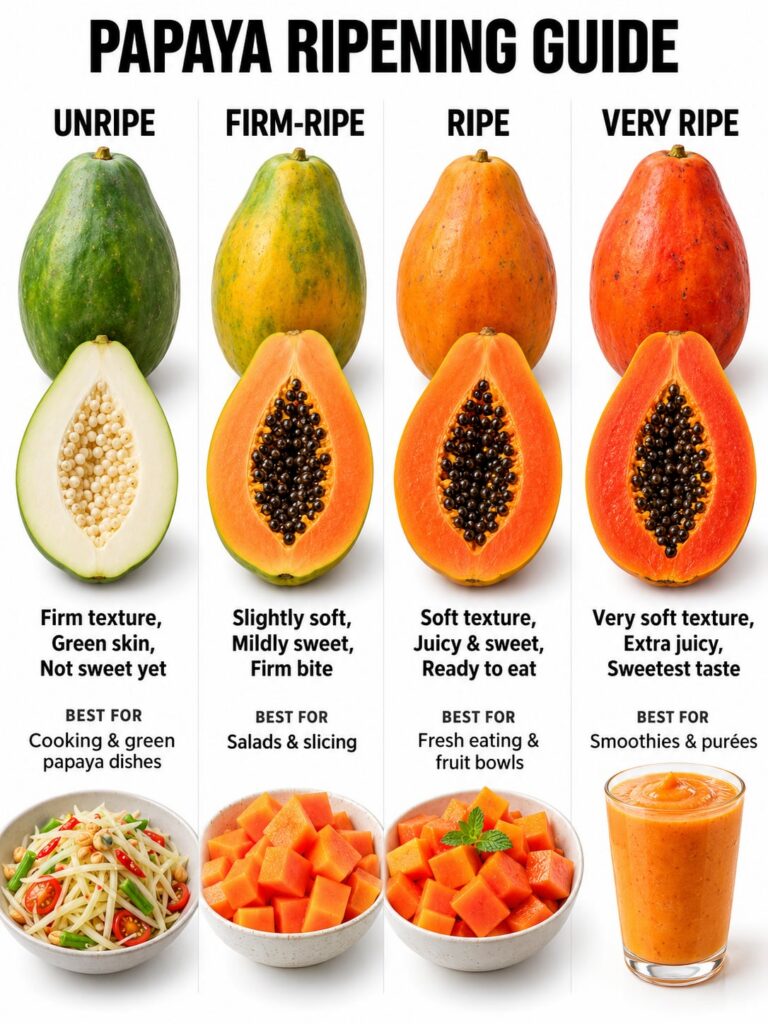
Papaya’s journey from green to golden offers a spectrum of flavors and textures. Knowing what to look for can elevate your cooking and ensure you enjoy this tropical fruit at its absolute best. Here’s how to identify the distinct stages:
Stage 1: Unripe Papaya (Green Papaya) – Your Culinary Canvas
How to Identify: Unripe papaya is characterized by its firm, green skin, with no traces of yellow. It will feel hard to the touch, much like a squash. When cut, the flesh will be pale white to very light green, and the seeds will also be pale and underdeveloped.
Best Uses: This is your go-to for savory dishes! Green papaya is a staple in many Asian cuisines, especially salads, stir-fries, and curries. Its crisp, firm flesh holds up well to cooking and grating, absorbing flavors beautifully without becoming mushy. It offers a refreshing, slightly tangy, and crunchy component to meals.
Nutritional Highlights: Unripe papaya is renowned for its high concentration of papain, a powerful digestive enzyme. Papain can aid in breaking down proteins, making it a natural digestive support. It also contains fiber, vitamins, and minerals, contributing to overall wellness.
Classic Green Papaya Salad (Som Tum-Inspired)
Discover the zesty crunch of green papaya in this refreshing salad, perfect as a light meal or side dish.
- Servings: 2
- Prep Time: 15 minutes
Ingredients:
- 2 cups shredded green papaya
- 1/4 cup chopped green beans, blanched (optional)
- 1/4 cup cherry tomatoes, halved
- 1 small carrot, julienned (optional)
- 1 clove garlic, minced
- 1-2 bird’s eye chilies, thinly sliced (adjust to taste)
- 2 tablespoons roasted peanuts, crushed
- 1 tablespoon fresh lime juice
- 1 tablespoon fish sauce (or soy sauce for vegan)
- 1 teaspoon brown sugar
- Fresh cilantro and mint for garnish
Instructions:
- In a large mortar and pestle (or a bowl), lightly bruise the garlic and chilies.
- Add green beans and cherry tomatoes, gently mashing to release juices.
- Stir in shredded green papaya and carrot.
- In a separate small bowl, whisk together lime juice, fish sauce, and brown sugar until sugar dissolves.
- Pour dressing over the papaya mixture and toss gently to combine.
- Stir in crushed peanuts.
- Garnish with fresh cilantro and mint before serving.
Stage 2: Partially Ripe Papaya – The Versatile Transition
How to Identify: A partially ripe papaya will show hints of yellow streaks or patches on its otherwise green skin. It will still feel firm, but with a slight give when gently pressed. The flesh inside will be a pale orange or yellowish hue, and the seeds will start to darken.
Best Uses: This stage offers a balance between the crispness of green papaya and the sweetness of fully ripe fruit. It’s excellent for chunky salsas, firm fruit salads, or light cooking where you want some sweetness but still desire texture. It can also be grilled or baked for a unique flavor.
Nutritional Highlights: As papaya ripens, its sugar content increases, and the concentrations of vitamins and antioxidants begin to rise. You’ll still get some digestive enzymes, alongside a growing dose of Vitamin C and carotenoids.
Stage 3: Fully Ripe Papaya – Sweetness for Fresh Delights
How to Identify: A fully ripe papaya will have skin that is mostly (or entirely) yellow or orange. It will feel soft to the touch, similar to an avocado, and may have a slight sweet aroma at the stem end. The flesh will be vibrant orange or reddish-orange, very tender, and the seeds will be dark, round, and easily scoopable.
Best Uses: This is the stage for pure enjoyment! Fully ripe papaya is wonderfully sweet and juicy, perfect for eating fresh, adding to fruit bowls, blending into smoothies, or creating light desserts. Its creamy texture makes it a fantastic base for purées and sauces.
Nutritional Highlights: Ripe papaya is a nutritional powerhouse, rich in Vitamin C, Vitamin A (from beta-carotene), and potent antioxidants like lycopene. These nutrients are crucial for immune support, vision health, and fighting oxidative stress. It’s also a good source of fiber, aiding digestive health.
Tropical Papaya Sunrise Smoothie
Start your day with a burst of tropical sweetness and nutrients from this vibrant smoothie.
- Servings: 1
- Prep Time: 5 minutes
Ingredients:
- 1 cup ripe papaya, peeled, deseeded, and cubed
- 1/2 cup frozen mango chunks
- 1/2 cup unsweetened coconut water (or milk of choice)
- 1/2 small banana (fresh or frozen)
- 1 teaspoon fresh lime juice (optional, for brightness)
Instructions:
- Combine all ingredients in a blender.
- Blend until smooth and creamy. If too thick, add a splash more coconut water.
- Pour into a glass and enjoy immediately.
Maximizing Papaya’s Nutritional Benefits
Regardless of its ripeness stage, papaya offers a wealth of health benefits:
- Digestive Health: The enzymes papain and chymopapain (more prevalent in unripe papaya) aid digestion. Fiber content in all stages supports regularity.
- Immune Support: High levels of Vitamin C (especially in ripe papaya) are vital for a strong immune system.
- Antioxidant Power: Carotenoids, including beta-carotene and lycopene, help protect cells from damage by free radicals.
- Anti-inflammatory Properties: Papain and chymopapain have been studied for their potential anti-inflammatory effects.
- Skin Health: Vitamins A and C, along with other antioxidants, contribute to healthy skin and a radiant complexion.
Storing Your Papaya for Optimal Enjoyment
- Unripe Papaya: Store at room temperature on your counter. It will gradually ripen over several days.
- Partially Ripe Papaya: Store at room temperature to encourage further ripening, or refrigerate if you want to slow down the process and maintain its firmer texture for a few days.
- Fully Ripe Papaya: Refrigerate in a plastic bag or airtight container for up to 5-7 days. The cold temperature will prevent further ripening and keep it fresh.
- Cut Papaya: Always store cut papaya in an airtight container in the refrigerator for 2-3 days.
Frequently Asked Questions About Papaya
Q: Can I freeze papaya?
A: Yes, you can! For ripe papaya, peel, deseed, and cube it, then freeze in a single layer on a baking sheet before transferring to an airtight freezer bag. It’s best for smoothies or purées once thawed.
Q: What’s the best way to deseed a papaya?
A: After cutting the papaya in half lengthwise, simply scoop out the black seeds with a spoon. The seeds are edible but have a peppery, slightly bitter taste.
Q: Is there a difference between Hawaiian and Mexican papaya?
A: Yes. Hawaiian papayas (e.g., Solo varieties) are typically smaller, pear-shaped, and sweeter with red-orange flesh. Mexican papayas are larger, more elongated, with yellow-orange flesh and a milder flavor. Both offer excellent nutritional benefits.