When you’re reaching for a satisfying snack, you might wonder if you’re making the best choice for your health, especially when it comes to fiber. Fiber is essential for digestive health, satiety, and overall well-being. Today, we’re diving into a popular snack showdown: Makhana versus Popcorn.
Both offer unique benefits, but which one truly packs a bigger fiber punch? This article will break down the fiber content of these two beloved snacks and reveal how preparation methods can significantly sway their nutritional value, helping you choose wisely for your next healthy bite.
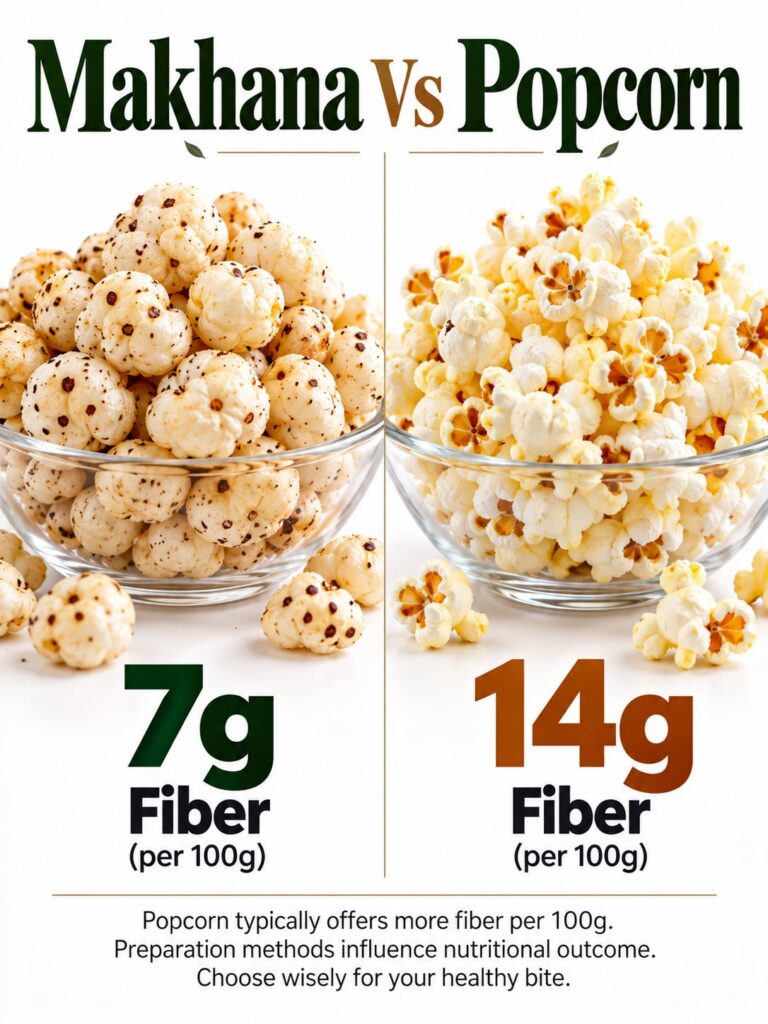
The Fiber Showdown: Makhana vs. Popcorn
Let’s get straight to the heart of the matter: fiber content. When comparing Makhana (also known as fox nuts or lotus seeds) and Popcorn, plain popcorn typically emerges as the winner in terms of fiber per 100 grams. Popcorn, a whole grain, is naturally rich in dietary fiber, which is crucial for maintaining a healthy digestive system and promoting feelings of fullness.
Makhana, while a good source of nutrients and a popular traditional snack, generally contains slightly less fiber than popcorn when measured by weight. However, its nutritional profile offers other benefits that make it a compelling choice.
Understanding the Basics
- Popcorn: Derived from corn kernels, popcorn is a whole grain food. When air-popped and unseasoned, it’s a low-calorie, high-fiber snack that also provides some antioxidants.
- Makhana: These are the seeds of the lotus flower, harvested and roasted. They are naturally gluten-free, low in calories, and a good source of protein, calcium, and iron, in addition to their fiber content.
Why Preparation Matters: Unlocking Healthy Snacking
The fiber battle isn’t just about the raw numbers; it’s heavily influenced by how you prepare your snack. This is where the nutritional story of both Makhana and Popcorn can take a significant turn.
Popcorn Preparation: The Good, the Bad, and the Buttery
The biggest factor in popcorn’s health profile is how it’s popped and what’s added to it. Air-popped popcorn, without oil, butter, excessive salt, or sugary toppings, is a genuinely healthy, high-fiber snack. It retains its whole-grain benefits and provides ample dietary fiber.
However, when popcorn is loaded with butter, cheese powder, caramel, or excessive salt and oil, its nutritional value plummets. These additions drastically increase calorie, fat, and sodium content, negating many of the inherent health benefits of the whole grain.
Makhana Preparation: Dry-Roasted vs. Fried
Makhana is often consumed dry-roasted, which is the healthiest way to enjoy it. Dry roasting preserves its natural nutrients and keeps it a low-calorie option. Light seasoning with natural spices can enhance flavor without adding unhealthy fats.
Conversely, makhana prepared by deep-frying in excessive oil, or coated with sugary or heavily salted glazes, will lose much of its health appeal. Like popcorn, the preparation method can transform a naturally beneficial snack into one that contributes to unhealthy eating patterns.
Making the Smart Choice for Your Health
So, which snack should you choose? The answer often depends on your dietary goals and how you plan to prepare them.
- For Maximum Fiber: Opt for air-popped, plain popcorn. It’s an excellent source of dietary fiber, especially when you’re looking to boost your daily intake.
- For a Light, Nutrient-Dense Option: Dry-roasted makhana is a fantastic choice. It’s low in calories, gluten-free, and offers a unique crunch with beneficial minerals. It can be a great alternative if you’re avoiding corn or looking for a different texture.
- Mindful Snacking: Regardless of your choice, portion control is key. Enjoy these snacks in moderation to reap their benefits without overconsuming.
Beyond Fiber: Other Nutritional Benefits
While fiber is a key highlight, both snacks bring other nutritional advantages to the table:
- Popcorn: As a whole grain, it offers complex carbohydrates for energy and contains some B vitamins and minerals like magnesium. Its antioxidant content, particularly polyphenols, may also contribute to overall health.
- Makhana: Beyond fiber, makhana is known for being a good source of plant-based protein, which aids in muscle repair and satiety. It also provides important minerals such as calcium, vital for bone health, and iron, crucial for energy and blood formation.
Healthy Preparation Tips for Both Snacks
To ensure you’re getting the most out of your Makhana and Popcorn, consider these healthy preparation tips:
- Air-Popped Popcorn: Use an air popper or a large pot with minimal oil (like coconut oil or avocado oil) to pop kernels. Season lightly with a pinch of sea salt, nutritional yeast for a cheesy flavor, or a dash of chili powder for a kick.
- Dry-Roasted Makhana: Toast makhana in a dry pan over medium heat until crispy. Once cooled, you can toss them with a tiny amount of ghee or olive oil and sprinkle with cumin, black salt, or a low-sodium spice blend.
Final Thoughts
When it comes to Makhana vs. Popcorn, there’s no single ‘winner’ for everyone. Both can be excellent additions to a healthy diet, particularly when chosen and prepared mindfully. While popcorn generally offers more fiber per 100g, the ultimate decision rests on your personal preferences, dietary needs, and, most importantly, the preparation method. Opt for air-popped popcorn or dry-roasted makhana to ensure you’re enjoying a genuinely beneficial, fiber-rich snack that supports your wellness journey.
Making informed choices about your snacks can significantly contribute to your overall health and help you stay on track with your nutritional goals.
Medical Disclaimer
The information provided in this article is for general informational purposes only and does not constitute medical advice. It is not intended to diagnose, treat, cure, or prevent any disease. Always consult with a qualified healthcare professional before making any changes to your diet, exercise, or health regimen, especially if you have pre-existing medical conditions or concerns.