A truly vibrant garden, bursting with healthy plants and abundant harvests, starts from the ground up – literally! While fertilizers provide essential nutrients, they are only part of the equation. To achieve long-term soil health and truly unlock your garden’s potential, we need to look beyond quick fixes and embrace nature’s own healing remedies: soil amendments.
Think of soil amendments as supplements for your garden’s foundation. They improve the physical, chemical, and biological properties of your soil, creating an optimal environment where plants don’t just survive, but thrive. Let’s dig deeper into the world of soil amendments and discover how these natural powerhouses can transform your garden.
What Are Soil Amendments and Why Do They Matter?
Unlike fertilizers, which primarily add specific nutrients, soil amendments are materials added to soil to improve its overall structure, water retention, drainage, aeration, and microbial activity. They enhance the soil’s ability to hold nutrients, making them available to plants more efficiently over time. Over time, amendments build a resilient, living soil ecosystem.
Whether you’re battling compacted clay, sandy soil that drains too quickly, or simply want to enrich your garden bed, soil amendments are your best friends. They help create a balanced environment, promoting stronger root systems, healthier foliage, and more prolific blooms and yields.
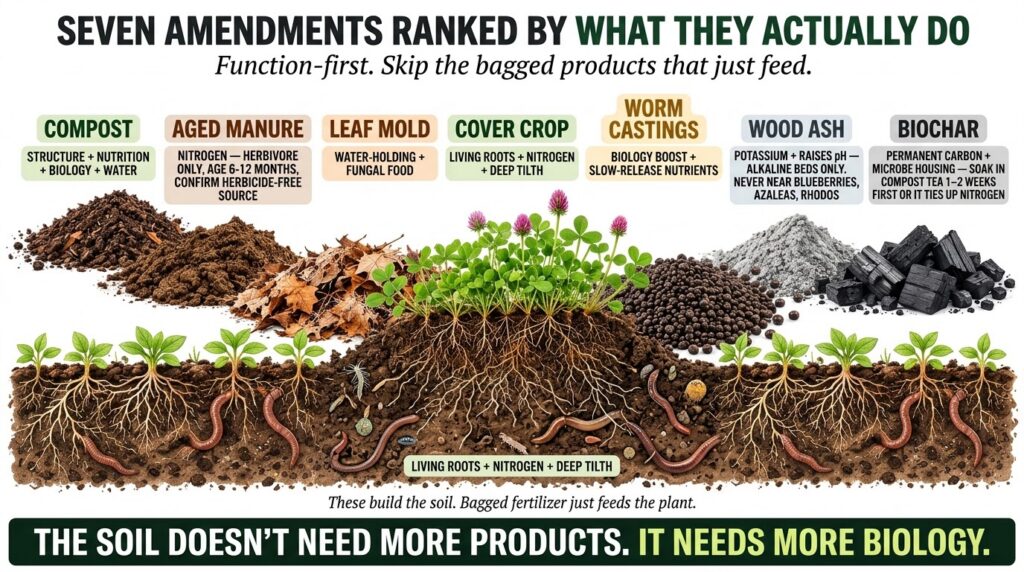
Essential Soil Amendments for a Thriving Garden
Here are some of the most beneficial soil amendments, each offering unique advantages to cultivate a healthier garden:
1. Compost: The Gardener’s Gold
Compost is decomposed organic matter, a true treasure for any garden. It improves soil structure, enhances water retention in sandy soils, and improves drainage in clay soils. Compost also provides a slow release of nutrients and boosts beneficial microbial life.
- Benefits: Improves soil structure, increases water and nutrient retention, feeds beneficial microbes.
- How to use: Mix into garden beds before planting, or top-dress around existing plants.
2. Aged Manure: Nutrient-Rich Boost
Aged manure (from cows, chickens, horses, etc.) is a fantastic source of nitrogen and other essential nutrients. It must be aged or composted to prevent burning plants with excessive nitrogen and to kill weed seeds and pathogens. Fresh manure is too strong!
- Benefits: Adds nitrogen and other nutrients, improves soil fertility, enhances soil structure.
- How to use: Incorporate into soil in fall or early spring, allowing time to break down before planting.
3. Leaf Mold: Forest Floor Magic
Made from decomposed leaves, leaf mold is incredibly effective at improving soil structure and water retention. It’s especially beneficial for loosening heavy clay soils and adding spongy organic matter to sandy soils. It also encourages a healthy fungal network in the soil.
- Benefits: Excellent for improving soil structure, increases water retention, provides a habitat for beneficial fungi.
- How to use: Mix into garden beds, or use as a mulch.
4. Worm Castings: Superfood for Plants
The digested output of earthworms, worm castings are packed with beneficial microbes, enzymes, and readily available nutrients. They significantly improve soil aeration, drainage, and water-holding capacity, and can even help suppress plant diseases.
- Benefits: Nutrient-rich, improves soil structure, enhances microbial activity, helps with disease suppression.
- How to use: Add to potting mixes, sprinkle around plant bases, or make a ‘worm tea’ for liquid feeding.
5. Cover Crop: Living Soil Armor
Cover crops are plants grown specifically to protect and enrich the soil rather than for harvest. Examples include clover, vetch, and rye. They prevent erosion, suppress weeds, add organic matter when tilled in (green manure), and some (legumes) fix nitrogen in the soil.
- Benefits: Prevents erosion, suppresses weeds, adds organic matter, some fix nitrogen.
- How to use: Plant in off-seasons or vacant garden beds, then cut down and incorporate into the soil before planting your main crop.
6. Wood Ash: A Touch of Potash
Wood ash, from untreated wood, is a source of potassium (potash) and trace minerals, and it can help raise soil pH, making it useful for acidic soils. Use sparingly, as too much can make soil too alkaline and harm plants.
- Benefits: Provides potassium and trace minerals, helps to raise soil pH.
- How to use: Apply sparingly and evenly to acidic garden beds; test soil pH before applying.
7. Biochar: Carbon Keeper
Biochar is a charcoal-like substance made from burning organic material in a low-oxygen environment. It’s highly stable in soil and improves water retention, nutrient availability, and microbial habitat. It’s a long-term investment in soil health and also helps sequester carbon.
- Benefits: Improves water retention and nutrient availability, enhances microbial habitat, long-lasting.
- How to use: Mix into garden beds before planting, typically a one-time application for lasting benefits.
Incorporating Amendments into Your Garden
The best way to determine which amendments your garden needs is to conduct a soil test. This will reveal your soil’s pH, nutrient levels, and composition. Once you know what your soil is lacking, you can choose the right amendments to create a balanced and healthy environment.
Most amendments are best incorporated into the top 6-12 inches of soil, allowing them to mix thoroughly with the existing soil particles. For established plants, top-dressing with amendments like compost or worm castings allows nutrients to slowly leach into the soil with watering.
Cultivate a Healthier Tomorrow
Moving beyond just fertilizers and embracing the power of soil amendments is a fundamental step towards sustainable and bountiful gardening. By nurturing your soil, you’re not just feeding your plants; you’re building a vibrant ecosystem that supports life above and below the ground. Start experimenting with these natural healers, and watch your garden flourish like never before!