Protein is one of the most important nutrients for maintaining muscle, supporting metabolism, promoting recovery, and helping you stay full between meals. However, not all protein sources provide the same amount of protein, calories, or amino acids.
Some foods are excellent everyday options, while others offer a more complete amino acid profile that can better support muscle growth and overall health.
Let’s break down some of the most popular protein-rich foods and learn how to use them effectively.
Good Protein Sources for Everyday Meals
These foods are affordable, widely available, and easy to include in a balanced diet.
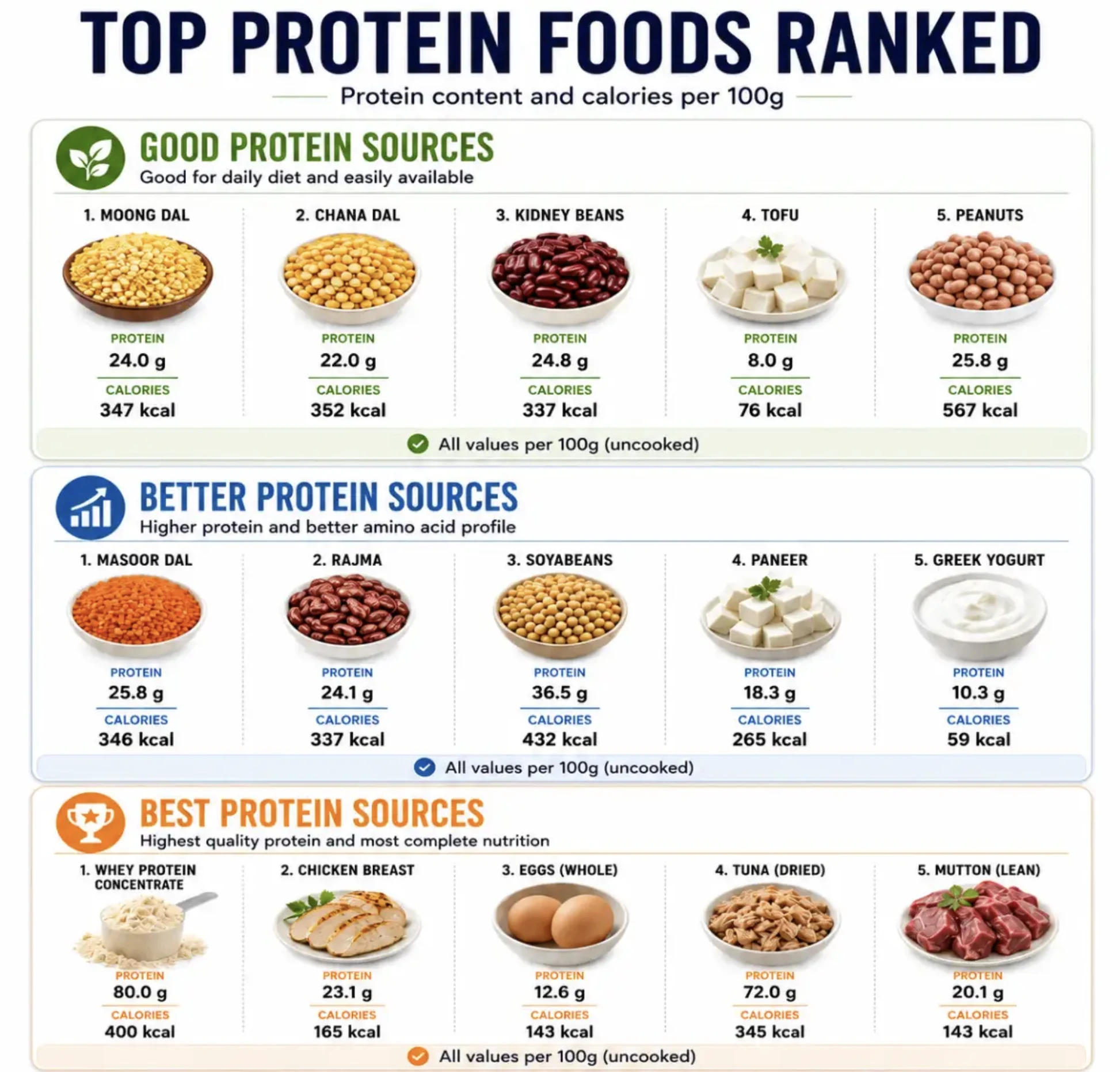
Moong Dal
Protein: 24g per 100g (dry)
Moong dal is rich in plant protein, fiber, and important minerals.
Best ways to eat it:
- Lentil soup
- Dal curry
- Mixed grain bowls
- Vegetable stews
Chana Dal
Protein: 22g per 100g (dry)
Chana dal provides protein together with slow-digesting carbohydrates that help support steady energy.
Best uses:
- Indian-style curries
- Soups
- Salad toppings
- Side dishes
Kidney Beans
Protein: 24.8g per 100g (dry)
Kidney beans provide protein, fiber, iron, and complex carbohydrates.
Great for:
- Chili
- Burrito bowls
- Salads
- Bean soups
Tofu
Protein: 8g per 100g
Tofu offers a complete plant-based protein source with relatively low calories.
Best preparation methods:
- Stir-fried
- Grilled
- Baked
- Added to soups
Peanuts
Protein: 25.8g per 100g
Peanuts contain substantial protein along with healthy fats.
Enjoy them:
- As a snack
- In trail mixes
- As peanut butter
- Added to oatmeal
Better Protein Sources with Strong Amino Acid Profiles
These foods provide high-quality protein while offering a more balanced amino acid composition.
Masoor Dal
Protein: 25.8g per 100g (dry)
Masoor dal is one of the highest-protein lentils available.
Rajma (Red Beans)
Protein: 24.1g per 100g (dry)
Rajma provides protein, fiber, and important minerals that support overall health.
Soybeans
Protein: 36.5g per 100g (dry)
Soybeans are among the highest-protein plant foods available.
Benefits include:
- Complete protein
- Fiber
- Iron
- Magnesium
Popular soy foods include tofu, edamame, soy milk, and tempeh.
Paneer
Protein: 18.3g per 100g
Paneer provides dairy-based protein together with calcium.
Best enjoyed:
- Grilled
- Added to curries
- Mixed into salads
- Served with vegetables
Greek Yogurt
Protein: 10.3g per 100g
Greek yogurt is one of the most convenient high-protein foods.
Try it with:
- Fresh berries
- Nuts
- Seeds
- Oatmeal
Best Protein Sources for Muscle Support
These foods generally provide highly digestible protein and complete amino acid profiles.
Whey Protein Concentrate
Protein: 80g per 100g
Whey is one of the most concentrated protein sources available.
Benefits:
- Fast digestion
- High leucine content
- Convenient post-workout option
Chicken Breast
Protein: 23.1g per 100g
Chicken breast remains one of the most popular lean protein sources.
Best cooking methods:
- Grilling
- Baking
- Air frying
- Pan searing
Eggs
Protein: 12.6g per 100g
Eggs provide complete protein along with vitamins and minerals.
Easy meal ideas:
- Boiled eggs
- Omelets
- Breakfast bowls
- Egg salads
Tuna
Protein: 72g per 100g (dried)
Tuna offers concentrated protein with relatively low fat.
Lean Mutton
Protein: 20.1g per 100g
Lean cuts can provide high-quality protein along with iron and vitamin B12.
How to Get the Most from Your Protein
Spread Protein Throughout the Day
Instead of eating most protein at dinner, try including protein in every meal.
Examples:
Breakfast:
- Greek yogurt
- Eggs
- Protein oats
Lunch:
- Chicken breast
- Beans
- Tofu
Dinner:
- Fish
- Lean meat
- Lentils
Combine Plant Proteins
Plant foods can work together to create a more complete amino acid profile.
Examples:
- Rice and beans
- Lentils and whole grains
- Hummus and whole wheat bread
- Tofu and quinoa
Don’t Focus Only on Protein Numbers
A food with slightly less protein may still provide important nutrients such as:
- Fiber
- Iron
- Calcium
- Magnesium
- Healthy fats
The best diet includes a variety of protein sources rather than relying on a single food.
Sample High-Protein Day
Breakfast:
Greek yogurt with berries and almonds
Lunch:
Grilled chicken breast with vegetables and brown rice
Snack:
Boiled eggs and fruit
Dinner:
Salmon with quinoa and roasted vegetables
This type of meal plan can provide protein consistently throughout the day while also delivering fiber, vitamins, minerals, and healthy fats.
Final Thoughts
The best protein source depends on your goals, preferences, and dietary pattern. For everyday nutrition, foods such as lentils, beans, tofu, Greek yogurt, and eggs provide excellent value. For muscle-building and recovery, higher-quality protein sources such as whey, chicken breast, fish, and eggs can be particularly effective. By combining a variety of protein-rich foods, you can support muscle maintenance, satiety, energy levels, and overall health without making your diet overly complicated.