Most gardeners know the bittersweet feeling as autumn approaches: a bounty of ripe tomatoes, but also a significant number of hard, green ones still clinging to the vine. Most people see these as waste, left for the compost pile after the first frost. But what if those overlooked green tomatoes held a secret? What if they could be transformed into a valuable, tangy ‘jarred remedy’ that not only extends your harvest but also offers a unique flavor and potential wellness benefits? It’s a surprising preservation secret that can turn gardening disappointment into culinary delight.
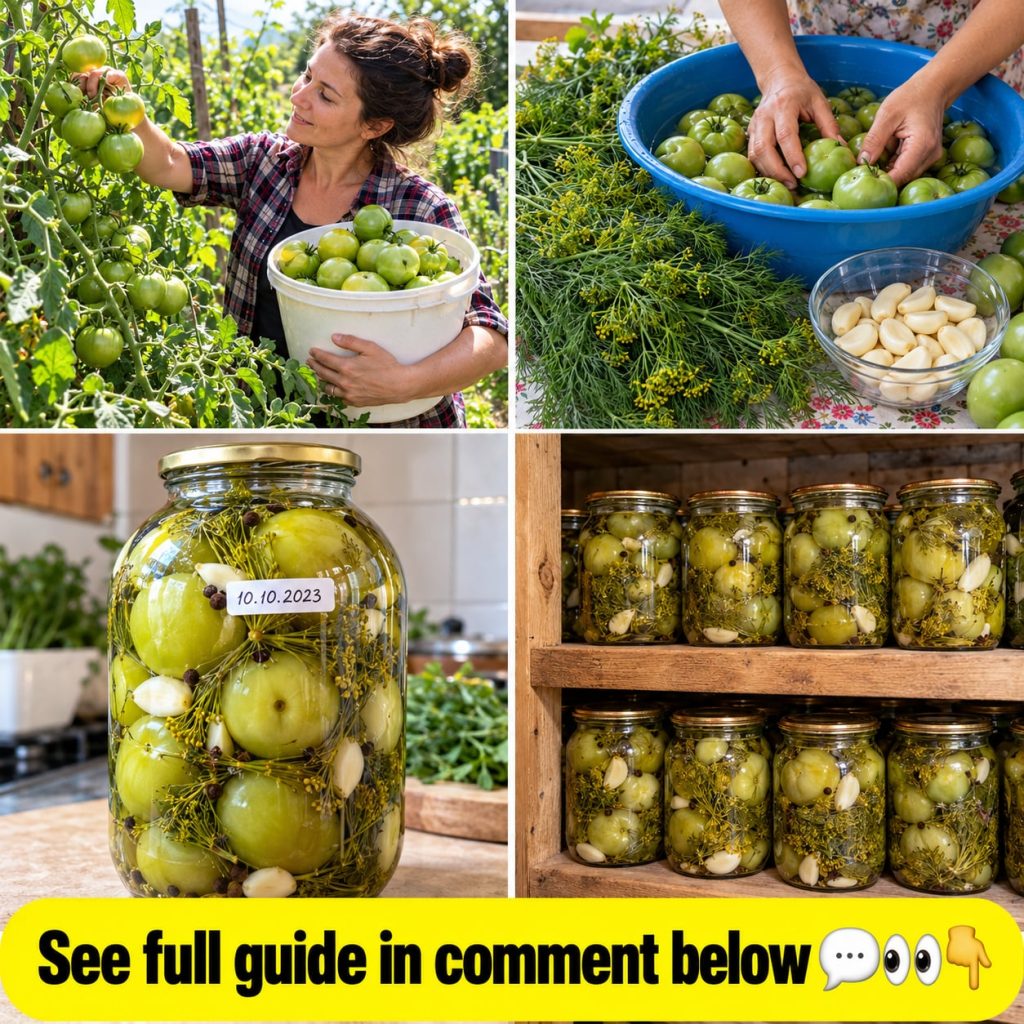
What is This Green Tomato Jarred Remedy?
This isn’t just about pickling; it’s about lacto-fermentation, a traditional method that transforms green tomatoes into a probiotic-rich, tangy, and flavorful food. By creating an anaerobic environment and allowing beneficial bacteria to thrive, we convert the starches and sugars in the green tomatoes into lactic acid. This process not only preserves the tomatoes but also enhances their flavor profile, making them a savory, slightly sour addition to meals. While not a conventional ‘medicine,’ fermented foods like these are considered remedies in the broader sense, supporting gut health and overall wellness.
Ingredients for Your Fermented Green Tomatoes
The beauty of this remedy lies in its simplicity. You only need a few basic ingredients:
- Green Tomatoes: Firm, unblemished, and free from soft spots. Any variety works, but firmer, larger ones are easier to slice.
- Non-Iodized Salt: Crucial for the fermentation process. Iodine can inhibit beneficial bacteria. Sea salt, pickling salt, or kosher salt (without anti-caking agents) are ideal.
- Filtered Water: Tap water often contains chlorine, which can also interfere with fermentation. If you must use tap water, let it sit out for 24 hours to allow the chlorine to dissipate.
- Optional Flavorings: These are entirely up to your preference and can elevate the taste. Consider fresh dill sprigs, garlic cloves, bay leaves, mustard seeds, or whole peppercorns.
Approximate Measurements (for a 1-quart/liter jar)
Consistency is key in fermentation. Here are standard measurements:
- Green Tomatoes: Enough to tightly pack a 1-quart jar (approximately 1.5-2 lbs or 700-900g).
- Brine Ratio: 2 tablespoons (about 30g) non-iodized salt per 4 cups (1 liter) of filtered water.
- Garlic: 2-3 cloves, peeled and smashed.
- Dill: 1-2 sprigs.
- Other Spices: 1 teaspoon of mustard seeds or peppercorns.
Formula / Recipe: Green Tomato Ferment
- Prepare Brine: Dissolve salt in filtered water. Stir well.
- Prepare Tomatoes: Wash and slice green tomatoes into 1/4-inch thick rounds or wedges.
- Pack Jar: Layer tomatoes and optional flavorings tightly into a clean, sterile 1-quart jar.
- Pour Brine: Cover tomatoes completely with brine, leaving 1-2 inches of headspace.
- Seal & Ferment: Seal with an airlock lid or a regular lid, burping daily. Ferment at room temperature (65-75°F / 18-24°C) for 1-3 weeks.
- Refrigerate: Once desired tanginess is reached, refrigerate.
Step-by-Step Method
Making your own fermented green tomatoes is a rewarding process. Follow these steps carefully for the best results:
-
Clean and Sanitize
Wash your hands thoroughly. Ensure your 1-quart glass jar and lid (or airlock system) are spotlessly clean and sterilized. You can run them through a dishwasher or boil them for 10 minutes.
-
Prepare the Brine
In a separate bowl or pitcher, combine 4 cups of filtered water with 2 tablespoons of non-iodized salt. Stir vigorously until the salt is completely dissolved. This brine is vital for creating the right environment for beneficial bacteria.
-
Prepare Your Green Tomatoes
Wash your firm, unblemished green tomatoes. Slice them into consistent 1/4-inch (approx. 0.6 cm) thick rounds or into wedges. The uniform thickness helps them ferment evenly.
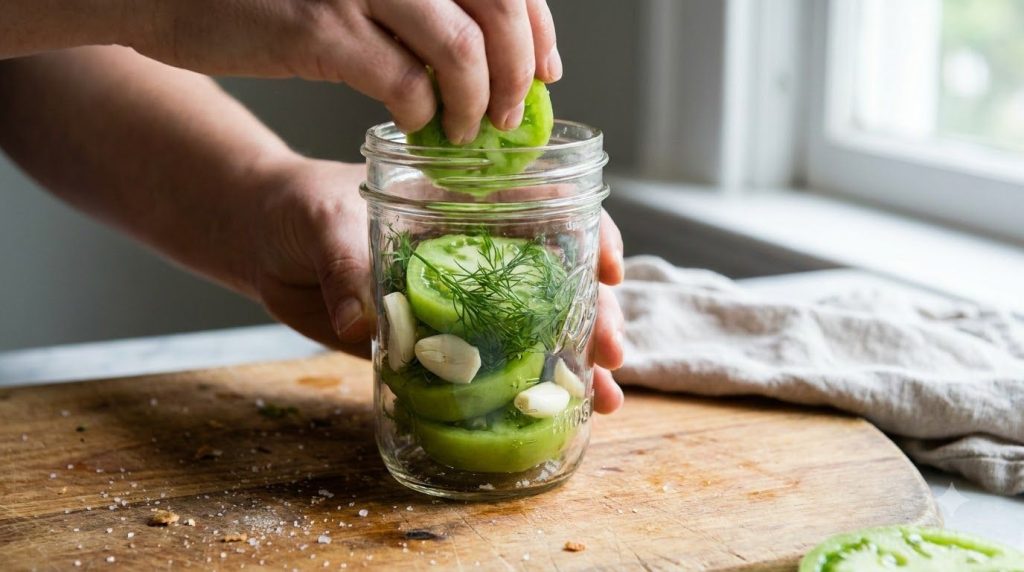
Packing tomatoes tightly is key for good fermentation. -
Layer and Pack the Jar
Begin layering your sliced green tomatoes into the sterilized jar. If you’re adding optional flavorings like garlic cloves, dill sprigs, or mustard seeds, distribute them evenly as you pack. Pack the tomatoes as tightly as possible without crushing them. This helps keep them submerged under the brine later.
-
Pour in the Brine
Slowly pour the prepared salt brine over the packed tomatoes until they are completely submerged. It’s crucial that all solid ingredients remain under the liquid to prevent mold growth. Leave about 1 to 2 inches (2.5-5 cm) of headspace from the top of the jar.
-
Weigh Down (Optional but Recommended)
If you don’t have an airlock system with a weight, use a fermentation weight or a smaller, clean glass jar filled with water that fits inside the mouth of the larger jar. This ensures all tomato pieces stay submerged. You can also use a sturdy cabbage leaf to create a barrier.
-
Seal the Jar
If using an airlock lid, secure it. If using a standard lid, screw it on loosely to allow gases to escape (or ‘burp’ the jar daily by unscrewing the lid briefly to release pressure). Alternatively, you can use a cloth secured with a rubber band for the first few days, but then switch to a lid once fermentation starts to become more active.
-
Ferment
Place the jar in a cool, dark place away from direct sunlight, ideally at room temperature (65-75°F / 18-24°C). Fermentation typically takes 1 to 3 weeks. You’ll notice bubbles forming, and the brine may become cloudy. Taste periodically after the first week until it reaches your desired level of tanginess and sourness.
-
Refrigerate
Once fermented to your liking, remove any weights or airlocks, secure the lid tightly, and transfer the jar to the refrigerator. This slows down the fermentation process significantly.
Did You Know? The cloudy appearance of the brine during fermentation is a sign of thriving beneficial bacteria, not spoilage! As long as there’s no fuzzy mold on the surface, your ferment is doing its job.
How to Use Your Fermented Green Tomatoes
These tangy, probiotic-rich tomatoes are incredibly versatile:
- Snack: Enjoy them straight from the jar for a zesty, gut-friendly bite.
- Salads: Chop and add to green salads, potato salads, or grain bowls for a bright, acidic kick.
- Sandwiches & Wraps: Layer into sandwiches, burgers, or wraps instead of traditional pickles.
- Side Dish: Serve alongside grilled meats, roasted vegetables, or scrambled eggs.
- Condiment: Dice them finely and mix into dips, sauces, or even a homemade tartar sauce.
How Often to Use
As with most fermented foods, a small, regular amount is often best. Start with a few slices (1/4 to 1/2 cup) daily or a few times a week. Listen to your body; if you’re new to fermented foods, you might want to start even smaller and gradually increase your intake.
How to Buy / How to Choose Ingredients
The quality of your ingredients directly impacts the success and flavor of your ferment.
- Green Tomatoes: Choose firm, blemish-free tomatoes. Avoid any that are soft, discolored, or show signs of disease. They don’t need to be perfectly round, but uniformity in size can help with even fermentation.
- Salt: Always use non-iodized salt. Look for pickling salt, sea salt, or kosher salt without anti-caking agents. These additives can make the brine cloudy and interfere with fermentation.
- Water: Filtered or distilled water is best. If using tap water, let it sit uncovered for at least 24 hours to allow chlorine to evaporate.
Storage
Before fermentation is complete, store jars in a cool, dark place (like a pantry) between 65-75°F (18-24°C). Once fermented to your preference, transfer the jars to the refrigerator. Refrigeration slows down the fermentation process dramatically and helps preserve the texture and flavor. Stored in the refrigerator, fermented green tomatoes can last for several months, often up to 6 months or longer, continuing to develop flavor over time.
Quick Tip: Ensure your lids are clean and tightly sealed once refrigerated. Always check for off-smells or mold before consuming, even if refrigerated.
Practical Tips for Success
- Keep it Submerged: This is the golden rule of fermentation. Any vegetable matter exposed to air above the brine can grow mold. Use weights or ensure tight packing.
- Use the Right Salt: Iodine and anti-caking agents in table salt can inhibit beneficial bacteria.
- Temperature Matters: Consistent room temperature is best. Too cold, and fermentation is slow; too hot, and it can go too fast or encourage undesirable bacteria.
- Cleanliness is Key: Sterilize your jars and equipment to give beneficial bacteria the best chance to thrive without competition from unwanted microbes.
- Burp Your Jars (if not using an airlock): Fermentation produces CO2. If using a standard lid, loosen it daily for a few seconds to release pressure and prevent jar explosions.
Common Mistakes to Avoid
One small preparation mistake can ruin the whole batch, or at least yield less-than-ideal results:
| Mistake | Consequence | How to Avoid |
|---|---|---|
| Using iodized or anti-caking salt | Inhibits beneficial bacteria, poor fermentation. | Always use non-iodized sea salt, pickling salt, or kosher salt. |
| Not submerging vegetables | Mold growth on exposed surfaces. | Use fermentation weights or ensure items are fully covered by brine. |
| Using chlorinated water | Chlorine can kill beneficial bacteria. | Use filtered water or let tap water sit out for 24 hours. |
| Too little salt in brine | Can lead to spoilage or undesirable bacterial growth. | Stick to the recommended 2% salt ratio (2 tbsp per 4 cups water). |
| Opening the jar too often | Introduces oxygen, which can encourage mold. | Only open to burp (if not using an airlock) or for tasting after the first week. |
Cautions / Who Should Avoid It
While generally safe and beneficial, fermented foods aren’t for everyone in large quantities:
- Sodium Restrictions: People on low-sodium diets should consume sparingly due to the salt content.
- Histamine Intolerance: Fermented foods are high in histamines, which can trigger symptoms in sensitive individuals.
- Compromised Immune Systems: Individuals with severely weakened immune systems should consult a healthcare professional before consuming raw fermented foods.
- Signs of Spoilage: Never consume if you see fuzzy mold (distinct from white Kahm yeast, which is usually harmless but can be scraped off), smell a putrid odor, or observe unusual colors. When in doubt, throw it out.
Before You Brew: Always trust your senses. A good ferment should smell pleasantly sour and tangy, not rotten or alcoholic.
Quick Summary
- Best Preparation: Lacto-fermentation with a 2% salt brine (2 tbsp non-iodized salt per 4 cups filtered water).
- Best Use-Case: As a tangy culinary addition to meals, supporting gut health.
- Storage: Ferment at room temperature for 1-3 weeks, then refrigerate for several months.
- When to Use: When late-season green tomatoes are abundant, or any time you want a probiotic boost.
- What to Avoid: Soft or damaged tomatoes, iodized salt, tap water with chlorine, and exposure to air during fermentation.
FAQ
- Can I use yellow or slightly red tomatoes for this recipe?
It’s best to stick to firm green tomatoes. Riper tomatoes have more sugar and can become mushy or ferment differently. - How long does the fermentation process take?
Typically 1 to 3 weeks at room temperature (65-75°F / 18-24°C), depending on your desired tanginess and the ambient temperature. Warmer temperatures speed it up. - How do I know if my green tomatoes are fermenting properly?
You’ll see small bubbles rising in the jar, and the brine may become cloudy. The tomatoes will taste pleasantly sour and tangy. - What is Kahm yeast, and is it harmful?
Kahm yeast is a white film that can form on the surface of ferments. It’s usually harmless but can give an off-flavor. Skim it off if you see it. Fuzzy, colored mold (blue, black, green) is a sign of spoilage, and the ferment should be discarded. - Can I reuse the brine for another batch?
While technically possible, it’s generally recommended to start with a fresh brine for each batch to ensure proper salt concentration and a balanced microbial environment. - How long do fermented green tomatoes last in the refrigerator?
Once refrigerated, they can last for several months, often 6 months or more, maintaining their flavor and probiotic benefits. - What if my tomatoes turn soft?
Softness can be due to over-fermentation, too warm a temperature, or using tomatoes that weren’t firm enough to begin with. Ensure firm tomatoes and proper temperature control.
You may also like: The Ultimate Guide to Probiotic-Rich Foods
Conclusion
The next time you find yourself with an abundance of green tomatoes as the season winds down, don’t despair! Embrace the ancient art of fermentation and transform them into a vibrant, flavorful, and gut-friendly ‘jarred remedy.’ It’s a testament to resourceful living and a delicious way to extend the bounty of your garden, offering a unique tang that brightens any meal. Give it a try – your palate and your gut will thank you.
Read more: Homemade Pickled Vegetables for Beginners