Most people ignore the powerful cleaning potential hidden within something they throw away every day: lemon peels. While the juicy pulp gets all the attention, the peels are packed with natural oils and compounds that can transform your home cleaning routine. Instead of tossing them, you can easily turn these citrus discards into an effective, fragrant, and eco-friendly all-purpose cleaner that rivals store-bought alternatives.
One small preparation mistake can ruin the whole batch, however. So, if you’re ready to ditch harsh chemicals and embrace a greener way to clean, understanding the right method for making your own lemon peel cleaner is essential. It’s more than just soaking; it’s about extracting the true power of the lemon.
 Transforming discarded lemon peels into a useful household cleaner.
What It Is: Lemon Peel All-Purpose Cleaner
This remedy is a homemade, natural all-purpose cleaner made primarily from lemon peels and white vinegar. The citrus oils in the lemon peels act as a natural degreaser and deodorizer, while white vinegar is a well-known disinfectant and cleaning agent. When combined, they create a potent, non-toxic cleaner that can tackle grease, grime, and odors throughout your home, leaving behind a fresh, natural scent instead of chemical fumes.
Ingredients
- Lemon peels (from approximately 6-8 lemons)
- White vinegar (about 4 cups or 1 liter)
- Water (about 2 cups or 500ml)
- Optional: A tablespoon of salt or baking soda (to aid extraction during boiling)
Approximate Measurements
- Lemon peels: Enough to loosely fill a medium saucepan
- White vinegar: Sufficient to cover the peels once in the jar
- Water: Half the volume of vinegar, for the initial boil
Formula / Recipe
The core of this cleaner relies on a simple infusion process. By gently heating the lemon peels, you help release their beneficial oils and compounds, which then infuse into the vinegar, creating a powerful, aromatic cleaning solution.
Step-by-Step Method
- Collect Your Peels: After using lemons for cooking or drinks, save the peels. The more, the better for a potent cleaner. Ensure they are free of any fruit pulp.
- Initial Boil (Optional but Recommended): Place the lemon peels in a medium saucepan. Add about 2 cups (500ml) of water, ensuring the peels are mostly submerged. If using, add a tablespoon of salt or baking soda. Bring the water to a gentle boil, then reduce heat and simmer for 10-15 minutes. This step helps soften the peels and extract more of their aromatic oils.
- Cool Down: Remove the saucepan from heat and let the peels and water cool completely. This prevents the vinegar from losing some of its potency due to heat.
- Prepare for Infusion: Once cooled, carefully transfer the softened lemon peels into a clean, airtight glass jar or bottle. You can use a funnel for ease.
- Add Vinegar: Pour white vinegar over the lemon peels in the jar, ensuring they are completely submerged. Fill the jar to the top, leaving a small headspace.
- Seal and Steep: Seal the jar tightly. Store it in a cool, dark place for at least 2-4 weeks. The longer it steeps, the stronger and more fragrant your cleaner will be. Gently shake the jar every few days to encourage infusion.
- Strain and Bottle: After the steeping period, strain the liquid through a fine-mesh sieve or cheesecloth to remove the solid lemon peels. Discard the peels (or compost them).
- Final Bottling: Pour the infused lemon vinegar into a clean spray bottle for easy use. Label your bottle clearly.
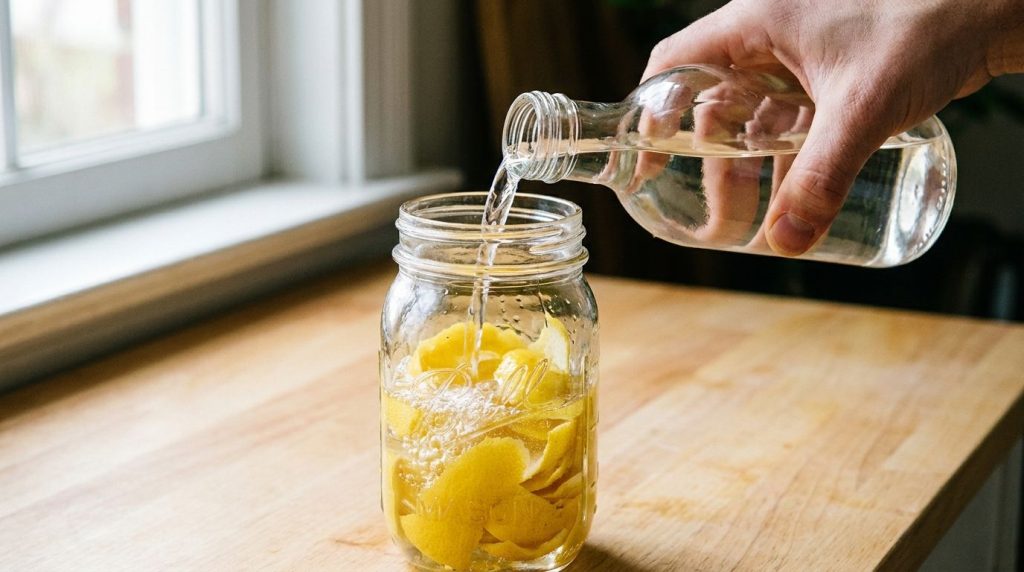 Pour white vinegar over the peels to begin the infusion process.
How to Use
This lemon peel cleaner is incredibly versatile:
- All-Purpose Surface Cleaner: Spray directly onto countertops, sinks, stovetops, and other hard, non-porous surfaces. Wipe clean with a damp cloth.
- Glass and Mirror Cleaner: Dilute the cleaner with an equal part of water for streak-free cleaning of windows and mirrors.
- Floor Cleaner: Add 1/2 cup of cleaner to a bucket of warm water for mopping hard floors.
- Bathroom Cleaner: Effective on tubs, tiles, and toilets to cut through soap scum and deodorize.
- Deodorizer: Spray into trash cans or smelly areas to neutralize odors.
Quick Tip: For stubborn grease spots, let the cleaner sit for a few minutes before wiping.
How Often to Use
You can use this natural cleaner as often as needed for daily clean-ups or weekly deep cleaning. Its non-toxic nature makes it safe for frequent use around children and pets, provided proper patch testing has been done on sensitive surfaces.
How to Buy / How to Choose Ingredients
- Lemons: Opt for organic, unwaxed lemons whenever possible. Waxes on conventional lemons can leave a residue and may not be desirable in your cleaner. If organic isn’t an option, scrub conventional lemons thoroughly with warm water and a brush before peeling.
- White Vinegar: Choose standard distilled white vinegar (5% acidity). Avoid apple cider vinegar as its color and scent can be stronger and less suitable for general cleaning.
Storage
Store your infused lemon vinegar in a tightly sealed glass bottle or jar in a cool, dark place, such as a pantry or cupboard. It does not require refrigeration. A spray bottle with a tight cap is ideal for daily use. Keep it away from direct sunlight, which can degrade the potency over time.
Practical Tips
- Enhance the Scent: For an even more pleasant aroma, add a few sprigs of fresh rosemary, thyme, or lavender to the jar during the infusion process.
- For a Gentle Scrub: Mix a small amount of the liquid cleaner with baking soda to create a paste for extra scrubbing power on tough stains in sinks or tubs.
- Repurpose Peels: After straining, you can even simmer the spent peels again with a little water to create a refreshing stovetop potpourri, squeezing out every last drop of their usefulness.
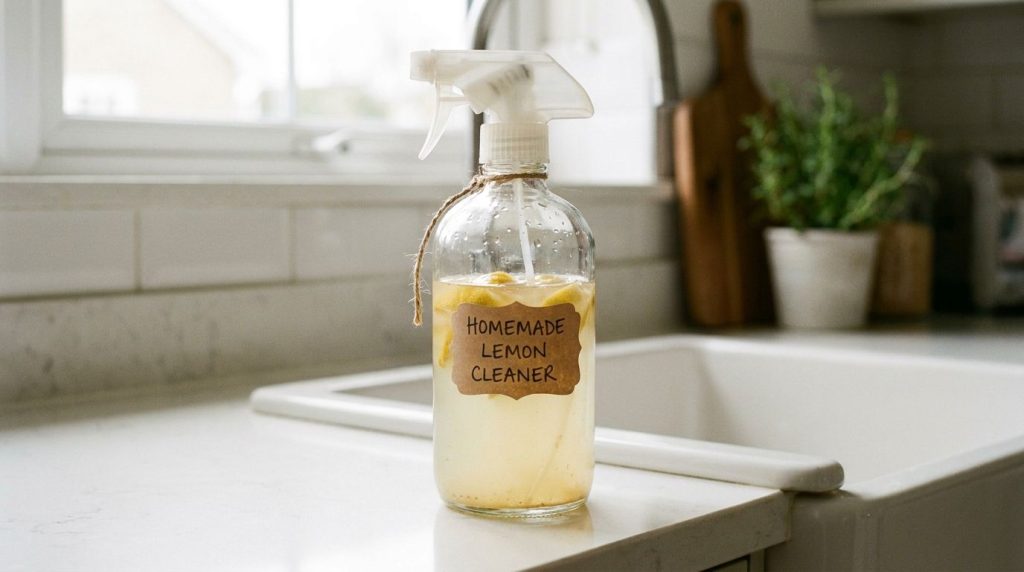 The finished lemon peel cleaner, ready for action in a spray bottle.
Common Mistakes
Avoiding these common pitfalls will ensure you get the best results from your homemade cleaner:
- Using Waxed or Sprayed Lemons: Waxes and pesticides on non-organic lemons can end up in your cleaner, defeating the purpose of a natural solution. Always clean conventional lemons thoroughly or use organic.
- Not Straining Properly: Leaving small pieces of peel in the solution can cause it to spoil faster or clog your spray bottle. Ensure a thorough strain.
- Short Infusion Time: Rushing the steeping process means a weaker cleaner. Give it at least two weeks for optimal potency.
- Storing in Clear Bottles in Sunlight: Exposure to light can break down the beneficial compounds and reduce the cleaner’s effectiveness.
- Using Plastic Containers for Long-Term Storage: While fine for short-term use, glass is generally preferred for long-term storage of vinegar-based solutions as it prevents any potential plastic degradation.
Cautions / Who Should Avoid It
While natural, this cleaner is still acidic due to the vinegar content. Always test a small, inconspicuous area first, especially on:
- Natural Stone: Surfaces like marble, granite, and travertine can be etched by vinegar’s acidity.
- Cast Iron: Vinegar can strip away the seasoning on cast iron.
- Unsealed Grout: Can potentially damage unsealed grout over time.
- Wood: Use with caution on finished wood, as it can dull the finish.
Always dilute the cleaner if you are concerned about acidity or testing on sensitive surfaces. Avoid contact with eyes; if contact occurs, rinse thoroughly with water.
Quick Summary
Transform your cleaning routine by repurposing lemon peels into a powerful, natural all-purpose cleaner. Boil peels in water, cool, then steep them in white vinegar for 2-4 weeks. Strain and bottle. This acidic, aromatic solution is excellent for countertops, glass, and floors, offering a chemical-free clean. Avoid natural stone and cast iron. Store in a cool, dark place in a sealed glass container.
FAQ
Q: Can I use fresh lemon peels without boiling them first?
A: Yes, you can. Boiling helps to soften the peels and extract more oils, resulting in a slightly stronger and more fragrant cleaner, but simply steeping fresh peels in vinegar will also work.
Q: How long does the lemon peel cleaner last?
A: When stored properly in a cool, dark place, your homemade lemon peel cleaner can last for 6-12 months, or even longer.
Q: Will my house smell like vinegar?
A: The strong vinegar smell dissipates as it dries, leaving behind a subtle, fresh lemon scent. The longer the peels infuse, the more the lemon aroma masks the vinegar.
Q: Can I add other essential oils to the cleaner?
A: Yes, you can add a few drops of lemon, orange, tea tree, or lavender essential oil to your strained cleaner for an extra scent boost or added antimicrobial properties.
Q: Is this cleaner safe for all surfaces?
A: No, it is not safe for all surfaces. Avoid using it on natural stone (like marble or granite), cast iron, and unsealed grout due to its acidic nature. Always patch test on a small area first.
Q: What if my cleaner turns cloudy or develops mold?
A: This indicates spoilage. Ensure your jar is clean, the peels are fully submerged in vinegar, and no food particles are left. Discard the batch and start fresh.
Q: Can I use this cleaner to disinfect?
A: While vinegar has disinfectant properties, this homemade cleaner might not meet the strict disinfection standards of commercial products for killing all types of germs. It’s best used as a natural, all-purpose cleaner.
Conclusion
Repurposing lemon peels into a homemade cleaning solution is a simple yet impactful step towards a more sustainable and chemical-free home. Not only do you reduce waste, but you also create a powerful, fresh-scented cleaner that’s effective on various surfaces. Embrace this resourceful method, and experience the satisfaction of a naturally sparkling home, one lemon peel at a time.