6 Delicious Custard Creations: Easy Homemade Dessert Recipes
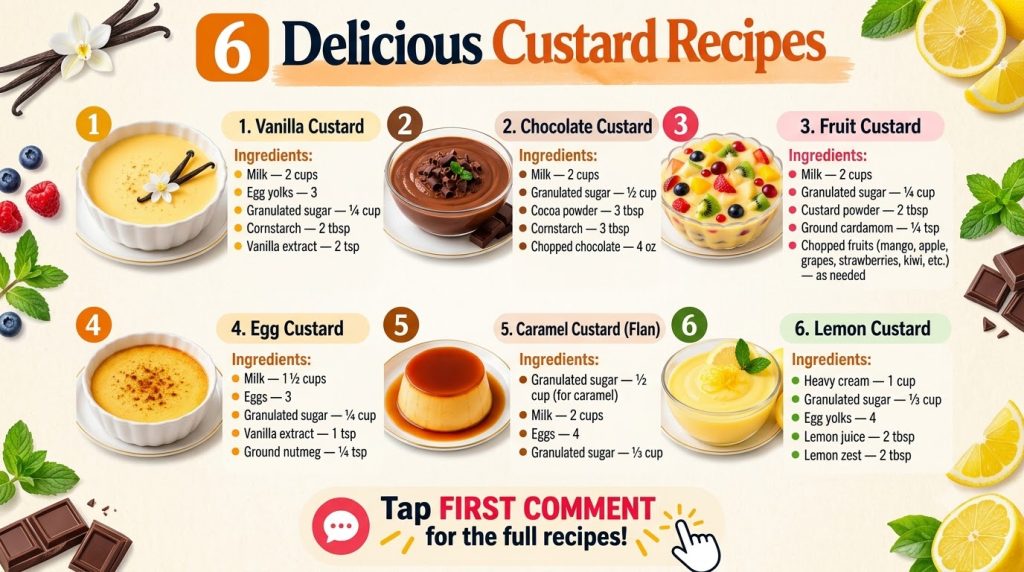
Dive into a world of creamy delights with these delicious custard creations, each offering a unique flavor experience that’s surprisingly simple to achieve at home. From classic vanilla to refreshing lemon and rich chocolate, the versatility of a basic custard base means there’s a perfect treat for every palate and occasion. Get ready to indulge in homemade goodness that will impress your family and friends!
Custard is a timeless dessert, beloved for its smooth, velvety texture and comforting sweetness. This guide will show you how to master a foundational baked custard recipe, then transform it into a variety of incredible desserts with simple additions and garnishes. Whether you’re looking for a sophisticated dessert for a dinner party or a simple sweet treat for a weeknight, these custard creations are sure to hit the spot.
Why You’ll Love These Custard Creations
- Simple Base Recipe: A single, easy-to-follow custard recipe forms the foundation for all variations.
- Versatile Flavors: Easily switch up the flavor profile to create vanilla, lemon, chocolate, and more.
- Elegant Presentation: Custards naturally look sophisticated, especially with minimal garnishes.
- Customizable: Adapt toppings and flavorings to suit any preference or dietary need.
- Family-Friendly: A classic dessert that appeals to all ages.
- Make-Ahead Friendly: Most custards are best served chilled, making them perfect for meal prep or entertaining.
Ingredients for Classic Baked Custard
This recipe provides a foundational baked custard that can be adapted into countless delicious custard creations.
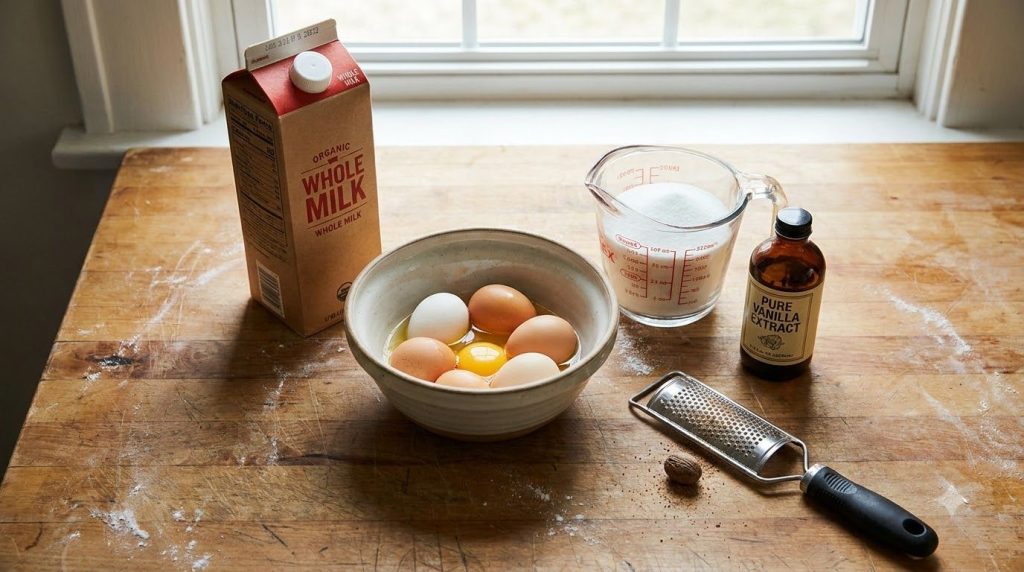
- 2 cups (480 ml) whole milk or half-and-half
- 1/2 cup (100 g) granulated sugar, plus extra for caramelizing (optional)
- 4 large eggs
- 1 teaspoon (5 ml) pure vanilla extract
- Pinch of salt
Ingredient Notes
- Whole Milk or Half-and-Half: For the creamiest, richest custard, whole milk or half-and-half is recommended. Low-fat milk can be used, but the texture may be slightly less luxurious.
- Granulated Sugar: Provides sweetness and helps with the custard’s structure. Adjust to your preferred level of sweetness.
- Eggs: Essential for setting the custard. Use large eggs. For an even richer custard, you can use 2 whole eggs and 2 egg yolks.
- Vanilla Extract: Use good quality pure vanilla extract for the best flavor. This is the base flavor for classic vanilla custard.
Equipment You’ll Need
- Medium saucepan
- Large mixing bowl
- Whisk
- Fine-mesh sieve (optional, for extra smooth custard)
- Four 6-ounce (180 ml) ramekins or oven-safe custard cups
- Baking dish (large enough to hold ramekins)
- Kettle or pot for hot water bath
How to Make Classic Baked Custard
Follow these steps to create a beautifully smooth and creamy baked custard, ready for your favorite variations.
- Preheat Oven & Prepare Water Bath: Preheat your oven to 325°F (160°C). Place the four ramekins in a large baking dish. Bring a kettle of water to a boil.
- Heat the Milk: In a medium saucepan, combine the milk and 1/2 cup of granulated sugar. Heat over medium heat, stirring occasionally, until the sugar dissolves and the milk is hot but not boiling (steam should be rising, and small bubbles may form around the edges). Remove from heat.
- Whisk Eggs: In a large mixing bowl, lightly whisk the eggs with the pinch of salt until just combined. Do not overwhisk, as too much air can cause bubbles in your custard.
- Temper the Eggs: Gradually pour about half of the hot milk mixture into the whisked eggs, whisking constantly to temper the eggs. This prevents the eggs from scrambling. Then, slowly pour the egg mixture back into the remaining hot milk in the saucepan, continuing to whisk until everything is well combined.
- Add Vanilla: Stir in the vanilla extract. For an extra smooth custard, pour the mixture through a fine-mesh sieve into a clean bowl or directly into the ramekins.
- Fill Ramekins: Carefully divide the custard mixture evenly among the prepared ramekins.
- Create Water Bath: Carefully pour the hot water into the baking dish, around the ramekins, until it comes halfway up the sides of the ramekins.
- Bake: Carefully transfer the baking dish to the preheated oven. Bake for 30-40 minutes, or until the custards are just set. They should still have a slight jiggle in the center when gently shaken.
- Cool & Chill: Carefully remove the baking dish from the oven. Let the ramekins cool in the water bath for about 15-20 minutes. Then, remove the ramekins from the water bath and place them on a wire rack to cool completely to room temperature. Once cool, cover each ramekin with plastic wrap and chill in the refrigerator for at least 3-4 hours, or preferably overnight, before serving.
Pro Tips for the Best Results
- Use a Water Bath (Bain-Marie): This is crucial for evenly cooking the custard and preventing it from curdling, cracking, or becoming rubbery. The gentle, moist heat ensures a silky-smooth texture.
- Temper Your Eggs Properly: Slowly adding hot milk to the eggs while whisking is key. If you add the eggs directly to hot milk, they will scramble.
- Don’t Overbake: Custard is done when the edges are set, but the center still has a slight wobble. It will continue to set as it cools. Overbaking leads to a tough, porous texture.
- Strain for Silkiness: For an exceptionally smooth custard, strain the mixture through a fine-mesh sieve before pouring it into ramekins. This removes any tiny bits of cooked egg or chalazae.
- Chill Thoroughly: Custards develop their best flavor and firmest texture when fully chilled. Allow at least 3-4 hours, but overnight is ideal.
- Use Room Temperature Eggs: Room temperature eggs incorporate more easily and evenly into the mixture, contributing to a smoother custard.
Common Mistakes to Avoid
- Scrambled Eggs: Adding eggs directly to hot milk without tempering will cook them too quickly. Always temper by slowly incorporating hot liquid into the eggs first.
- Cracked Custard Tops: This often happens from overbaking or not using a water bath, which causes the custard to dry out too quickly.
- Rubbery Texture: Another sign of overbaking. Keep an eye on the cooking time and look for that slight jiggle in the center.
- Uneven Cooking: Skipping the water bath can lead to edges that are overcooked and a center that is still runny.
- Too Many Bubbles: Overwhisking the eggs can incorporate too much air, leading to a foamy or bubbly texture. Whisk gently, just until combined.
Variations & Substitutions for 6 Delicious Custard Creations
Once you’ve mastered the classic baked custard, the possibilities for delicious custard creations are endless! Here are ideas to inspire your own:
- Classic Vanilla Custard: The base recipe already delivers this. Garnish with a fresh vanilla bean pod or a small edible flower for elegance.
- Rich Chocolate Custard: While heating the milk, whisk in 1/4 cup (25 g) unsweetened cocoa powder until smooth. For an even richer flavor, melt 2 ounces (56 g) of high-quality dark chocolate into the hot milk mixture before tempering the eggs. Garnish with chocolate shavings or a sprinkle of cocoa powder.
- Refreshing Lemon Custard: Add 2 tablespoons (30 ml) of fresh lemon juice and 1 teaspoon of lemon zest to the custard mixture after tempering the eggs. This adds a bright, tangy note. Garnish with fresh lemon zest and a sprig of mint.
- Spiced Custard: Add 1/2 teaspoon of ground cinnamon, nutmeg, or a pumpkin pie spice blend to the milk as it heats. A pinch of ground cardamom also works beautifully. Garnish with a light dusting of your chosen spice.
- Caramel Custard (Creme Caramel/Flan): Before pouring the custard mixture into the ramekins, melt 1/4 cup (50g) of granulated sugar in a saucepan over medium heat, swirling until it turns into an amber caramel. Carefully pour a thin layer of hot caramel into the bottom of each ramekin. Once the custard is chilled and inverted, the caramel will create a glossy sauce.
- Fruit Topped Custard: Serve chilled vanilla or lemon custard with a medley of fresh berries (strawberries, raspberries, blueberries), sliced peaches, or a spoonful of compote.
Serving Suggestions
These custard creations are delightful on their own, but a few simple additions can elevate them further:
- Fresh Berries: A sprinkle of fresh raspberries, blueberries, or sliced strawberries adds a burst of freshness and color.
- Whipped Cream: A dollop of lightly sweetened whipped cream is a classic pairing that enhances the creamy texture.
- Caramel Sauce: A drizzle of homemade or store-bought caramel sauce complements the rich flavor of custard.
- Chocolate Shavings: For chocolate variations, a sprinkle of dark chocolate shavings adds a touch of sophistication.
- Espresso or Coffee: A small cup of espresso or a light coffee can be a wonderful accompaniment to a sweet, creamy custard.
Storage & Reheating
- Refrigerator Storage: Store individual custards covered tightly with plastic wrap in the refrigerator for up to 3-4 days.
- Freezer Suitability: Custards generally do not freeze well, as the texture can become grainy and watery upon thawing. It is best to enjoy them fresh from the refrigerator.
- Reheating: Custards are traditionally served chilled. Reheating is not recommended as it can negatively affect their delicate texture.
FAQ
Can I use different types of milk?
While whole milk or half-and-half yields the best results for richness and texture, you can use 2% milk, or even a plant-based milk like almond or oat milk for a dairy-free option. However, be aware that the final texture may vary.
Why did my custard crack on top?
Cracking usually indicates that the custard was overbaked or cooked at too high a temperature. Using a water bath and closely monitoring the cooking time to avoid overcooking helps prevent this.
Can I make these custards ahead of time?
Absolutely! Custards are best when thoroughly chilled, so making them a day in advance is perfect for entertaining or meal prepping. Just ensure they are tightly covered and refrigerated.
How do I know when the custard is done?
The custard is done when the edges are set, but the center still has a slight, delicate jiggle when you gently shake the ramekin. A knife inserted near the edge should come out clean, but a knife inserted into the very center might still have a little wet custard on it.
Can I make a large batch of custard in one dish?
Yes, you can make a large custard in a baking dish (like a 9×13 inch pan) instead of individual ramekins. Adjust the baking time accordingly, as it will likely be longer, and ensure it’s still cooked in a water bath.
What can I substitute for vanilla extract?
If you don’t have vanilla extract, you can use vanilla bean paste for a more intense vanilla flavor, or simply omit it for a neutral base to build other flavors upon. Other extracts like almond or coconut can also be used for different flavor profiles.
Recipe Card
Recipe Name: Classic Baked Custard
Short Description: A versatile base recipe for creamy, silky-smooth baked custard, perfect for making various delicious creations.
Prep Time: 15 minutes
Cook Time: 30-40 minutes
Total Time: 45-55 minutes (plus 3-4 hours chilling)
Servings: 4
Course: Dessert
Cuisine: American
Cooking Method: Baking (with water bath)
Ingredients:
- 2 cups (480 ml) whole milk or half-and-half
- 1/2 cup (100 g) granulated sugar
- 4 large eggs
- 1 teaspoon (5 ml) pure vanilla extract
- Pinch of salt
Instructions:
- Preheat your oven to 325°F (160°C). Place four 6-ounce (180 ml) ramekins in a large baking dish. Bring a kettle of water to a boil.
- In a medium saucepan, combine the milk and 1/2 cup of granulated sugar. Heat over medium heat, stirring occasionally, until the sugar dissolves and the milk is hot but not boiling. Remove from heat.
- In a large mixing bowl, lightly whisk the eggs with the pinch of salt until just combined.
- Gradually pour about half of the hot milk mixture into the whisked eggs, whisking constantly to temper the eggs. Then, slowly pour the egg mixture back into the remaining hot milk in the saucepan, continuing to whisk until well combined.
- Stir in the vanilla extract. For extra smoothness, pour the mixture through a fine-mesh sieve into the ramekins.
- Carefully divide the custard mixture evenly among the prepared ramekins.
- Carefully pour the hot water into the baking dish, around the ramekins, until it comes halfway up the sides of the ramekins.
- Carefully transfer the baking dish to the preheated oven. Bake for 30-40 minutes, or until the custards are just set with a slight jiggle in the center.
- Remove from oven. Let cool in the water bath for 15-20 minutes, then remove ramekins to a wire rack to cool completely. Cover and chill in the refrigerator for at least 3-4 hours, or overnight, before serving.
Notes: This recipe provides a basic custard. See the “Variations & Substitutions” section above for ideas to create different flavors like chocolate, lemon, spiced, or caramel custards.
Storage: Store covered in the refrigerator for up to 3-4 days. Not suitable for freezing.
Nutrition: Nutrition information is an estimate and may vary depending on the ingredients and brands used.