Imagine transforming a small patio, balcony, or even a sunny corner of your living room into a lush, vibrant green space. Vertical gardening with climbing vines is an incredibly effective way to do just that, adding dramatic height, rich foliage, and stunning blooms without taking up precious ground space. Whether you dream of a wall adorned with fragrant blossoms or a trellis overflowing with edible delights, container-grown climbers make it possible. They bring life upwards, enhance privacy, and create a sense of enclosure and beauty that truly elevates your outdoor or indoor oasis.
This guide will introduce you to 16 remarkable climbing vines, each suited for container life, offering practical tips to help you choose the right plant, provide the best care, and enjoy a thriving vertical garden. Let’s explore how to bring this green magic into your home and garden!
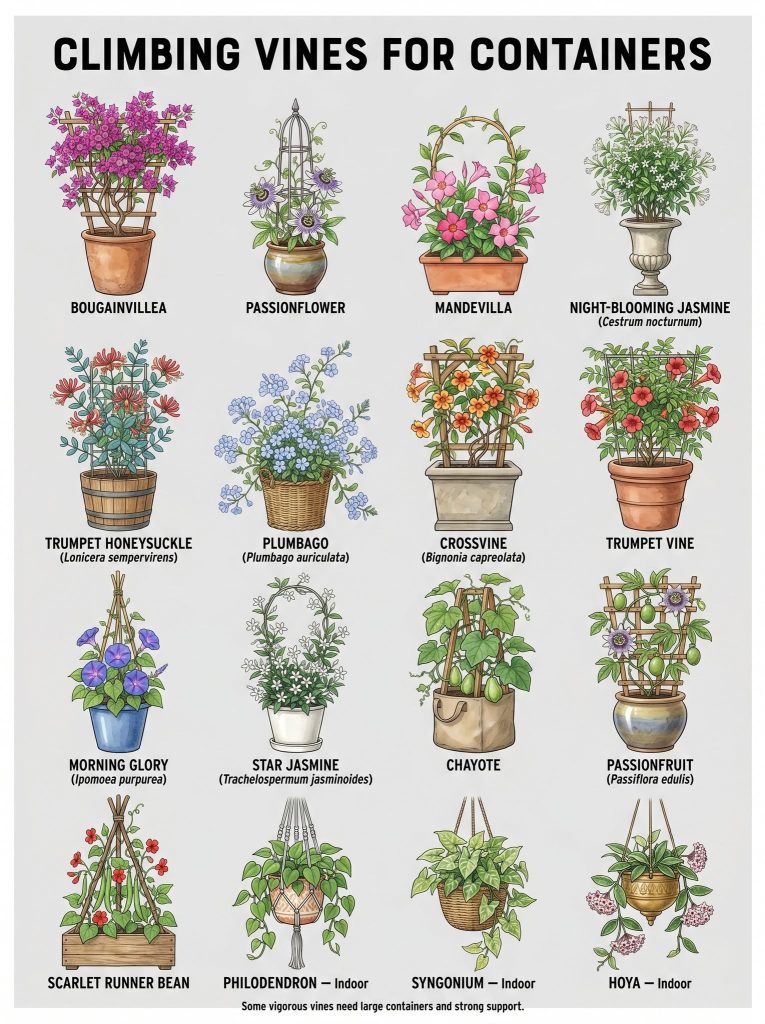 Discover the perfect climbing vine to add vertical charm to your potted garden.
The Art of Container Vertical Gardening
Growing climbing plants in containers offers flexibility and control that in-ground planting sometimes lacks. You can move plants to optimize sunlight, protect them from harsh weather, or simply rearrange your display. The key to success lies in understanding the specific needs of each vine, especially regarding container size, soil, and support.
- Container Size: Vigorous vines need ample root room. A good rule of thumb is to start with a pot at least 15-20 inches in diameter for most climbers, increasing the size as the plant grows.
- Drainage: Excellent drainage is crucial. Ensure your containers have drainage holes and use a well-draining potting mix, possibly amended with perlite or coarse sand.
- Support: From trellises and obelisks to stakes and moss poles, climbers need something to cling to or twine around. Install support at planting time to avoid damaging roots later.
- Watering & Feeding: Container plants dry out faster than in-ground plants and rely entirely on you for nutrients. Regular watering and consistent feeding during the growing season are essential.
Meet Your Container Climbing Companions
Here are 16 fantastic climbing plants that thrive in pots, bringing beauty and interest to any space:
1. Mandevilla (Mandevilla sanderi)
A tropical beauty with trumpet-shaped flowers in shades of pink, red, and white. Mandevilla (often sold as Dipladenia, a close relative) thrives in warm climates and full sun. It’s a gorgeous choice for patios and can be overwintered indoors in cooler zones.
- Hardiness: Zones 9-11 (perennial), often grown as an annual elsewhere or brought indoors.
- Exposure: Full sun to partial shade (prefers morning sun in hot climates).
- Height: 3-10 feet, depending on cultivar and support.
- Care Tip: Prune in early spring to encourage bushier growth and more blooms.
2. Bougainvillea (Bougainvillea spectabilis)
Known for its vibrant, papery bracts that surround tiny white flowers. Bougainvillea is a showstopper in hot, sunny conditions. It’s quite vigorous and thorny, so choose a large, sturdy container and provide strong support.
- Hardiness: Zones 9-11 (perennial), often grown as an annual or houseplant in cooler regions.
- Exposure: Full sun (at least 6 hours).
- Height: 10-30 feet if left unsupported, but easily managed in containers to 3-8 feet.
- Care Tip: Allow the soil to dry slightly between waterings to encourage more prolific flowering.
3. Hoya (Hoya carnosa, Wax Plant)
With its thick, waxy leaves and clusters of star-shaped, fragrant flowers, Hoya is a beloved houseplant and a gentle climber. It’s slow-growing and perfect for smaller containers or hanging baskets where it can trail or be trained up a small support.
- Hardiness: Zones 10-11 (outdoors), typically grown indoors.
- Exposure: Bright, indirect light.
- Height: 2-6 feet.
- Care Tip: Let the soil dry out completely between waterings, especially in winter.
4. Passionfruit (Passiflora edulis)
These exotic vines boast incredibly intricate flowers and, if pollinated, delicious fruit. Passionfruit is a vigorous grower that needs a large pot and a strong trellis to support its growth and potential fruit yield.
- Hardiness: Zones 9-11 (perennial for fruit), some species are hardier.
- Exposure: Full sun.
- Height: 10-20 feet.
- Care Tip: Provide consistent moisture and nutrients during the growing season to support flowering and fruiting.
5. Clematis (Clematis florida)
A classic garden favorite, Clematis offers a wide range of flower shapes, sizes, and colors. Many varieties are suitable for containers, especially the compact types. They prefer ‘cool feet’ – shaded roots – so consider placing smaller plants around the base of the container or mulching heavily.
- Hardiness: Zones 4-9, depending on the species/cultivar.
- Exposure: Full sun to partial shade (flowers in sun, roots in shade).
- Height: 3-10 feet, depending on variety.
- Care Tip: Prune according to the specific clematis group (early, mid, or late flowering) for best results.
6. Jasmine (Jasminum polyanthum)
Known for its intoxicatingly fragrant white flowers, particularly in late winter to early spring. This vigorous jasmine needs a sturdy support and can be a beautiful choice for a container near an entryway or window where its scent can be appreciated.
- Hardiness: Zones 8-10 (perennial).
- Exposure: Full sun to partial shade.
- Height: 10-20 feet, can be kept smaller in containers.
- Care Tip: Prune after flowering to maintain shape and encourage new growth.
7. Morning Glory (Ipomoea purpurea)
These annual vines produce beautiful trumpet-shaped flowers that open in the morning and close in the afternoon. They are fast-growing and provide quick color and privacy on a trellis or obelisk, perfect for a single season of enjoyment.
- Hardiness: Grown as an annual in all zones.
- Exposure: Full sun.
- Height: 6-10 feet.
- Care Tip: Sow seeds directly in the container after all danger of frost has passed. Nicking the seed coat or soaking seeds overnight can improve germination.
8. Philodendron (Philodendron hederaceum, Heartleaf Philodendron)
A popular houseplant with glossy, heart-shaped green leaves. While it often trails in hanging baskets, it will readily climb a moss pole or small trellis, especially when its aerial roots can cling. It thrives in indoor conditions and can add a lush, tropical feel.
- Hardiness: Zones 10-11 (outdoors), primarily an indoor plant.
- Exposure: Bright, indirect light to low light.
- Height: Vining stems can reach 10 feet or more.
- Care Tip: Water when the top inch of soil feels dry. Increase humidity for larger leaves and better climbing.
9. Potato Vine (Solanum jasminoides)
Also known as Jasmine Nightshade, this vigorous semi-evergreen vine produces clusters of delicate white, star-shaped flowers throughout the summer. It grows quickly and needs robust support in a large container. Keep it well-fed and watered.
- Hardiness: Zones 9-11 (perennial), grown as an annual or container plant in colder zones.
- Exposure: Full sun to partial shade.
- Height: 10-20 feet.
- Care Tip: Regular pruning helps control its size and encourages more blooms.
10. Trumpet Vine (Campsis radicans)
This bold vine offers spectacular orange or red trumpet-shaped flowers that attract hummingbirds. However, be warned: Trumpet Vine is extremely vigorous and can be invasive in many regions of the U.S. If growing in a container, choose a very large, sturdy pot and provide exceptionally strong support. Regular pruning is essential to manage its aggressive growth and prevent it from escaping the container.
- Hardiness: Zones 4-9.
- Exposure: Full sun.
- Height: 20-40 feet.
- Care Tip: Prune aggressively in late winter or early spring to control size and remove unwanted shoots.
11. Star Jasmine (Trachelospermum jasminoides)
A beautiful evergreen vine with glossy, dark green leaves and highly fragrant, star-shaped white flowers. Star Jasmine offers year-round appeal and is a more manageable, less aggressive alternative to some other vigorous jasmines, making it excellent for containers with a fan or grid trellis.
- Hardiness: Zones 8-10.
- Exposure: Full sun to partial shade.
- Height: 3-6 feet in containers, potentially up to 20 feet in ideal conditions.
- Care Tip: Water regularly during dry spells, especially in containers, to keep the foliage lush.
12. Hyacinth Bean (Lablab purpureus)
An ornamental and edible annual vine, Hyacinth Bean features attractive purple stems, leaves, and striking purple-pink flowers, followed by glossy, bright purple seed pods. It’s a fast grower that adds unique color and texture, needing strong support for its substantial growth.
- Hardiness: Grown as an annual in all zones.
- Exposure: Full sun.
- Height: 10-15 feet.
- Care Tip: The young leaves, flowers, and immature pods are edible after cooking; mature beans require extensive processing.
13. Sweet Pea (Lathyrus odoratus)
Beloved for their delicate, fragrant flowers, sweet peas are annuals that add romantic charm to any container. They thrive in cool weather and need something slender to twine around, like a pea netting, thin trellis, or stakes. Succession plant for continuous blooms.
- Hardiness: Grown as an annual.
- Exposure: Full sun.
- Height: 5-8 feet.
- Care Tip: Provide consistent moisture and deadhead spent blooms to encourage more flowering.
14. Nasturtium (Tropaeolum majus)
While often seen as a sprawling plant, many nasturtium varieties are vining and can be trained up small supports or allowed to cascade beautifully from a container. Their vibrant edible flowers and peppery leaves are a fantastic addition to salads. They are easy to grow from seed.
- Hardiness: Grown as an annual.
- Exposure: Full sun to partial shade.
- Height: Vining types can reach 3-10 feet.
- Care Tip: Avoid over-fertilizing, as this encourages foliage growth over flowering.
15. Black-Eyed Susan Vine (Thunbergia alata)
A cheerful annual vine featuring bright orange, yellow, or white flowers with distinctive dark centers. It’s a moderate climber, perfect for hanging baskets where it can trail, or for small trellises in containers, bringing a sunny disposition to any spot.
- Hardiness: Grown as an annual in most zones, perennial in Zones 10-11.
- Exposure: Full sun to partial shade.
- Height: 3-8 feet.
- Care Tip: Pinch back young plants to encourage bushier growth and more flowers.
16. Chayote (Sechium edule)
This vigorous, edible gourd vine is a productive choice for a large container and strong, tall support. Its light green, pear-shaped fruits are a staple in many cuisines. It grows quickly and requires significant space and nutrients to thrive, acting as an annual in most U.S. climates.
- Hardiness: Zones 9-11 (perennial), grown as an annual elsewhere.
- Exposure: Full sun.
- Height: 20-30 feet.
- Care Tip: Provide a deep, rich potting mix and consistent watering for the best fruit production.
Common Mistakes to Avoid with Container Vines
Even experienced gardeners can stumble. Here’s how to prevent common issues:
- Under-sizing the Container: Too small a pot restricts root growth, leading to stunted plants and poor performance. Always err on the side of larger containers for vigorous vines.
- Insufficient Support: Vines need something to climb from day one. Installing support later can damage roots. Ensure the support is strong enough for the mature plant’s weight.
- Inconsistent Watering: Container plants dry out faster. Check soil moisture daily, especially during hot, windy weather, and water thoroughly until it drains from the bottom.
- Ignoring Plant Vigor: Some vines, like Trumpet Vine and Chayote, are incredibly aggressive. Understand their growth habit and prune regularly to keep them contained and healthy.
- Poor Drainage: Soggy soil leads to root rot. Always use pots with drainage holes and a suitable potting mix.
- Lack of Nutrients: Container soil loses nutrients quickly. Fertilize regularly with a balanced liquid fertilizer during the growing season as per product instructions.
Regional and Seasonal Considerations for U.S. Gardeners
The vast climates across the United States mean that a perennial in Zone 9 might be an annual in Zone 5 or a beloved houseplant indoors. Always check your local USDA Hardiness Zone:
- Zones 3-5 (Cooler Climates): Most tropical vines (Mandevilla, Bougainvillea, Passionfruit) are best treated as annuals or brought indoors before the first frost. Cold-hardy Clematis and Sweet Peas will thrive during the growing season.
- Zones 6-8 (Temperate Climates): Many vines listed, like Clematis, some Jasmines, and Potato Vine, will be perennial. You can often overwinter more tender plants with protection or by moving them to a sheltered location.
- Zones 9-11 (Warm Climates): Most of these vines are true perennials, enjoying long growing seasons. Be mindful of summer heat, providing afternoon shade for plants that prefer it.
For annuals like Morning Glory, Hyacinth Bean, Sweet Pea, Nasturtium, and Black-Eyed Susan Vine, planting time is crucial. Sow seeds or transplant after all danger of frost has passed and soil temperatures have warmed up, typically late spring in most regions.
Cultivate Your Vertical Oasis
Embracing climbing vines in containers opens up a world of possibilities for maximizing your garden space and enhancing its beauty. By providing the right container, sturdy support, and consistent care, you can enjoy an abundance of flowers, foliage, and even fresh produce right outside your door or inside your home. Take these practical tips, observe your plants, and let your gardening journey inspire you. Happy climbing!