There’s nothing quite like the taste of a fresh, juicy mango, especially when you’ve grown it yourself! While growing a mango tree (Mangifera indica) at home requires a bit of patience, the sweet rewards are absolutely worth it. If you’ve ever dreamt of harvesting your own tropical fruit, this comprehensive guide will walk you through the complete mango growing timeline, from a tiny seed to abundant fruit.
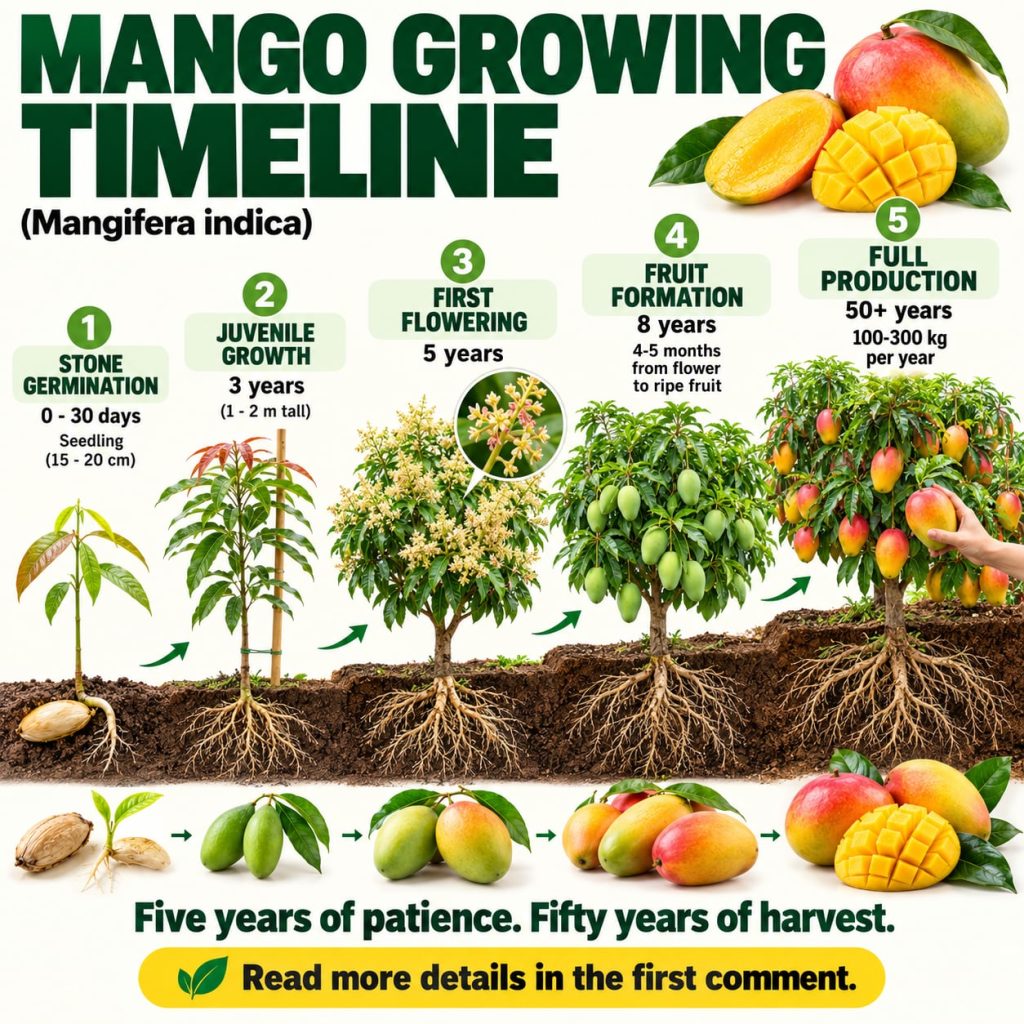
The Journey Begins: From Stone to Sprout (Week 1 – Month 3)
Your mango growing adventure starts with a single seed, or ‘stone’. While you can buy grafted saplings, growing from a seed is an incredibly rewarding experience. First, enjoy a delicious mango! Then, carefully clean the large, flat seed and gently remove its outer husk to reveal the kidney-bean-shaped kernel inside. This kernel is what you’ll plant.
Germination Tips:
- Preparation: Soak the peeled kernel in water for a few hours.
- Planting Medium: Plant it in a well-draining pot filled with rich, organic potting mix. Bury the seed about 1 inch deep with the concave (curved in) edge facing downwards.
- Environment: Place the pot in a warm, sunny spot. Keep the soil consistently moist but not waterlogged.
- Patience is Key: Germination can take anywhere from a few weeks to a couple of months. Don’t be discouraged if it takes time; eventually, you’ll see a shoot emerge!
The Young Sapling: Nurturing Growth (Months 3 – Year 3)
Once your seed has sprouted and developed a few true leaves, you have a young mango sapling. This stage is crucial for establishing strong roots and healthy foliage.
Caring for Your Young Tree:
- Sunlight: Mango trees absolutely love sunshine! Provide at least 6-8 hours of direct sunlight daily. If growing indoors, place it near a south-facing window or use grow lights.
- Watering: Water regularly, allowing the top inch or two of soil to dry out between waterings. Young trees are sensitive to overwatering.
- Repotting: As your sapling grows, you’ll need to repot it into progressively larger containers. Look for signs of roots circling the bottom of the pot.
- Fertilization: Begin feeding with a balanced, slow-release fertilizer designed for fruit trees after about 6 months, following package instructions.
- Pruning: Lightly prune to encourage a bushy growth habit and strong structure. Remove any weak or crossing branches.
Maturing Tree: Preparing for Fruit (Years 3 – 5+)
Around 3 to 5 years (or sometimes longer depending on variety and conditions), your mango tree will start to mature. This is the exciting stage where you can anticipate its first blooms and, hopefully, its first fruits!
Encouraging Fruiting:
- Soil Health: Ensure your soil is well-draining and rich in organic matter. Mangoes prefer slightly acidic to neutral soil (pH 6.0-7.0).
- Climate: Mangoes thrive in warm, subtropical to tropical climates. They can be sensitive to frost, so protect young trees in colder temperatures.
- Fertilization: Continue with a balanced fertilizer, switching to one with higher phosphorus and potassium once flowering begins to encourage fruit production.
- Pest and Disease Management: Keep an eye out for common pests like aphids or mealybugs, and address them promptly with organic solutions if possible. Healthy trees are more resilient.
- Space: If growing in the ground, remember that mature mango trees can grow quite large (up to 30-60 feet tall!). Choose a spacious location. For container growers, root pruning and regular repotting are essential.
Fruiting Abundantly: The Harvest Season (Years 5+ Annually)
Once your mango tree starts producing, you can look forward to an annual harvest. This is where your patience truly pays off!
Understanding the Harvest:
- Flowering: Mango trees produce clusters of small, fragrant flowers. Not all flowers will set fruit, but a healthy tree will produce many.
- Fruit Development: After flowering, small mangoes will begin to form. It takes several months for them to grow to full size.
- Annual Yield: A mature, healthy tree can produce hundreds of mangoes in a good year, with yields increasing as the tree ages.
The Sweet Reward: Ripening and Enjoying Your Mangoes
Knowing when to pick and how to ripen your mangoes is crucial for the best flavor.
Harvesting and Ripening:
- When to Pick: Mangoes are typically ready for harvest when their color starts to change (from green to yellow, orange, or red, depending on the variety), and the fruit feels slightly softer. A good indicator is when a few start to fall naturally from the tree.
- How to Pick: Gently twist the mango off the branch. Avoid pulling too hard, which can damage the fruit or the tree.
- Ripening Indoors: Most mangoes benefit from ripening off the tree. Place them on your counter at room temperature. You can speed up the process by placing them in a paper bag with an apple or banana, which release ethylene gas.
- Enjoy! Once soft to the touch and fragrant, your home-grown mangoes are ready to be savored.
Growing a mango tree is a journey of dedication, but the joy of biting into a perfectly ripe, home-grown mango is an experience every gardener should have. With these tips and a little tender loving care, you’ll be well on your way to a bountiful home harvest. Happy gardening!