Dreaming of fresh, sweet papayas picked right from your own garden? While often associated with tropical climates, growing papayas can be a rewarding experience for many home gardeners, even those in cooler regions with a bit of extra care! Imagine slicing into a juicy, sun-ripened papaya, knowing you nurtured it from a tiny seed. It’s entirely possible, and we’re here to guide you through every step of the journey.
Papayas (Carica papaya) are fast-growing, fruit-bearing plants known for their delicious fruit and ornamental value. From germination to your first harvest, the process typically takes about 9-12 months. Ready to embark on this exciting gardening adventure?
Why Grow Papayas in Your Home Garden?
Beyond the undeniable joy of harvesting your own food, growing papayas offers several benefits:
- Freshness and Flavor: Nothing beats the taste of a homegrown papaya, ripened naturally on the plant.
- Nutritional Value: Papayas are packed with vitamins A and C, fiber, and powerful antioxidants.
- Tropical Vibe: Their large, palmate leaves and vibrant fruits bring a touch of the tropics to any garden or patio.
- A Rewarding Challenge: For those who love learning new gardening techniques, growing a tropical fruit is a fantastic project.
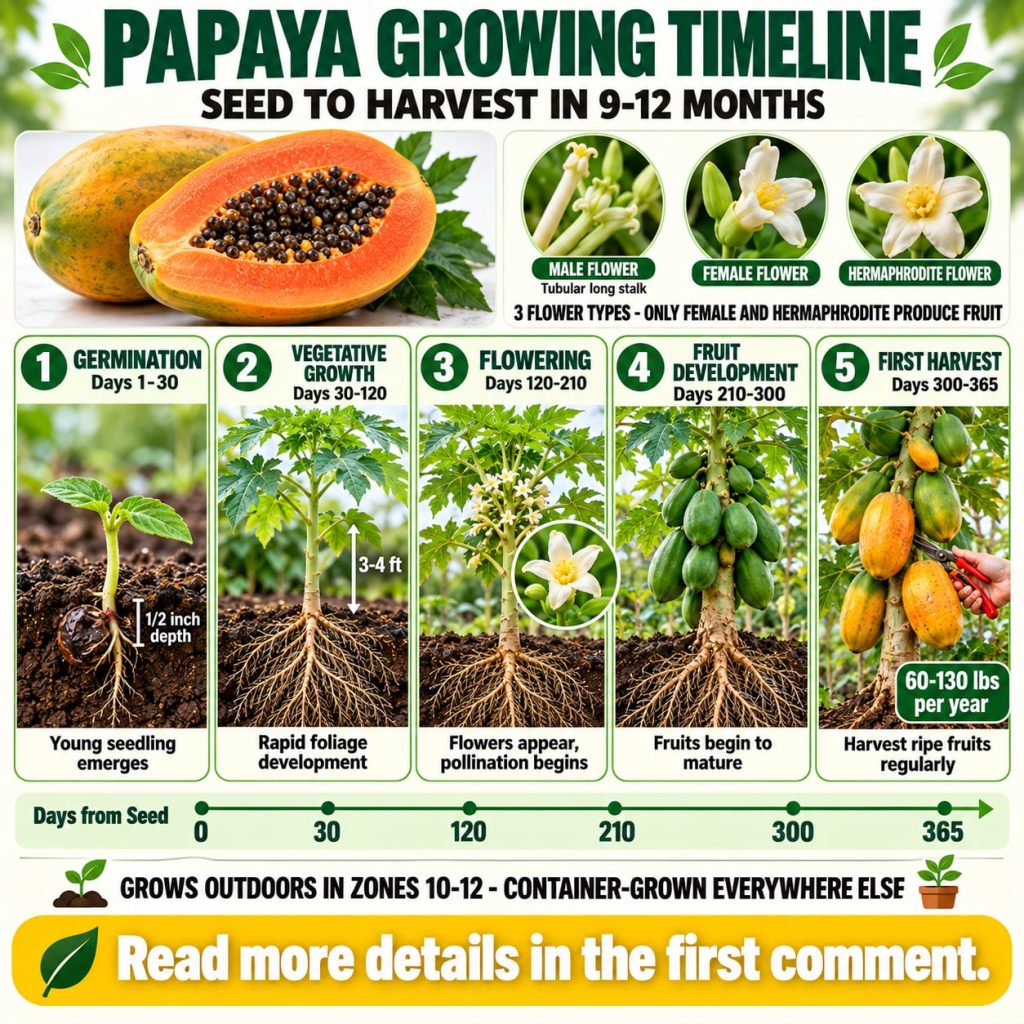
Understanding Papaya Flowers: The Key to Fruiting
Before diving into the timeline, it’s essential to understand papaya flowers, as they dictate whether your plant will produce fruit. Papayas can have male, female, or hermaphrodite flowers:
- Male Flowers: Long, pendulous stalks with many small flowers. They produce pollen but no fruit.
- Female Flowers: Large, solitary flowers close to the stem, with a prominent ovary. They need pollen from a male or hermaphrodite plant to produce fruit.
- Hermaphrodite Flowers: Contain both male and female parts, allowing for self-pollination and fruit production. These are often preferred by home gardeners as a single plant can yield fruit.
Most commercial seeds are from hermaphrodite plants, but if you’re unsure, planting several seeds increases your chances of getting a fruit-bearing plant.
The Papaya Growing Timeline: Seed to Harvest
Here’s a detailed breakdown of the papaya growth stages, typically spanning 9 to 12 months:
Stage 1: Germination (Days 0-21)
Your journey begins with selecting good quality seeds, ideally from a ripe, healthy papaya. Wash the seeds to remove any pulp and allow them to air dry. Some gardeners gently rub off the gelatinous coating (sarcotesta) around the seeds, which can inhibit germination.
- Planting: Plant seeds about 0.5 inches deep in well-draining potting mix, spacing them a few inches apart.
- Conditions: Keep the soil consistently moist and warm (ideally 70-80°F / 21-27°C). A seed-starting tray with a humidity dome or plastic wrap can help maintain moisture.
- Emergence: You should see seedlings emerge within 10-21 days.
Stage 2: Vegetative Growth (Days 21-120)
Once seedlings have developed a few true leaves, thin them to the strongest plants, or carefully transplant them into larger pots (at least 1-gallon). During this phase, the plant focuses on developing its robust stem and large, lush leaves.
- Sunlight: Papayas need full sun, at least 6-8 hours daily.
- Watering: Water regularly, keeping the soil moist but not waterlogged. Good drainage is crucial to prevent root rot.
- Nutrients: Begin feeding with a balanced liquid fertilizer diluted to half strength every 2-4 weeks.
- Growth: Plants can reach several feet in height during this period, developing a strong central trunk.
Stage 3: Flowering (Days 120-180)
Around 4-6 months after planting, your papaya plants should start to produce flowers. This is an exciting time as you can begin to identify the sex of your plants if you didn’t start with known hermaphrodite seeds.
- Identification: Observe the flowers closely to determine if they are male, female, or hermaphrodite. You may need to wait for a few flowers to fully develop.
- Pollination: If you have female plants, ensure there’s a male or hermaphrodite nearby for pollination (or hand-pollinate if necessary). Hermaphrodite plants will self-pollinate.
- Environment: Continue consistent watering and feeding to support flower and future fruit development.
Stage 4: Fruit Development (Days 180-270)
After successful pollination, you’ll see small fruits begin to form behind the flowers. This stage requires consistent care to ensure healthy fruit growth.
- Fertilization: Switch to a fertilizer higher in phosphorus and potassium to support fruit development.
- Watering: Maintain consistent moisture levels, especially as fruits begin to swell.
- Support: As fruits grow, their weight can become substantial. If necessary, provide staking or support to the branches to prevent breakage.
- Pest & Disease Watch: Keep an eye out for common papaya pests like spider mites or fruit flies, and address them promptly with organic solutions.
Stage 5: First Harvest (Days 270-365)
By 9-12 months, your papayas should be ready for their first harvest! The yield can be impressive, with plants potentially producing 60-130 pounds of fruit per year under ideal conditions.
- Ripeness: Papayas are ready to harvest when their skin begins to turn yellow or orange. They should still be firm but yield slightly to gentle pressure.
- Harvesting: Gently twist or cut the fruit from the tree, leaving a small stem attached.
- Enjoy: Bring your homegrown tropical treat indoors and let it ripen further at room temperature if needed, until fully colored and fragrant.
Essential Tips for Papaya Growing Success
- Growing Zones: Papayas grow outdoors year-round in USDA Zones 10-12. In cooler climates, they can be grown in containers and brought indoors during colder months.
- Sunlight: Full sun is non-negotiable for healthy growth and fruit production.
- Soil: Well-draining, fertile soil rich in organic matter is ideal. A slightly acidic to neutral pH (6.0-7.0) is best.
- Watering: Consistent moisture is key, especially during flowering and fruiting. Avoid waterlogging, which can lead to root rot.
- Protection: Protect young plants from strong winds, and ensure adequate airflow to prevent fungal issues.
Growing papayas from seed to harvest is a journey of patience and delight. With this detailed timeline and a little bit of care, you’ll be enjoying your own homegrown tropical fruits in no time. Happy gardening!