Imagine a vibrant indoor oasis, where lush foliage and sometimes even delicate blooms emerge from simple glass vessels, their roots gracefully suspended in water. This isn’t just a dream for seasoned gardeners; it’s a surprisingly accessible method for anyone seeking to bring more green serenity into their home. Growing plants in water, often called hydroculture or water propagation, offers a clean, elegant, and often low-maintenance alternative to traditional soil gardening, revealing the fascinating beauty of a plant’s hidden root system.
If you’ve ever felt intimidated by soil-borne pests, messy repotting, or simply wanted a unique display, water growing might be your perfect solution. It’s an excellent way to start new plants, refresh your living spaces, or simply marvel at nature’s resilience. This guide will walk you through nine fantastic plants that can thrive and even bloom when grown in water, along with practical tips to ensure their success.
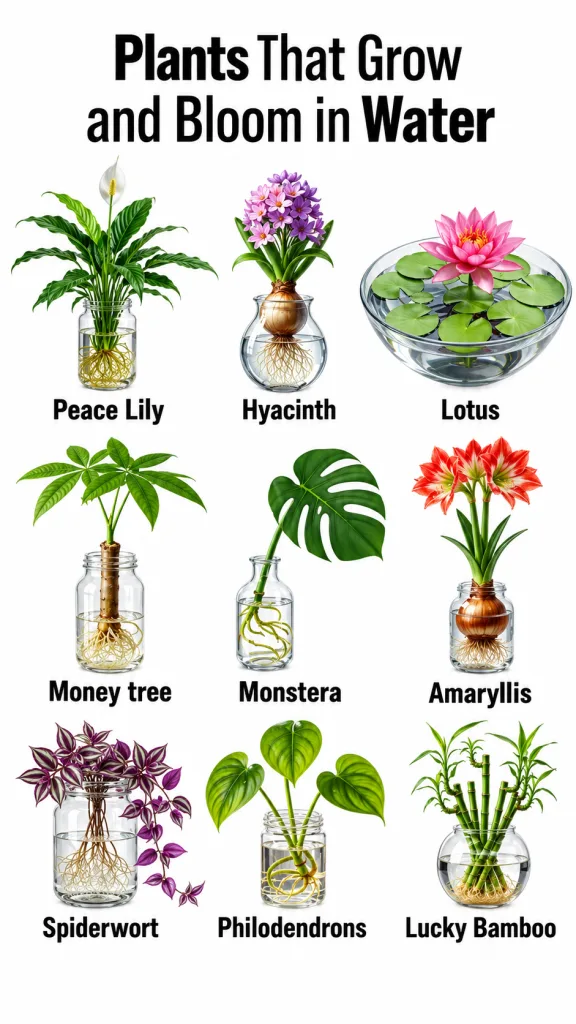 Witness the elegant simplicity of plants thriving in water, showcasing their vibrant foliage and graceful roots.
The Art of Hydroculture: Growing Plants in Water
The principle behind growing plants in water is straightforward: provide them with water, light, and occasional nutrients. While some plants are perfectly suited for long-term hydroculture, others are best for propagation or temporary display before being moved to soil. The key is to understand each plant’s specific needs and provide consistent care, primarily by regularly refreshing the water to prevent stagnation and introducing a liquid fertilizer formulated for hydroponics every few weeks.
Peace Lily (Spathiphyllum)
The Peace Lily is renowned for its elegant white spathes (modified leaves) and lush green foliage. It’s an excellent candidate for water growing and makes a sophisticated indoor plant.
- Plant type: Tropical perennial, grown as a houseplant.
- Exposure: Low to medium indirect light. Direct sun can scorch leaves.
- Care tip: Ensure the crown of the plant (where stems emerge) is above the water line to prevent rot. Change water weekly.
- Warning: While Peace Lilies thrive in water, blooming may be less frequent or robust compared to soil-grown counterparts without consistent hydroponic nutrient feeding.
Hyacinth (Hyacinthus orientalis)
Hyacinths are beloved for their intensely fragrant, colorful flower spikes. Growing them in water is a classic way to force indoor blooms, especially during winter.
- Plant type: Bulbous perennial, typically forced as an annual indoors.
- Exposure: Bright, indirect light once roots form and sprout.
- Propagation: Place the bulb in a special hyacinth glass or narrow-necked vase so only the base touches the water. Keep in a cool, dark place (like a closet) for 6-8 weeks until roots develop and a shoot appears, then move to light.
- Care tip: Use non-chlorinated water. Once bloomed, these bulbs are often discarded or planted outdoors in suitable zones (4-8) for a chance to re-bloom next year, as water forcing depletes their energy.
Lotus (Nelumbo nucifera)
The Lotus is an iconic aquatic plant known for its stunning, large flowers and distinctive seed pods. While beautiful, growing a Lotus ‘in water’ as a houseplant is more complex than it appears.
- Plant type: Aquatic perennial.
- Exposure: Full sun (at least 6 hours direct light).
- Care tip: True lotus growth requires a large container with a soil base (heavy clay loam) submerged in water. The method shown in the image is typically for germinating seeds or very short-term display of roots, not for long-term growth and blooming.
- Warning: Do not expect a large, blooming lotus from just roots in a clear glass of water. It’s a pond plant requiring substantial substrate and space.
Money Tree (Pachira aquatica)
The Money Tree, often seen with a braided trunk, is a symbol of good luck. While it can root in water, it’s generally a temporary propagation method rather than a long-term growing solution.
- Plant type: Tropical tree, grown as a houseplant.
- Exposure: Bright, indirect light.
- Propagation: Cuttings can root in water. Once a robust root system has developed, transfer the cutting to a well-draining soil mix for best long-term growth.
- Care tip: Change the water every few days to keep it fresh and prevent bacterial growth on the young roots.
- Warning: Money trees grown long-term in only water will struggle to thrive and are unlikely to bloom, as they require nutrients found in soil or a dedicated hydroponic system.
Monstera (Monstera deliciosa)
Monsteras, with their dramatic fenestrated leaves, are extremely popular houseplants. They root readily in water and can be maintained in water for extended periods, making them ideal for a statement piece.
- Plant type: Tropical vine, grown as a houseplant.
- Exposure: Bright, indirect light.
- Propagation: Take stem cuttings with at least one node and an aerial root if possible. Submerge the node in water.
- Care tip: Provide a support stake if you want your Monstera to grow larger leaves, as they naturally climb. Replenish water weekly, and consider adding liquid plant food quarterly.
Amaryllis (Hippeastrum)
Amaryllis bulbs produce spectacular, large, trumpet-shaped flowers. Like hyacinths, they are frequently forced to bloom indoors in water.
- Plant type: Bulbous perennial, typically forced as an annual indoors.
- Exposure: Bright, indirect light once roots and shoots appear.
- Propagation: Place the bulb in an amaryllis vase or glass with only the bottom quarter of the bulb touching the water. Keep in a bright, warm spot.
- Care tip: After blooming, the bulb can be planted in soil and cared for to potentially re-bloom in future years, as water forcing is temporary.
Spiderwort (Tradescantia)
Spiderworts, particularly the purple-leaved varieties, are vigorous, colorful plants that are incredibly easy to root and grow in water, creating cascades of vibrant foliage.
- Plant type: Tender perennial, grown as a houseplant or annual outdoors.
- Exposure: Bright, indirect light for best color.
- Propagation: Simply take stem cuttings (with a few leaves removed from the bottom node) and place them in water. They root within days.
- Care tip: Pinch back leggy stems to encourage bushier growth. Change water weekly.
Philodendron (Philodendron spp.)
Philodendrons, especially the heart-leaf variety (Philodendron hederaceum), are classic, low-maintenance houseplants that adapt beautifully to water culture, producing long, trailing vines.
- Plant type: Tropical vine, grown as a houseplant.
- Exposure: Low to medium indirect light.
- Propagation: Take stem cuttings with at least one node and a few leaves. Roots will emerge quickly.
- Care tip: These plants appreciate occasional misting, especially in dry indoor environments.
Lucky Bamboo (Dracaena sanderiana)
Despite its name, Lucky Bamboo is not true bamboo but a type of Dracaena. It’s one of the most popular plants grown exclusively in water, often shaped into intricate designs.
- Plant type: Tropical shrub, grown as a houseplant.
- Exposure: Medium to bright indirect light. Avoid direct sun.
- Care tip: Use distilled, filtered, or rainwater to prevent mineral buildup and fluoride toxicity, which can yellow the leaves. Keep water level consistent.
- Warning: Though it tolerates low light, it won’t thrive or grow as robustly without adequate indirect light.
Common Mistakes and How to Avoid Them
While growing plants in water is generally simple, a few common pitfalls can hinder your success:
- Ignoring Water Quality: Tap water often contains chlorine or fluoride, which can be detrimental to sensitive plants. Use filtered, distilled, or rainwater when possible.
- Stagnant Water: Failing to change the water regularly leads to oxygen depletion, algae growth, and bacterial buildup, which can cause root rot. Change water weekly, or every few days for propagation.
- No Nutrients: Water alone doesn’t provide all essential minerals. For long-term water growth, add a diluted liquid hydroponic fertilizer every 2-4 weeks. Follow package instructions carefully.
- Improper Lighting: Too little light leads to weak, leggy growth, while too much direct sun can scorch leaves and encourage algae. Understand each plant’s specific light needs.
- Submerging the Crown: For plants like Peace Lilies, ensure the base of the stems (the crown) is above the water to prevent rot.
Bringing Your Water Garden to Life
Cultivating plants in water is a rewarding experience that offers a fresh perspective on indoor gardening. It allows you to observe root development, create stunning displays, and enjoy greenery in new ways. While some plants, like the Hyacinth and Amaryllis, are best enjoyed as temporary, forced blooms, others such as Monsteras, Philodendrons, Peace Lilies, and Lucky Bamboo can thrive for years with minimal care in their aquatic environment.
Embrace this method to propagate new plants, enhance your home decor, or simply appreciate the elegant simplicity of nature. Experiment with different clear vases and containers to showcase the beauty of their submerged roots, and you’ll find yourself connected to the plant world in a whole new, serene way.