Do your car’s headlights look cloudy, yellowed, or hazy? This common problem isn’t just an aesthetic issue; it can also reduce your visibility, especially when driving at night. Before you invest in expensive restoration kits or professional services, consider trying a simple DIY solution using two common household ingredients: lemon and baking soda.
This method offers an affordable and surprisingly effective way to improve the clarity of your headlights, making them look better and potentially increasing your driving safety.
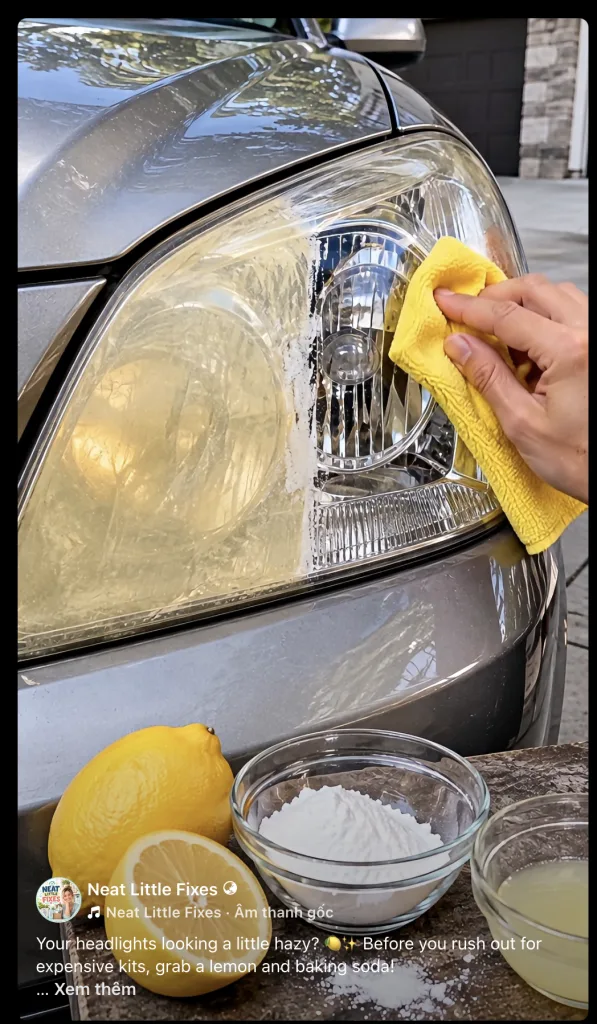 Tackle cloudy headlights with this simple, natural solution.
What You’ll Need
- 1-2 fresh lemons
- 1/2 cup baking soda
- Small mixing bowl
- Another small bowl (for lemon juice)
- Clean microfiber towels (at least two)
- Water (for rinsing)
- Car wash soap (optional, for initial cleaning)
Why This DIY Can Be Useful
The combination of lemon and baking soda creates a powerful, yet gentle, cleaning agent for oxidized headlight plastic.
- Lemon: Lemons contain citric acid, a natural acid that helps to break down the oxidized layer and grime that causes headlights to appear hazy and yellow.
- Baking Soda: Baking soda acts as a mild abrasive, allowing you to scrub away the loosened oxidation without scratching the plastic. When mixed with lemon juice, it creates a fizzing reaction that further aids in lifting dirt and discoloration.
Together, they work to gently exfoliate the dull surface of the headlight, revealing clearer plastic underneath.
How to Make It
- Cut your lemon(s) in half and squeeze the juice into one of your small bowls. You’ll want enough juice to create a thick paste.
- Gradually add the baking soda to the lemon juice in the mixing bowl. Stir as you add, aiming for a thick, spreadable paste consistency. It should be thick enough to cling to the headlight without dripping off too easily.
How to Use It
- Clean the Headlights: Start by thoroughly washing your headlights with car wash soap and water to remove any loose dirt, dust, or debris. Rinse well and let them air dry or wipe them with a clean towel.
- Apply the Paste: Take a generous amount of your lemon and baking soda paste and apply it directly onto the entire surface of the hazy headlight. Make sure to cover it evenly.
- Scrub: Using a clean, damp microfiber towel, firmly scrub the headlight in circular motions. Focus on areas that appear particularly hazy or yellow. You should see the oxidation and grime coming off on your towel.
- Let It Sit (Optional): For very stubborn haze, you can let the paste sit on the headlight for 5-10 minutes after scrubbing to allow the acids and abrasives more time to work.
- Rinse Thoroughly: Rinse the headlight completely with clean water, ensuring all the paste and loosened grime are washed away.
- Dry and Inspect: Dry the headlight with a fresh, clean, dry microfiber towel. Inspect the clarity.
What to Expect
You should notice a significant improvement in the clarity of your headlights. The haziness and yellowing will be noticeably reduced, and the plastic will appear clearer and brighter. While this DIY method can’t magically make old headlights look brand new, it offers a substantial aesthetic and functional improvement, enhancing both your car’s appearance and nighttime visibility.
Helpful Tips
- Work One Headlight at a Time: This allows you to focus your efforts and prevent the paste from drying out on the other headlight before you get to it.
- Use Firm Pressure: Don’t be afraid to apply a good amount of pressure while scrubbing, but avoid excessive force that could potentially scratch the surface.
- Repeat if Necessary: For very heavily oxidized headlights, you might need to repeat the application and scrubbing process a second time to achieve the best results.
- Protect Surrounding Paint: If you’re concerned about the paste coming into contact with your car’s paint, you can tape off the area around the headlights with painter’s tape before you begin.
Important Notes / Safety
- Always rinse the headlights thoroughly with water after cleaning to remove all residue.
- While lemon and baking soda are natural, it’s always wise to avoid prolonged contact with painted surfaces. If the paste gets on paint, wipe it off quickly.
- Avoid using abrasive sponges or cloths that could scratch the headlight plastic. Microfiber towels are ideal.