Tackling a greasy, grime-covered oven or those heavily soiled baking sheets can feel like a daunting task. If you’re tired of harsh chemical fumes and scrubbing endlessly without seeing results, a simple homemade solution might be just what you need.
This DIY cleaner combines common household ingredients to create a powerful paste that helps lift stubborn baked-on food and grease, leaving your oven and bakeware looking much cleaner. It’s a practical, more natural alternative that can save you money and effort.
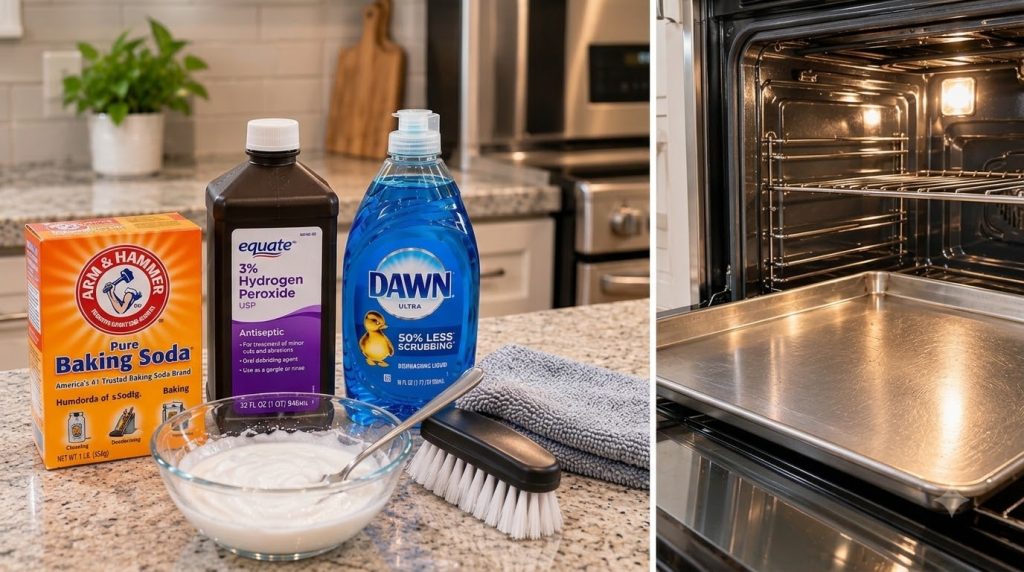
What You’ll Need
- Baking Soda: Approximately 1/2 cup (or more, depending on the area to clean)
- Hydrogen Peroxide (3% solution): Enough to form a paste
- Dish Soap: A few drops
- Small Mixing Bowl
- Sturdy Scrubbing Brush
- Clean Cloths or Sponges
Why This DIY Can Be Useful
This homemade cleaning paste works thanks to the combined power of its simple ingredients:
- Baking Soda: A mild abrasive that helps scour away grime without scratching surfaces. It’s also a natural deodorizer.
- Hydrogen Peroxide: A gentle bleaching agent that helps to break down stubborn stains and food residue, making them easier to wipe away.
- Dish Soap: Acts as a degreaser, cutting through fatty deposits and helping the paste spread and adhere to greasy surfaces.
Together, these ingredients create an effective cleaning combination that can tackle tough oven grease and baked-on stains on metal baking sheets.
How to Make It
- In your small mixing bowl, start by adding about 1/2 cup of baking soda.
- Gradually add hydrogen peroxide, a little at a time, mixing well with a spoon or spatula. Your goal is to achieve a thick, spreadable paste consistency – similar to toothpaste.
- Add just a few drops of dish soap to the paste and mix until fully incorporated. This helps with degreasing and ensures the paste adheres nicely.
How to Use It
Before you begin, ensure your oven is cool and empty. Remove any loose crumbs or debris.
- Apply the Paste: Using a spoon, spatula, or even gloved hands, spread a generous layer of the cleaning paste over the dirty surfaces of your oven interior, including the glass door. For baking sheets, coat the stained areas thoroughly.
- Let It Work: Allow the paste to sit and penetrate the grime for at least 30 minutes to an hour. For very heavily soiled ovens or baking sheets, you may want to leave it on for several hours, or even overnight.
- Scrub: After the waiting time, use your sturdy scrubbing brush to thoroughly scrub the treated areas. You’ll notice the grime starting to lift and loosen. For stubborn spots, apply a little more paste and continue scrubbing.
- Wipe Away: Once you’ve scrubbed sufficiently, use a damp cloth or sponge to wipe away the paste and loosened grime. You may need to rinse your cloth frequently and wipe multiple times to remove all residue.
- Final Rinse/Wipe: Finish by wiping down the surfaces with a clean, damp cloth to ensure no paste residue remains. This is particularly important for oven interiors to prevent any lingering odors when you next use the oven.
What to Expect
You can expect a noticeable improvement in the cleanliness of your oven and baking sheets. Baked-on grease and food stains should be significantly reduced or completely removed, leaving surfaces much brighter and shinier. For extremely tough, years-old buildup, you might need a second application or extended soaking time to achieve the best results.
Helpful Tips
- Wear Gloves: While these ingredients are relatively mild, wearing gloves will protect your hands from drying and mess.
- Spot Test: If you’re unsure about a particular surface (especially for delicate finishes on appliances), always test the paste on an inconspicuous area first.
- For Oven Racks: If your oven racks are heavily soiled, you can remove them and apply the paste, letting them soak in a large basin or bathtub before scrubbing.
- Consistency is Key: Adjust the amount of hydrogen peroxide to get a paste that’s thick enough to cling to vertical surfaces without dripping.
Important Notes / Safety
- Ventilation: Although this DIY uses gentler ingredients than commercial oven cleaners, it’s always good practice to ensure good ventilation when cleaning your oven.
- Avoid Heating Elements: Do not apply the paste directly to the oven’s heating elements.
- Rinse Thoroughly: Make sure to wipe and rinse all paste residue from your oven and baking sheets before using them again to prevent any odors or discoloration when heated.
- Storage: Mix this solution fresh each time you clean. Do not store leftover paste, as hydrogen peroxide can degrade over time when mixed.