Staying properly hydrated is fundamental for overall health. It’s not just about quenching your thirst; water plays a crucial role in almost every bodily function, from regulating body temperature to transporting nutrients and lubricating joints. While drinking plain water is essential, did you know that many foods, especially fruits and vegetables, can significantly contribute to your daily fluid intake?
This article will explore the importance of hydration and introduce you to some of nature’s best “hydration heroes” – delicious, water-rich foods that can help you stay refreshed, especially when the weather heats up or you’re active. Get ready to discover tasty ways to boost your hydration naturally!
The Power of Hydrating Foods
Our bodies are made up of approximately 50-70% water, highlighting its critical role in survival. While reaching for a glass of water is the most direct way to hydrate, incorporating water-rich foods into your diet offers a delicious bonus: you get essential vitamins, minerals, and fiber along with your fluids.
Why Hydration Matters
- Body Temperature Regulation: Water helps maintain a normal body temperature through sweating.
- Nutrient Transport: It carries nutrients to cells and removes waste products.
- Joint Lubrication: Water helps lubricate joints and protect tissues and organs.
- Cognitive Function: Even mild dehydration can impair mood, concentration, and memory.
- Digestion: Adequate water intake is crucial for healthy digestion and preventing constipation.
Top Hydration Heroes from Nature
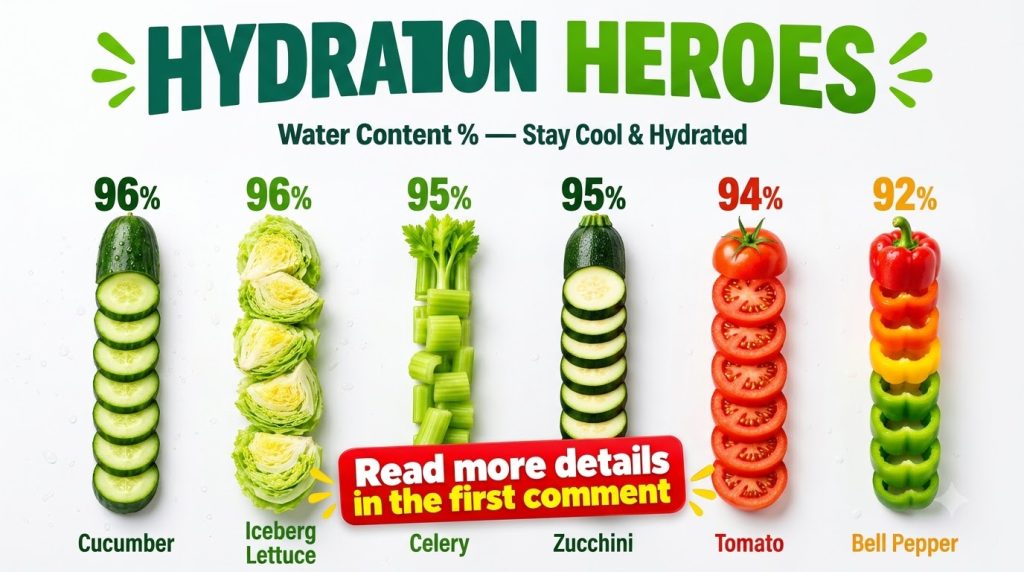
Many fruits and vegetables boast impressive water content, making them excellent choices for natural hydration. Here are some of our favorites, including the stars from our infographic:
Cucumber (95% Water)
Cucumbers are practically synonymous with refreshment. Their mild flavor and crisp texture make them perfect for salads, sandwiches, or simply snacking. They also contain electrolytes like potassium, which are important for maintaining fluid balance.
Iceberg Lettuce (96% Water)
Often overlooked, iceberg lettuce is incredibly high in water. While it may not offer the same nutrient density as darker leafy greens, it’s a fantastic crunchy base for salads, wraps, and sandwiches, adding bulk and hydration without many calories.
Celery (95% Water)
Celery is another hydration powerhouse known for its satisfying crunch. It’s a good source of fiber and contains a small amount of vitamin K and folate. Enjoy it with hummus, in soups, or as a healthy snack.
Zucchini (95% Water)
This versatile summer squash is low in calories and rich in water, vitamin C, and potassium. Zucchini can be grilled, roasted, spiralized into noodles, or added to stir-fries and baked goods.
Tomato (95% Water)
Tomatoes are juicy and packed with antioxidants like lycopene, which may offer various health benefits. They are excellent in salads, sauces, sandwiches, and as a refreshing snack on their own.
Bell Pepper (92% Water)
Sweet bell peppers, especially red and yellow varieties, are not only hydrating but also bursting with vitamin C. They add vibrant color and a sweet crunch to meals, whether raw in salads or cooked in various dishes.
Watermelon (92% Water)
A classic summer fruit, watermelon lives up to its name. It’s incredibly refreshing and a good source of vitamins A and C, as well as lycopene. Enjoy it chilled, in fruit salads, or blended into a smoothie.
Strawberries (91% Water)
These sweet berries are not just delicious; they’re also packed with water and vitamin C, manganese, and powerful antioxidants. Perfect in breakfast bowls, desserts, or as a snack.
Beyond Water Content: Essential Nutrients
One of the biggest advantages of getting hydration from whole foods is the added nutritional boost. These foods provide a spectrum of vitamins, minerals, and antioxidants that plain water doesn’t. For example:
- Electrolytes: Many hydrating foods like cucumber and celery contain potassium, which is vital for nerve and muscle function and fluid balance.
- Vitamins: You’ll get vitamins like C (from bell peppers, strawberries, tomatoes) and A (from watermelon), which support immunity and vision.
- Fiber: Foods like zucchini and strawberries contribute fiber, important for digestive health and satiety.
- Antioxidants: Lycopene in tomatoes and watermelon, and various compounds in berries, help protect your cells from damage.
Practical Tips for Boosting Hydration
- Start Your Day Hydrated: Have a glass of water or a hydrating fruit smoothie with your breakfast.
- Snack Smart: Keep sliced cucumbers, bell peppers, or a bowl of berries handy for easy, hydrating snacks.
- Add to Meals: Incorporate hydrating vegetables into your main dishes. Think zucchini noodles, cucumber slices in sandwiches, or tomatoes in sauces.
- Infused Water: If you find plain water boring, infuse it with slices of cucumber, lemon, mint, or berries for a flavorful twist.
- Soups and Smoothies: Opt for broth-based soups and fruit/vegetable smoothies, which are excellent sources of fluid.
- Listen to Your Body: Pay attention to signs of thirst and dehydration, and proactively reach for water or hydrating foods.

FAQs
How much water do I really need each day?
The general recommendation is around 8 glasses (64 ounces) of water daily, but individual needs vary based on activity level, climate, and overall health. Listen to your body’s thirst signals and observe your urine color; light yellow indicates good hydration.
Are hydrating foods as effective as drinking water?
Hydrating foods complement water intake but don’t fully replace it. They provide fluids along with essential nutrients, but direct water consumption remains crucial for optimal hydration.
Can I over-hydrate?
Over-hydration, or hyponatremia, is rare but possible, especially in endurance athletes who drink excessive amounts of plain water without sufficient electrolyte intake. For the average person, consuming water and water-rich foods in moderation is usually safe.
What are good hydrating options for breakfast?
Yogurt with berries, oatmeal cooked with water and topped with fruit, or a smoothie made with spinach, banana, and water are excellent hydrating breakfast choices.
Do caffeinated drinks contribute to dehydration?
While caffeine has a mild diuretic effect, studies suggest that moderate caffeine intake (e.g., 2-4 cups of coffee) does not significantly contribute to dehydration in regular consumers. However, water remains the best choice for pure hydration.
What are some hydrating snacks for kids?
Fruit slices (watermelon, oranges), cucumber sticks, celery with peanut butter, and fruit popsicles made from 100% fruit juice are great hydrating options for children.
Conclusion
Embracing nature’s “hydration heroes” is a delicious and nutritious way to support your well-being. By incorporating more water-rich fruits and vegetables into your daily diet, you not only boost your fluid intake but also nourish your body with essential vitamins, minerals, and fiber. Staying well-hydrated is a simple yet powerful step towards a healthier, more energetic you.
Ready to explore more ways to enhance your diet and lifestyle? Dive into our other articles for creative recipes, nutritional insights, and healthy living tips!
This content is for educational purposes only and should not be considered medical advice. Consult a qualified healthcare professional for personalized dietary recommendations.