There’s nothing quite as satisfying as stepping into your garden and seeing your cucumber plants thriving, laden with crisp, green fruit. However, the path to a bountiful cucumber harvest often comes with its challenges, especially when it comes to unwelcome guests: garden pests. But what if we told you that protecting your precious cucumbers doesn’t require harsh chemicals? It’s true! Embracing organic pest control methods can lead to an incredible harvest while keeping your garden healthy and sustainable.
At Garden – L. Quyên, we believe in nurturing our plants the natural way. Join us as we explore simple yet effective strategies to keep pests away from your cucumbers, ensuring a flourishing garden that you can truly be proud of.
Why Choose Organic Pest Control for Cucumbers?
Opting for organic pest control isn’t just a trend; it’s a commitment to the health of your garden, your family, and the environment. Chemical pesticides can harm beneficial insects, contaminate soil and water, and leave residues on your produce. Organic methods, on the other hand, work with nature, promoting a balanced ecosystem and ensuring your cucumbers are safe and delicious right off the vine.
Common Cucumber Pests to Watch Out For
Before we dive into the solutions, let’s identify the usual suspects:
- Cucumber Beetles: These yellow and black striped or spotted beetles can cause significant damage by feeding on leaves, flowers, and fruit, and can also spread bacterial wilt.
- Aphids: Tiny, pear-shaped insects that cluster on new growth, sucking sap and leaving behind a sticky residue called honeydew, which can lead to sooty mold.
- Squash Bugs: Brownish-gray bugs that feed on sap, causing leaves to yellow, wilt, and eventually die.
- Spider Mites: Microscopic pests that thrive in hot, dry conditions, causing stippling on leaves and fine webbing.
Natural Ways to Protect Your Cucumbers
Here are some of our favorite natural strategies to keep your cucumber plants pest-free:
1. Companion Planting: Nature’s Bodyguards
Certain plants can act as natural deterrents or traps for pests, protecting your cucumbers. Plant these nearby:
- Marigolds: Their strong scent deters nematodes and other harmful insects.
- Nasturtiums: Act as a trap crop, luring aphids away from your cucumbers.
- Radishes: Some varieties can deter cucumber beetles.
- Dill: Attracts beneficial insects like ladybugs and predatory wasps, which feast on aphids.
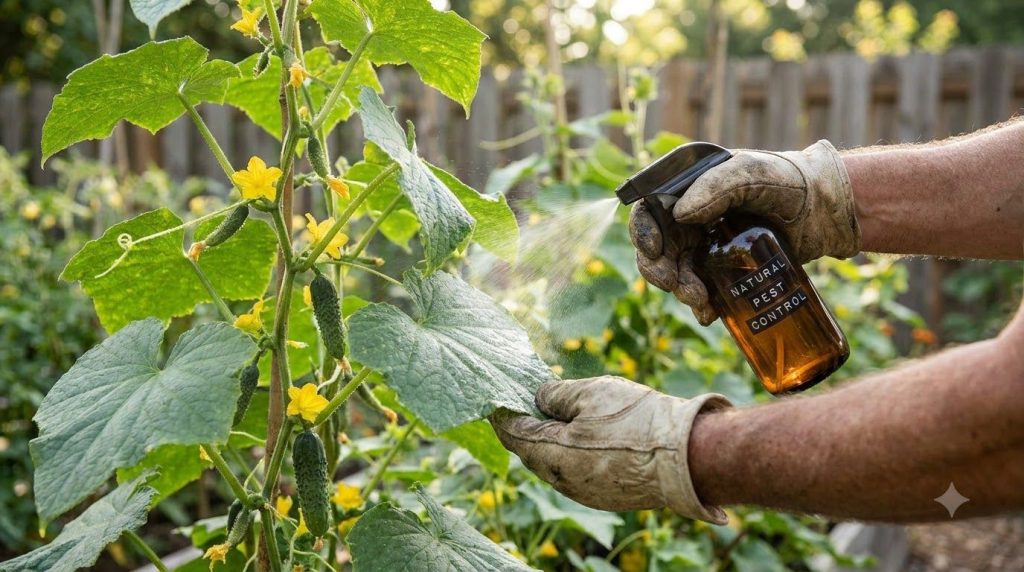
2. Neem Oil Spray
Derived from the neem tree, neem oil is a powerful organic insecticide, fungicide, and miticide. It works by disrupting insect feeding and growth cycles.
- How to Use: Mix pure neem oil with water and a small amount of mild liquid soap (as an emulsifier) according to package directions. Spray thoroughly on all plant surfaces, especially the undersides of leaves, in the early morning or late evening to avoid burning foliage. Reapply every 7-10 days or after rain.
3. Insecticidal Soap
A simple and effective solution for soft-bodied insects like aphids, spider mites, and whiteflies. It works by breaking down their protective outer layers.
- How to Use: You can purchase ready-to-use insecticidal soap or make your own by mixing 1-2 tablespoons of mild liquid dish soap (ensure it’s free of degreasers or harsh chemicals) with a gallon of water. Spray directly onto affected areas, ensuring good coverage. Test on a small area first to ensure it doesn’t harm your plants.
4. Diatomaceous Earth (DE)
This natural, powdery substance is made from fossilized diatoms. When insects crawl over it, the microscopic sharp edges abrade their exoskeletons, leading to dehydration.
- How to Use: Sprinkle food-grade DE around the base of your cucumber plants and lightly dust the leaves. Apply when plants are dry, as it becomes ineffective when wet. Wear a mask when applying to avoid inhaling the dust.
5. Hand-Picking and Traps
For larger pests like squash bugs and cucumber beetles, sometimes the simplest method is the best.
- Hand-Picking: Regularly inspect your plants and pick off visible pests, dropping them into a bucket of soapy water. Do this in the early morning when insects are less active.
- Yellow Sticky Traps: These non-toxic traps can help monitor and reduce populations of flying pests like cucumber beetles and whiteflies.
6. Row Covers
Physical barriers are excellent for preventing pests from reaching your plants in the first place.
- How to Use: Drape lightweight row covers over your cucumber plants at planting time, securing the edges to the ground. Remove them when plants begin to flower to allow for pollination by bees.
Cultivating a Healthy Environment for a Bountiful Harvest
Remember, strong, healthy plants are more resilient to pest attacks. Incorporate these practices into your routine:
- Healthy Soil: Amend your soil with compost to provide essential nutrients and improve drainage.
- Proper Watering: Water deeply and consistently at the base of the plant to encourage strong root development and avoid fungal issues.
- Good Air Circulation: Space your plants adequately to ensure good airflow, which helps prevent diseases and makes it harder for pests to spread.
- Attract Beneficial Insects: Plant flowers that attract pollinators and predatory insects, such as cosmos, sunflowers, and yarrow. Ladybugs and lacewings are natural predators of aphids and other soft-bodied pests.
By implementing these organic pest control methods and nurturing a healthy garden environment, you’ll not only protect your cucumbers but also foster a vibrant ecosystem. There’s a profound satisfaction in harvesting fresh, chemical-free cucumbers from your very own garden, knowing you’ve nurtured them naturally from seed to plate. Happy gardening!