Boost your hair’s natural vitality with these three simple DIY hair sprays, each crafted to address common concerns like hair fall, slow growth, and maintaining vibrant hair color. These recipes use readily available natural ingredients to support a healthier-looking scalp and strands.
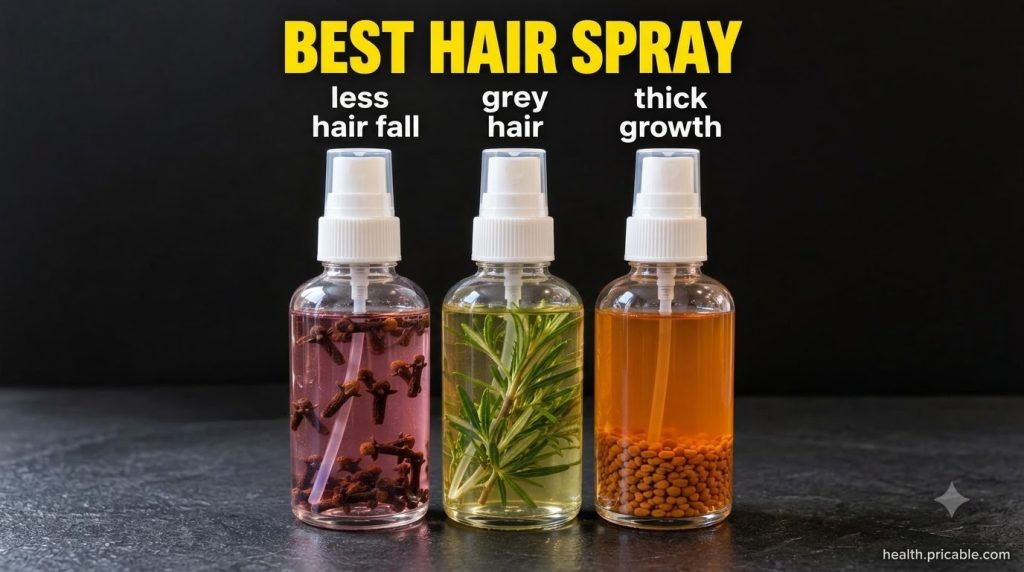
Quick Recipe Overview
These recipes offer a natural approach to hair care, focusing on scalp health and hair strength. Choose the spray that best suits your hair goals, or try them all!
Prep time: 10 minutes (plus cooling time)
Best for: Hair fall, slow hair growth, scalp health, supporting natural hair color.
Use type: Hair spray/rinse
Main ingredients: Cloves, Rosemary, Fenugreek seeds
Ingredients for Each Spray
For the Clove Hair Spray (for Hair Fall & Supporting Darker Tones)
- 1 tablespoon whole cloves
- 1 cup filtered water
For the Rosemary Hair Spray (for Thick Growth & Scalp Health)
- 2-3 fresh rosemary sprigs (or 1 tablespoon dried rosemary)
- 1 cup filtered water
For the Fenugreek Hair Spray (for Growth & Strength)
- 1 tablespoon fenugreek seeds
- 1 cup filtered water
How to Make Each Hair Spray
Clove Hair Spray
- Bring 1 cup of filtered water to a boil in a small pot.
- Add 1 tablespoon of whole cloves to the boiling water.
- Reduce heat and let it simmer for 5-7 minutes until the water turns a light reddish-brown color.
- Remove from heat and let it cool completely.
- Once cooled, strain the liquid into a clean spray bottle, discarding the cloves.
Rosemary Hair Spray
- Bring 1 cup of filtered water to a boil.
- Add 2-3 fresh rosemary sprigs (or 1 tablespoon dried rosemary) to the boiling water.
- Reduce heat and simmer for 5-10 minutes. The water should take on a light greenish tint and a fragrant aroma.
- Remove from heat and let it steep until completely cool.
- Strain the liquid into a clean spray bottle, removing the rosemary.
Fenugreek Hair Spray
- Soak 1 tablespoon of fenugreek seeds in 1 cup of filtered water overnight (or for at least 6-8 hours).
- The next morning, the water will have a slightly yellowish tint and the seeds will be plump.
- Strain the liquid into a clean spray bottle, reserving the seeds (which can be used for a hair mask).
How to Use It
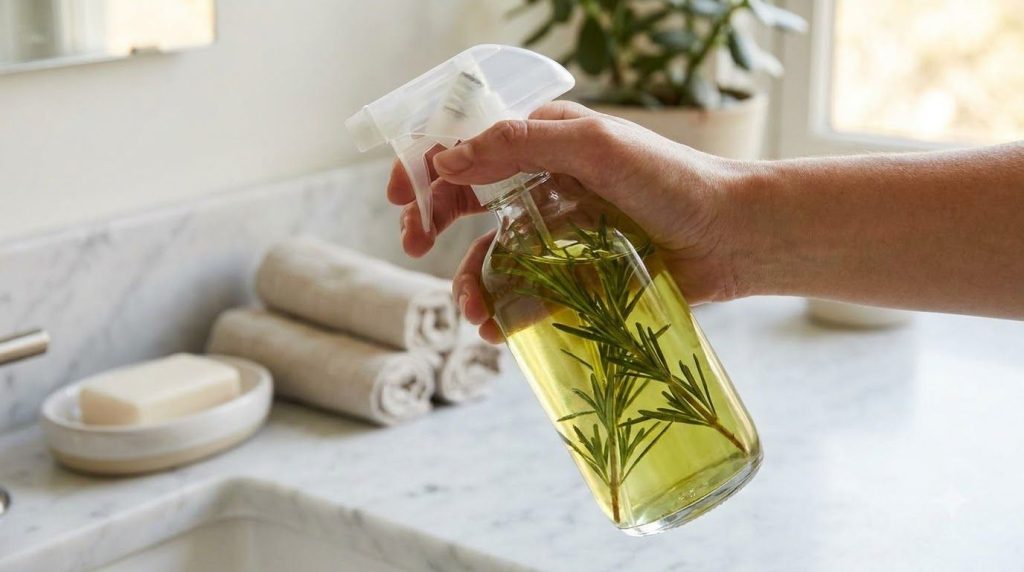
- After washing your hair, or on dry hair, lightly mist the chosen spray directly onto your scalp.
- Gently massage your scalp for 1-2 minutes to help stimulate blood flow and aid absorption.
- You do not need to rinse it out. Style your hair as usual.
- You can also apply it to the lengths of your hair for added benefit.
How Often to Use It
These sprays can be used daily or every other day. Consistent use is key to seeing potential benefits. Store any leftover spray in the refrigerator for up to one week. If it develops an unusual smell or appearance, discard it.

Why These Ingredients Are Used
Cloves
Cloves are known for their stimulating properties and their rich antioxidant content. In traditional practices, clove water is often used to help invigorate the scalp, which can support healthier hair follicles. Some also believe it can help enhance the natural dark tones of hair, contributing to a vibrant look.
Rosemary
Rosemary has been a revered herb in hair care for centuries. It’s widely praised for its potential to stimulate the scalp and promote circulation, which can be beneficial for hair growth. Many beauty enthusiasts turn to rosemary water or oil infusions to encourage thicker-looking hair and a healthier scalp environment.
Fenugreek Seeds
Fenugreek seeds are a powerhouse of nutrients, including proteins and nicotinic acid, which are vital for hair health. They are frequently used in home remedies to help reduce hair fall and support hair strength and thickness. The mucilage in fenugreek seeds also provides a conditioning effect, leaving hair feeling softer and more manageable.
What Results to Expect
With consistent use, you may notice your scalp feeling more invigorated and healthier. These natural sprays can help support a reduction in the appearance of hair fall and contribute to the look of fuller, shinier hair. For those using the clove spray, it may help enhance the natural vibrancy of darker hair tones. Remember, natural remedies work gradually, and individual results can vary.
Safety Notes
- Patch test first: Before applying any new product to your scalp, apply a small amount to a discreet area of skin (like behind your ear or on your inner arm) and wait 24 hours to check for any irritation or allergic reaction.
- Use gently: Always apply these sprays with clean hands and avoid vigorous rubbing if your scalp is sensitive.
- Avoid irritated or broken skin: Do not use these sprays on a scalp that is cut, irritated, or has open sores.
- Stop using if discomfort occurs: If you experience any burning, itching, redness, or discomfort, discontinue use immediately.
- Ingredient-specific cautions: While generally mild, some individuals may be sensitive to certain herbs. Always listen to your body.
- Storage: Store the sprays in the refrigerator to maintain freshness and prevent bacterial growth. Discard after one week.
FAQ
Can I mix these ingredients together?
While you could combine them, it’s often best to use them separately to observe how your hair responds to each ingredient individually. This also allows you to target specific concerns more effectively.
Will these sprays make my hair greasy?
When applied lightly to the scalp and hair, these water-based sprays should not make your hair greasy. If you find it makes your hair feel heavy, try using less product.
Can I use these on colored hair?
Generally, these natural sprays are safe for colored hair. However, if you have very light or freshly colored hair, consider doing a strand test first, especially with the clove spray, which may subtly enhance darker tones.
Final Thoughts
Incorporating natural hair sprays into your beauty routine can be a gentle and nourishing way to support overall hair health. Experiment with these recipes to find what works best for your hair, and enjoy the process of caring for your strands with nature’s goodness. Share your favorite natural hair care tips in the comments below!