Welcome, fellow garden enthusiasts! Ever wondered how to truly make your garden flourish, bursting with vibrant blooms and healthy foliage? The secret often lies in one essential practice: pruning. Far from being a daunting task, mastering the art of pruning can transform your garden, ensuring each plant reaches its full potential. At Garden – L. Quyên, we believe in making gardening accessible and enjoyable for everyone, and this comprehensive month-by-month guide is designed to help you navigate the pruning year with confidence.
Pruning is more than just snipping away branches; it’s about shaping, encouraging growth, improving plant health, and boosting flower and fruit production. It’s a dialogue between you and your plants, helping them thrive through every season. Let’s dive into the year-long journey of nurturing your garden through thoughtful pruning!
Why Pruning Matters for a Thriving Garden
Before we jump into the monthly tasks, let’s briefly touch upon the incredible benefits of proper pruning:
- Improved Plant Health: Removing dead, diseased, or damaged branches prevents the spread of pathogens and pests, ensuring the plant’s overall vitality.
- Enhanced Growth and Vigor: Strategic cuts direct the plant’s energy to stronger, healthier branches, leading to more robust growth.
- Increased Flower and Fruit Production: Pruning encourages the development of new flowering wood and helps plants allocate resources more efficiently, resulting in bountiful harvests and stunning blooms.
- Better Air Circulation and Light Penetration: Thinning out dense growth improves air flow, reducing the risk of fungal diseases, and allows more sunlight to reach inner parts of the plant.
- Desirable Shape and Size: Pruning helps maintain a plant’s natural form, keeps it within desirable bounds, and creates an aesthetically pleasing garden landscape.
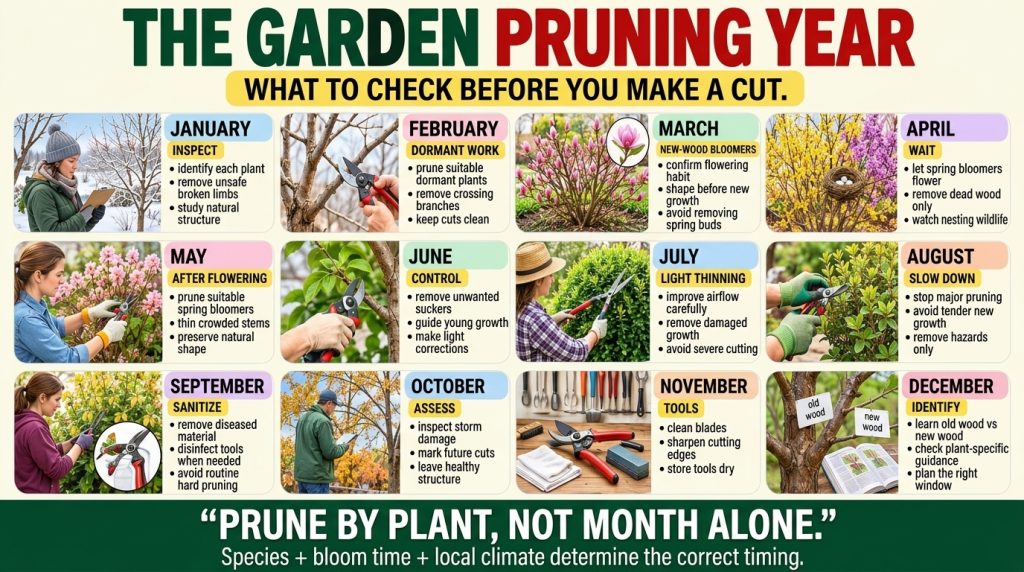
Your Month-by-Month Pruning Guide
Here’s how you can approach pruning throughout the year, adapting to your specific climate and plant varieties.
January: The Winter Cleanup
In many regions, January is a dormant month, perfect for tackling deciduous trees and shrubs. This is the ideal time to remove dead, damaged, or crossing branches that could cause issues later. Focus on structural pruning to improve the overall shape and health of your plants.
- What to prune: Deciduous trees (except maples, birches, and walnuts which bleed heavily), fruit trees (for shaping and encouraging fruit), summer-flowering shrubs that bloom on new wood (like Buddleia and certain Spirea).
- Why: Visible branch structure makes it easy to identify problem areas. Minimal sap flow reduces stress on the plant.
February: Prepare for Spring Bloom
As the weather hints at warming up, February is a crucial month for preparing certain plants for their spring display.
- What to prune: Late winter is still good for fruit trees if not done in January. Also, prune grapevines, wisteria, and roses (hybrid teas, floribundas, grandifloras) before new growth begins.
- Why: Stimulates strong new growth for heavy flowering on new wood.
March: Spring’s Gentle Touch
With new growth emerging, March requires a more delicate approach. Focus on tidying up and light shaping.
- What to prune: Evergreen shrubs that are getting too large, ornamental grasses (cut back old foliage), and winter-damaged branches. Avoid pruning spring-flowflowering shrubs (like lilacs, forsythia) as you’ll remove their upcoming blooms.
- Why: Encourages fresh, vigorous growth for the new season.
April: Post-Bloom Care
April is all about caring for those early spring bloomers that have just finished their show.
- What to prune: Spring-flowering shrubs and trees (e.g., forsythia, lilac, rhododendrons, azaleas) immediately after they finish flowering.
- Why: Pruning immediately after flowering encourages the plant to set buds for next year’s blooms, as they typically bloom on old wood.
May: Shaping and Deadheading
As the garden springs to life, May is a busy month for maintaining plant shape and encouraging more flowers.
- What to prune: Lightly prune fast-growing shrubs for shape. Deadhead spent flowers from perennials and annuals to encourage continuous blooming.
- Why: Keeps plants looking tidy, prevents seed formation (which diverts energy from flowering), and promotes secondary blooms.
June: Mid-Season Maintenance
June brings warmer weather and continued growth. Keep an eye on vigorous plants.
- What to prune: Prune climbers and ramblers (like some roses and clematis) as needed to control their size and direct their growth. Lightly trim hedges for a neat appearance.
- Why: Prevents plants from becoming overgrown and keeps garden paths clear.
July: Sustaining the Bloom
The heat of summer can be tough on plants, but consistent pruning helps them power through.
- What to prune: Continue deadheading summer annuals and perennials. You can also lightly prune some summer-flowering shrubs if they become leggy or unruly.
- Why: Extends the flowering season and maintains plant vitality.
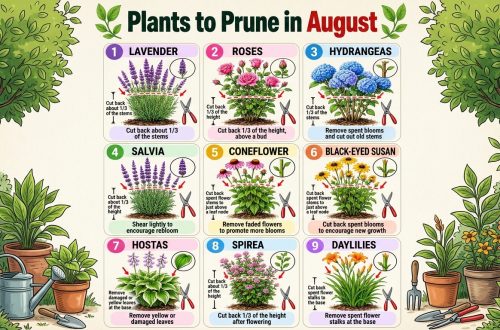
August: Light Trimming and Tidying
As summer peaks, focus on minor adjustments rather than heavy pruning.
- What to prune: Lightly trim any plants that have grown out of bounds or look untidy. Avoid major pruning cuts, as new growth might not harden off before winter.
- Why: Keeps the garden looking neat without stimulating late-season tender growth.
September: Prepare for Autumn Harvest
With autumn approaching, it’s time to prepare your garden for its transition.
- What to prune: Raspberry canes (remove old fruiting canes), perennial herbs that have gone to seed, and spent vegetable plants.
- Why: Cleans up the garden, prevents disease, and prepares for new growth next season.
October: Autumn Cleanup and Final Checks
October is a time for winding down and preparing the garden for dormancy.
- What to prune: Remove dead foliage from perennials. You can also prune some trees and shrubs that have finished their growing season, especially if they are small or have a specific winter shape you want to maintain.
- Why: Reduces hiding spots for pests and diseases, improving overall garden hygiene for winter.
November: Last Structural Pruning
As leaves fall, the structure of deciduous plants becomes clear, offering a last chance for certain pruning tasks.
- What to prune: Deciduous trees and shrubs (similar to January, but be mindful of imminent cold). Delay pruning tender plants.
- Why: Allows you to assess the plant’s framework without foliage obstruction.
December: Reflect and Rest
December is generally a quiet month for pruning, especially in colder climates.
- What to prune: Only prune if absolutely necessary, such as removing storm-damaged branches. Mostly, it’s a time for planning and preparing tools for the next year.
- Why: Minimal plant activity means any major cuts would be stressful.
Essential Pruning Tools
Having the right tools makes all the difference:
- Hand Pruners (Bypass and Anvil): For smaller branches (up to 3/4 inch). Bypass pruners offer cleaner cuts, while anvil pruners are good for deadwood.
- Loppers: For thicker branches (up to 1 1/2 inches), offering more leverage.
- Pruning Saw: For branches larger than loppers can handle.
- Hedge Shears: For shaping hedges and light trimming.
- Gloves: Essential for protecting your hands from thorns and blisters.
Remember to always use sharp, clean tools to make precise cuts and prevent the spread of diseases. Sanitize your tools between plants, especially if pruning diseased material.
Pruning with Confidence
Pruning doesn’t have to be intimidating. By understanding the basics and following a seasonal guide, you can confidently help your plants thrive. Observe your plants, understand their growth habits, and don’t be afraid to make those cuts. With each season, you’ll gain more experience and a deeper connection to your garden.
We hope this guide empowers you to unlock your garden’s full potential and enjoy a year of healthy, beautiful plants. Happy gardening!