Welcome, fellow garden enthusiasts! As the summer sun begins its gentle descent and August arrives, our gardens are often still bursting with life and color. But did you know that August is a critical time for certain pruning tasks? A little strategic snip here and there can make all the difference, setting your plants up for a spectacular late-season show and ensuring robust growth next year.
Pruning isn’t just about cutting things back; it’s an art and a science that helps maintain plant health, encourages more blooms, improves air circulation, and keeps your garden looking its best. Join us as we explore the essential August pruning tips for some of your favorite plants!
Lavender: Aromatic and Tidy
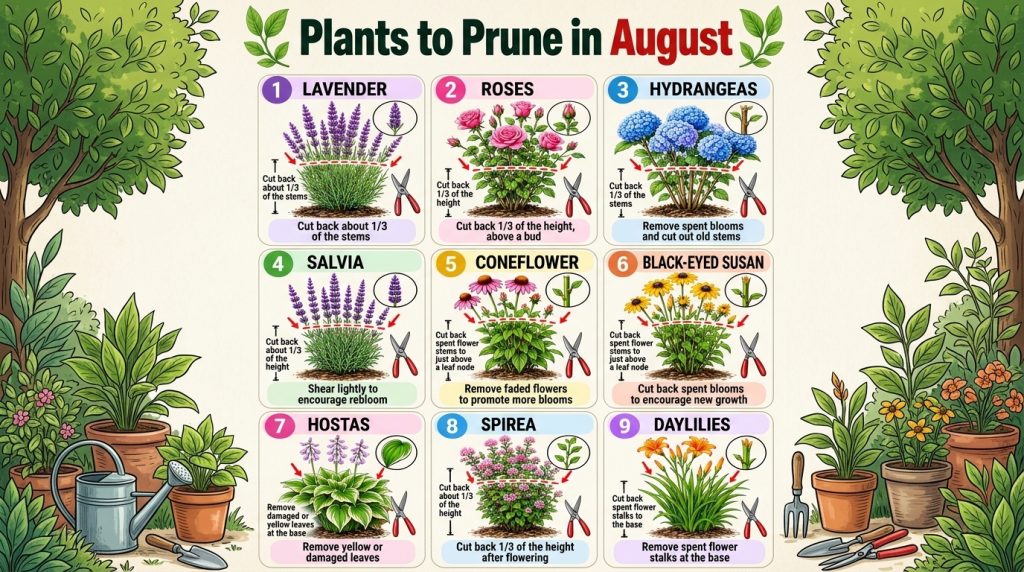
Lavender (Lavandula) is beloved for its fragrant blooms and calming presence. By August, many varieties have finished their first flush of flowers. Pruning now helps prevent your plant from becoming leggy and woody, promoting a denser, more attractive shape and potentially encouraging a second, smaller bloom.
How to Prune Lavender in August:
- Remove Spent Flower Stalks: Snip off the faded flower spikes just above the first set of leaves or new growth.
- Shape the Plant: You can gently shape the plant by trimming up to one-third of the current year’s growth. Avoid cutting into the old, woody stems, as this can stress the plant and may prevent it from regrowing.
- Maintain Compactness: This light trim encourages bushier growth and a more appealing form, perfect for those garden edges or fragrant pathways.
Roses: Encouraging More Blooms
Roses are often the queens of the garden, and August pruning is all about keeping them blooming abundantly. Deadheading is key for most modern roses to encourage a continuous show.
How to Prune Roses in August:
- Deadhead Spent Flowers: Regularly remove faded blooms by cutting the stem just above a set of five healthy leaves pointing outwards. This directs the plant’s energy into producing more flowers rather than developing seeds.
- Remove Weak or Crossing Stems: Take out any thin, weak, or inward-growing stems to improve air circulation and prevent disease.
- Light Shaping: You can also lightly shape your rose bushes, removing any leggy growth that detracts from their overall appearance. Avoid heavy pruning, as this is best reserved for late winter or early spring.
Hydrangeas: Understanding Their Needs
Hydrangea pruning in August depends largely on the type of hydrangea you have, as some bloom on old wood and others on new wood.
How to Prune Hydrangeas in August:
- Bigleaf Hydrangeas (Hydrangea macrophylla – Mophead and Lacecap): These typically bloom on old wood. In August, only deadhead spent flowers down to the first set of healthy leaves. Avoid significant structural pruning, as you might remove next year’s flower buds.
- Smooth Hydrangeas (Hydrangea arborescens – e.g., ‘Annabelle’): These bloom on new wood. You can deadhead spent blooms to tidy them up. If the plant is getting too large, you can lightly prune it back, but heavy pruning is usually done in late winter or early spring.
- Panicle Hydrangeas (Hydrangea paniculata – e.g., ‘Limelight’, ‘Vanilla Strawberry’): These also bloom on new wood. Deadheading spent flowers will encourage more blooms and maintain a tidy appearance. You can also lightly shape them if needed.
Perennials and Other Shrubs: Tidy-Ups and Rebloomers
August is also a great time to give many other plants a mid-season tidy-up, encouraging a refreshed look and sometimes a second flush of flowers.
Salvia:
Deadhead spent flower spikes to encourage repeat blooming, especially for perennial salvias. Cut back the faded spikes to just above a set of healthy leaves or new growth.
Coneflower (Echinacea):
Remove faded flowers to encourage the plant to produce more blooms. You can cut the stem back to a strong leaf or side shoot. Leaving some seed heads can also provide winter interest and food for birds.
Black-Eyed Susan (Rudbeckia):
Similar to coneflowers, deadheading encourages prolonged blooming. Snip off faded flowers at the base of the stem or just above a new bud to promote continuous color through late summer and fall.
Hostas:
While primarily grown for their foliage, hostas send up flower stalks that can sometimes detract from their overall appearance after blooming. Cut the spent flower stalks back to the base of the plant to keep your hosta beds looking neat and tidy. Also, remove any yellowing or damaged leaves.
Spirea:
Many varieties of spirea are spring or early summer bloomers. After their main flowering period, you can give them a light trim to remove spent flowers and shape the plant. This ‘shearing’ helps maintain a compact form and can encourage a new flush of growth.
Daylilies:
Deadhead spent individual flowers daily or every few days to keep the plant looking tidy and prevent it from expending energy on seed production. Once an entire scape (flower stalk) has finished blooming, cut it down to the base of the plant.
General August Pruning Tips
- Use Clean, Sharp Tools: Always use clean, sharp pruners to make precise cuts and prevent the spread of diseases. Sterilize your tools between plants if you suspect any issues.
- Don’t Over-Prune: August is generally not the time for heavy structural pruning. Focus on deadheading, shaping, and removing diseased or damaged parts.
- Water After Pruning: Ensure your plants are well-watered after pruning, especially during dry spells, to help them recover and put out new growth.
- Compost the Cuttings: Most healthy plant trimmings can be added to your compost pile, returning valuable nutrients to your garden.
By taking a little time in August to perform these essential pruning tasks, you’ll be rewarded with a healthier, more vibrant garden that continues to flourish well into the autumn. Happy gardening!