In our journey toward optimal health, understanding where to find essential vitamins in our daily diet is a cornerstone. While supplements offer a convenient boost, the best way to nourish your body is through whole-food sources of essential vitamins. These vitamin-rich foods not only provide crucial nutrients but also offer a symphony of synergistic compounds, fiber, and antioxidants that work together for maximum benefit.
At Glowra Health, we believe in empowering you with practical, actionable information. This guide will walk you through the key vitamins your body needs and precisely which delicious, everyday foods can help you meet those needs naturally. From boosting your immunity to supporting strong bones and vibrant skin, let’s explore the powerful potential on your plate.
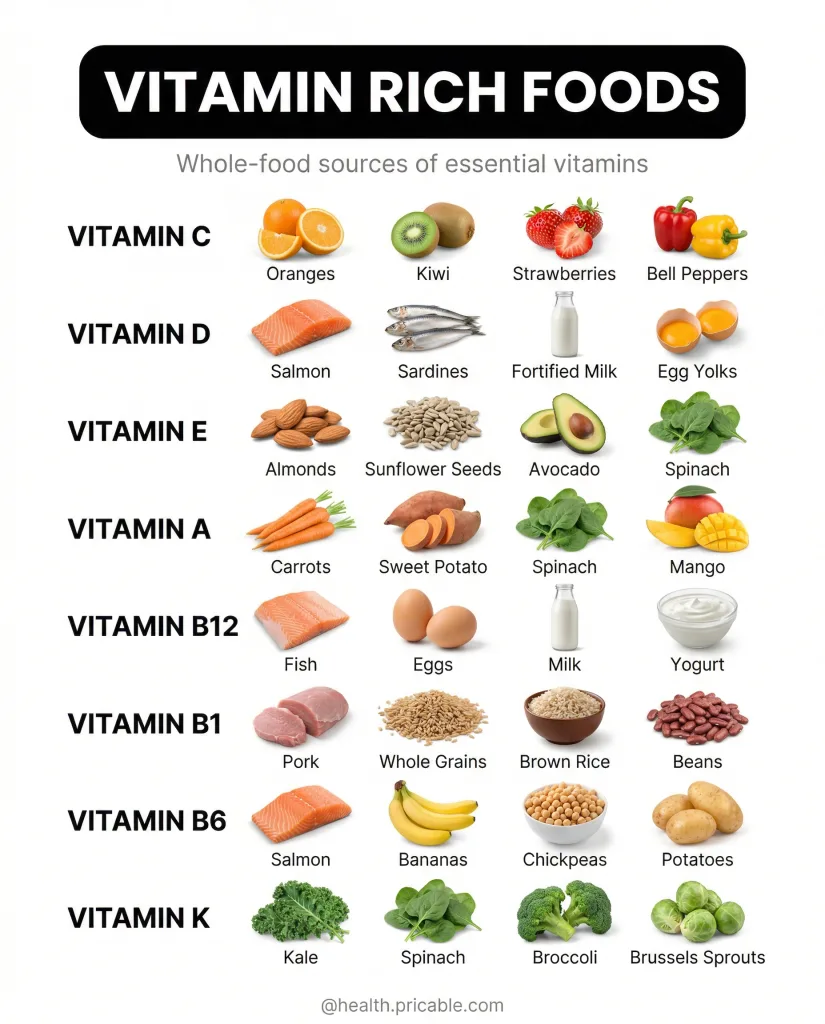 Unlock a healthier you by incorporating these vitamin-rich foods into your diet.
Vitamin C: Your Immunity Booster
Vitamin C is perhaps best known for its role in supporting a robust immune system. But this powerful antioxidant does much more, contributing to healthy skin, collagen production, and iron absorption. Ensuring you get enough Vitamin C daily can make a significant difference in your overall vitality.
- Orange: A classic source, one medium orange provides a substantial amount of your daily Vitamin C. Enjoy it fresh, in smoothies, or as a vibrant snack.
- Broccoli: This cruciferous vegetable is not only packed with Vitamin C but also offers fiber and other beneficial compounds, making it a true superfood.
- Strawberry: Sweet and juicy, strawberries are a delightful way to boost your Vitamin C intake. They’re also rich in antioxidants.
- Bell Pepper: Surprisingly, bell peppers (especially red and yellow ones) contain even more Vitamin C than oranges. They add a crisp, sweet crunch to salads and stir-fries.
Vitamin D: The Sunshine Vitamin from Food
Often called the ‘sunshine vitamin,’ Vitamin D is crucial for bone health, immune function, and even mood regulation. While sunlight is a primary source, incorporating dietary sources is essential, especially during colder months or for those with limited sun exposure.
- Egg Yolk: A convenient and versatile source, egg yolks contain a moderate amount of Vitamin D, along with protein and other nutrients.
- Mushroom: Certain mushrooms, especially those exposed to UV light, can be a plant-based source of Vitamin D. Look for labels indicating UV exposure.
- Sardines: These small, oily fish are a powerhouse of nutrients, providing not only Vitamin D but also beneficial omega-3 fatty acids.
- Salmon: A beloved fatty fish, salmon is an excellent source of Vitamin D, along with high-quality protein and heart-healthy fats. Consider wild-caught salmon for higher nutrient content.
Vitamin E: Antioxidant Powerhouse
Vitamin E is a potent antioxidant that helps protect your cells from damage, supports skin health, and plays a role in immune function. It’s an unsung hero for maintaining youthful skin and overall cellular integrity.
- Avocado: Creamy and delicious, avocados are rich in Vitamin E, healthy monounsaturated fats, and fiber. Perfect for salads, toasts, or guacamole.
- Spinach: This leafy green vegetable is packed with Vitamin E, along with a host of other vitamins and minerals. Add it to smoothies, salads, or sautéed dishes.
- Almonds: A fantastic snack, almonds are not only a good source of Vitamin E but also provide healthy fats, protein, and fiber.
- Sunflower Seeds: These small seeds are mighty in Vitamin E content, offering a crunchy addition to salads, yogurt, or as a standalone snack.
Vitamin A: For Vision and Beyond
Vitamin A is vital for healthy vision, immune function, and skin cell growth. It’s often found in two forms: preformed Vitamin A (retinoids) in animal products and provitamin A carotenoids (like beta-carotene) in plant foods, which the body converts to Vitamin A.
- Sweet Potato: An excellent source of beta-carotene, which gives it its vibrant orange hue. Sweet potatoes are versatile and delicious, whether baked, roasted, or mashed.
- Carrot: Famous for promoting good eyesight, carrots are loaded with beta-carotene. Enjoy them raw, in juices, or cooked into various dishes.
- Kale: This nutrient-dense leafy green is another rich source of beta-carotene, offering a wealth of antioxidants and fiber.
- Cod Liver Oil: A traditional supplement, cod liver oil is a concentrated source of preformed Vitamin A, as well as Vitamin D and omega-3s.
Vitamin B12: Essential for Energy and Nerves
Vitamin B12 is indispensable for nerve function, the formation of red blood cells, and DNA synthesis. It plays a crucial role in maintaining your energy levels and cognitive health. Since B12 is primarily found in animal products, plant-based eaters may need to consider fortified foods or supplements.
- Beef: Red meat, especially lean cuts, is a significant source of Vitamin B12, along with iron and protein.
- Salmon: This oily fish provides a healthy dose of Vitamin B12, alongside Vitamin D and omega-3 fatty acids, making it a nutrient powerhouse.
- Milk: Dairy milk is a readily available source of Vitamin B12, as well as calcium and protein.
- Egg: Eggs are a versatile source of Vitamin B12, particularly in the yolk, along with high-quality protein.
Vitamin B1 (Thiamine): Fueling Your Body
Thiamine, or Vitamin B1, is crucial for converting food into energy. It plays a key role in nervous system function and muscle health, ensuring your body can effectively power all its processes.
- Pork: Certain cuts of pork are excellent sources of Vitamin B1, contributing to your daily energy production.
- Lentils: These legumes are not only rich in plant-based protein and fiber but also provide a good amount of Vitamin B1, making them a staple in healthy eating.
- Sunflower Seeds: A crunchy and nutritious snack, sunflower seeds offer a good dose of Vitamin B1, along with Vitamin E and healthy fats.
- Asparagus: This springtime vegetable is a delicious source of Vitamin B1, as well as folate and Vitamin K.
Vitamin B6 (Pyridoxine): A Versatile Nutrient
Vitamin B6, or pyridoxine, is involved in over 100 enzyme reactions in the body. It’s vital for brain development, immune function, and metabolism, helping to create neurotransmitters and red blood cells.
- Chickpea: These versatile legumes are a fantastic source of Vitamin B6, fiber, and plant-based protein. Enjoy them in hummus, roasted, or in stews.
- Salmon: Once again, salmon proves its nutritional value by being a strong source of Vitamin B6, supporting various bodily functions.
- Sweet Potato: Beyond Vitamin A, sweet potatoes also contribute to your Vitamin B6 intake, offering a naturally sweet and satisfying option.
- Banana: An easy and convenient source of Vitamin B6, bananas are also known for their potassium content, making them a great post-workout snack.
Vitamin K: Crucial for Blood and Bones
Vitamin K is essential for blood clotting and plays a critical role in bone health. It helps regulate calcium in the body, which is important for maintaining strong bones and preventing calcification in arteries.
- Spinach: This leafy green is a powerhouse of Vitamin K, making it a must-have for supporting bone density and blood coagulation.
- Broccoli: Another green vegetable that shines with Vitamin K content. Broccoli is versatile and packed with other beneficial compounds.
- Kale: As a king of leafy greens, kale provides an exceptional amount of Vitamin K, along with Vitamins A and C.
- Brussels Sprouts: These mini cabbages are a excellent source of Vitamin K, offering a unique flavor and nutrient boost to your meals.
Final Thoughts on Embracing Vitamin-Rich Foods
Incorporating a wide variety of these essential vitamin-rich foods into your diet is one of the most effective strategies for promoting overall health and well-being. By focusing on whole, unprocessed ingredients, you’re not just getting individual vitamins, but a complete package of nutrients that work synergistically to support every system in your body.
Remember, a balanced and varied diet is key. Experiment with different foods, discover new favorite recipes, and make nutrient-rich eating an enjoyable and sustainable part of your lifestyle. Your body will thank you for it!
Medical Disclaimer
The information provided in this article is for educational purposes only and is not intended as medical advice. Always consult with a qualified healthcare professional before making any decisions about your health or treatment.