Fuel your body with the essential minerals it needs for strong bones, energy, and overall wellness! Minerals are vital nutrients that play countless roles in maintaining your health, from supporting nerve function to building strong bones and producing hormones. While often overlooked, getting enough of these micronutrients through your diet is crucial for feeling your best every day.
This guide highlights delicious, everyday foods packed with some of the most important minerals, including magnesium, iron, calcium, and potassium. Incorporating these foods into your daily meals can be a simple yet powerful way to support your overall health and vitality.
Magnesium: The Relaxation Mineral
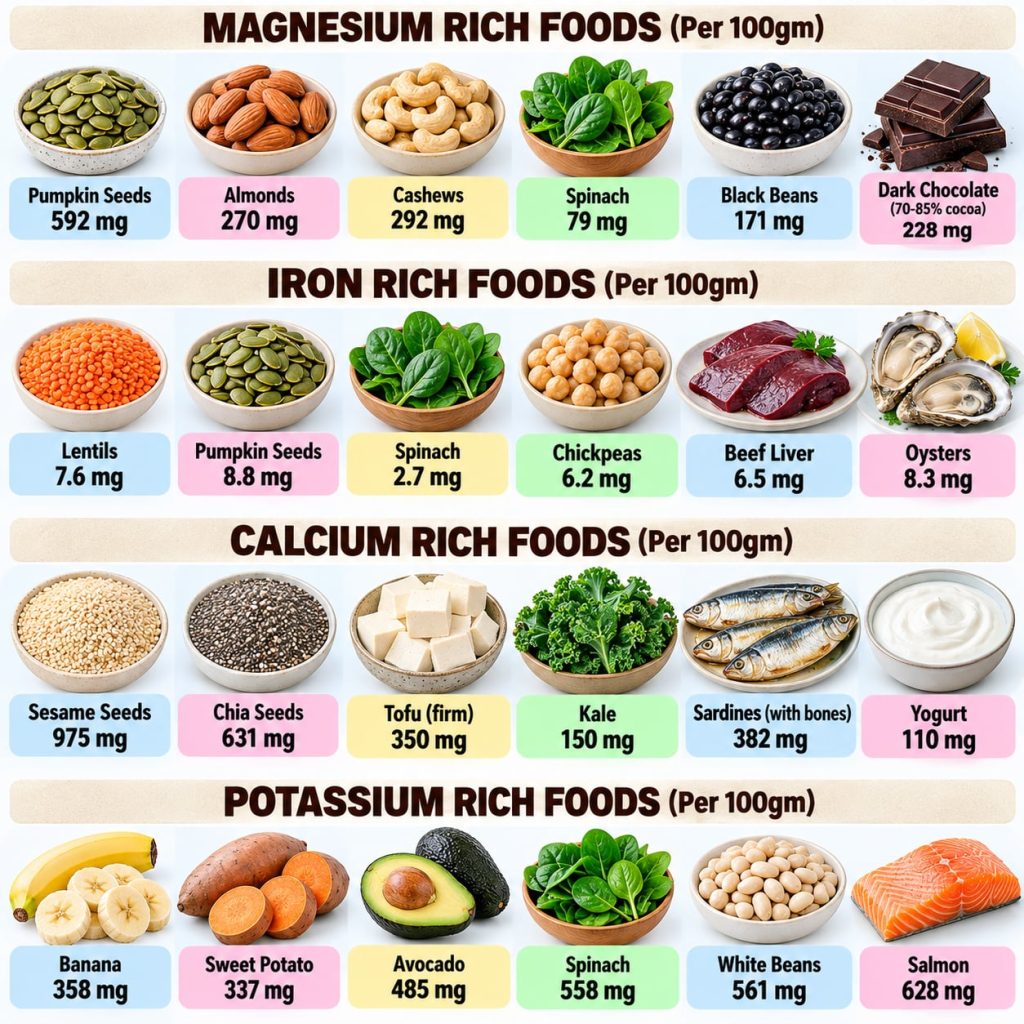
Magnesium is a powerhouse mineral involved in over 300 biochemical reactions in the body. It may support muscle and nerve function, blood glucose control, and blood pressure regulation. It also plays a key role in energy production, protein synthesis, and bone health.
Foods Rich in Magnesium:
- Leafy Green Vegetables: Spinach, kale, and Swiss chard are excellent sources.
- Nuts and Seeds: Almonds, cashews, peanuts, pumpkin seeds, and chia seeds are packed with magnesium.
- Legumes: Black beans, lentils, and chickpeas can contribute to your daily intake.
- Whole Grains: Brown rice, whole wheat, and oats provide good amounts.
- Avocado: A delicious and versatile fruit rich in magnesium.
- Dark Chocolate: A tasty treat that also offers a boost of magnesium (in moderation!).
Iron: The Energy Booster
Iron is essential for producing hemoglobin, a protein in red blood cells that carries oxygen from your lungs to all parts of your body. Without enough iron, you may feel tired and weak. There are two types of iron: heme iron (found in animal products) and non-heme iron (found in plant-based foods).
Foods Rich in Iron:
- Red Meat: Beef, lamb, and pork are rich in highly absorbable heme iron.
- Poultry: Chicken and turkey, especially the dark meat, contain iron.
- Fish: Tuna, salmon, and sardines are good sources.
- Legumes: Lentils, beans, and chickpeas provide non-heme iron.
- Spinach and Kale: These leafy greens are also good sources of non-heme iron.
- Fortified Cereals: Many breakfast cereals are fortified with iron.
- Pumpkin Seeds: A great snack for an iron boost.
To enhance the absorption of non-heme iron, pair it with foods rich in Vitamin C, such as citrus fruits, bell peppers, and broccoli.
Calcium: For Strong Bones and More
Calcium is well-known for its role in building and maintaining strong bones and teeth. However, its importance extends beyond that; calcium is also vital for muscle function, nerve transmission, and hormone secretion.
Foods Rich in Calcium:
- Dairy Products: Milk, yogurt, and cheese are classic calcium sources.
- Leafy Greens: Collard greens, kale, and broccoli contain significant calcium.
- Fortified Foods: Many plant-based milks (almond, soy, oat) and orange juices are fortified with calcium.
- Sardines and Canned Salmon: The edible bones in these fish are a fantastic source of calcium.
- Tofu: Calcium-set tofu is a great plant-based option.
- Sesame Seeds: Including tahini or whole seeds can add calcium to your diet.
Potassium: The Balance Keeper
Potassium is an electrolyte that plays a critical role in maintaining fluid balance, nerve signals, and muscle contractions. It may also help to offset the effects of sodium on blood pressure, contributing to cardiovascular health.
Foods Rich in Potassium:
- Bananas: One of the most famous sources of potassium.
- Sweet Potatoes: A delicious and versatile vegetable packed with potassium.
- Avocado: Another multi-mineral star, rich in potassium.
- Spinach: Again, this leafy green shows its nutritional prowess.
- Beans and Lentils: These legumes are excellent sources.
- Oranges: Citrus fruits offer potassium along with Vitamin C.
- Tomatoes: Fresh tomatoes and tomato paste are good sources.
Making Mineral-Rich Eating Easy
Incorporating these mineral-rich foods into your diet doesn’t have to be complicated. Simple changes, like adding spinach to your morning smoothie, snacking on almonds, or choosing whole grains over refined options, can make a significant difference. Variety is key to ensure you’re getting a broad spectrum of essential minerals.
Which of these mineral-rich foods do you already love to eat? By prioritizing these nutrient-dense options, you can help your body function optimally and enjoy improved energy levels, stronger bones, and overall better health!