Broccoli is a nutritional powerhouse, packed with vitamins, minerals, and fiber, making it a staple in many healthy diets. But did you know that how you prepare this versatile green can significantly impact its nutritional value? From crunchy roasted florets to tender steamed spears or even a creamy, cheesy side, each cooking method tells a different story for your plate.
Understanding these differences can help you make informed choices that align with your wellness goals. Let’s dive into how steaming, roasting, and adding cheese sauce can change the calorie and fat content, along with other key nutrients, of your beloved broccoli.
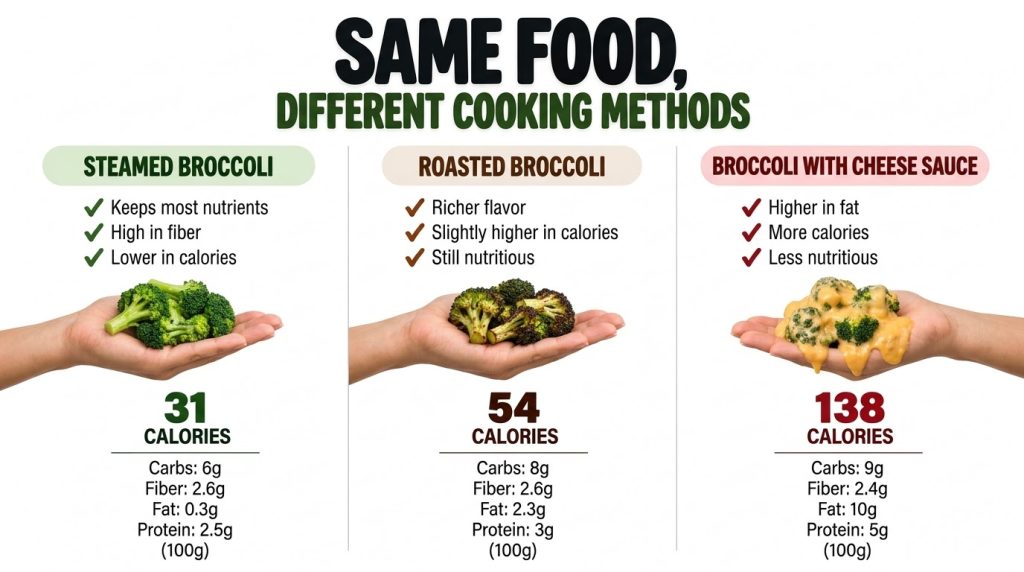
Steamed Broccoli: The Nutrient Preserver
Steaming is often hailed as one of the healthiest ways to cook vegetables, and for good reason. This gentle method cooks broccoli using hot vapor, which helps retain a significant portion of its water-soluble vitamins, like Vitamin C and some B vitamins, that might otherwise leach into boiling water. It also keeps the calorie and fat content naturally low, making it an excellent choice for those focusing on nutrient density and weight management.
- Preparation: Simple, quick, and requires minimal added ingredients.
- Taste & Texture: Tender-crisp with a bright green color, retaining broccoli’s natural, earthy flavor.
- Nutritional Impact: Generally preserves the highest amount of vitamins and minerals. The calorie and fat content remains very close to raw broccoli, primarily from the vegetable itself.
Roasted Broccoli: Flavorful and Slightly More Concentrated
Roasting broccoli transforms it, bringing out a deeper, nuttier flavor and a delightful tender-crisp texture with slightly caramelized edges. When roasted with a minimal amount of healthy oil (like olive oil) and seasonings, it can still be a very healthy option. However, the addition of oil will naturally increase the fat and calorie content compared to plain steamed broccoli.
- Preparation: Roasting typically involves a small amount of oil and seasoning at a high temperature.
- Taste & Texture: Crispier texture, with a richer, slightly sweet, and savory flavor.
- Nutritional Impact: While still highly nutritious, the added oil will contribute to a higher fat and calorie count. The concentration of nutrients may slightly increase as some water content evaporates during roasting.
Broccoli with Cheese Sauce: The Indulgent Choice
There’s no denying that broccoli smothered in a creamy, savory cheese sauce is a comfort food classic. While undeniably delicious, this preparation method significantly alters the nutritional profile of the broccoli. The addition of dairy products like butter, milk, and cheese, especially in generous amounts, will substantially increase the total calories, saturated fat, and sometimes sodium.
- Preparation: Involves preparing a béchamel or similar cheese sauce to coat the cooked broccoli.
- Taste & Texture: Creamy, rich, and often very satisfying.
- Nutritional Impact: This method adds a considerable amount of fat and calories due to the cheese and other sauce ingredients. While it may increase calcium intake, it’s generally a more calorie-dense option that should be enjoyed in moderation as part of a balanced diet.
Making the Best Choice for You
Broccoli, in any form, offers valuable nutrients. The best way to enjoy it depends on your dietary goals and personal preferences. If you’re aiming for maximum nutrient retention and minimal calories, steaming is an excellent choice. If you prefer a more robust flavor and don’t mind a slight increase in fat, roasting can be wonderfully delicious. And for those occasional treats, broccoli with cheese sauce can be a comforting and flavorful dish.
Remember, the most important thing is to incorporate plenty of vegetables like broccoli into your diet regularly. Small adjustments in preparation can make a big difference in your overall nutritional intake.
Disclaimer: This article is for informational purposes only and is not intended to be a substitute for professional medical advice, diagnosis, or treatment. Always seek the advice of your physician or other qualified health provider with any questions you may have regarding a medical condition.