Are you looking for a simple, eco-friendly way to enrich your garden soil and reduce household waste? Look no further! Composting is a fantastic gardening secret that turns everyday kitchen scraps into nutrient-rich ‘garden gold’. And guess what? It’s much easier than you might think, even if you have a small garden or are new to the composting world.
Why Composting is a Game-Changer for Your Garden
Composting is essentially recycling organic matter, like fruit and vegetable peels, coffee grounds, and leaves, into a dark, crumbly material called humus. This humus is packed with essential nutrients that plants absolutely love. When you add compost to your garden soil, you’re not just feeding your plants; you’re also:
- Improving Soil Structure: Compost helps sandy soils retain water and nutrients, and breaks up heavy clay soils, making them easier to work with.
- Boosting Plant Health: Healthy soil means stronger, more resilient plants that are better able to resist pests and diseases.
- Reducing Waste: Divert kitchen and garden waste from landfills, doing your part for the environment.
- Saving Money: Reduce the need for synthetic fertilizers and expensive soil amendments.
The Magic of Banana Peels in Your Compost
While almost all fruit and vegetable scraps are good for compost, banana peels are particularly beneficial. They are rich in potassium, phosphorus, and calcium – vital nutrients that encourage strong root development, healthy flowering, and robust fruit production. Don’t toss those peels; give them a new life in your garden!
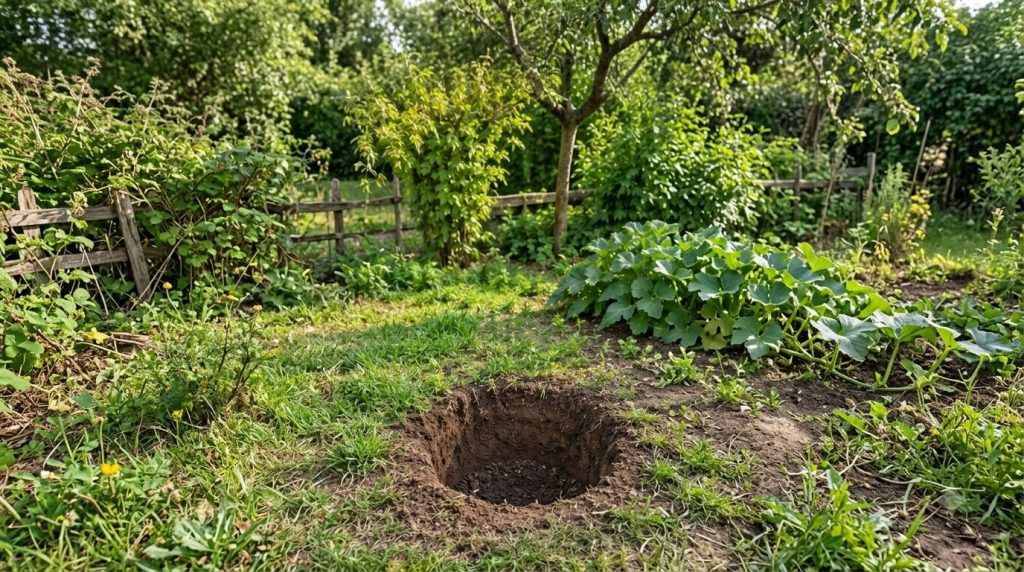
DIY In-Ground Composting System with a Recycled Basket
This method is perfect for those who want a discreet and efficient way to compost without a large compost bin. Plus, it’s super easy!
Materials You’ll Need:
- A recycled plastic laundry basket, storage bin, or any sturdy plastic container with plenty of holes (or that you can easily drill holes into).
- A shovel.
- Your kitchen scraps (banana peels, vegetable trimmings, coffee grounds, eggshells, etc.).
- A small lid or cover for the basket (optional, but good for keeping critters out).
Step-by-Step Guide:
- Choose Your Spot: Select a well-drained area in your garden, ideally near plants that will benefit from the compost. Make sure it’s not too close to your house to avoid attracting unwanted attention from pests.
- Dig the Hole: Dig a hole slightly wider and deeper than your recycled basket.
- Prepare the Basket: If your basket doesn’t have many holes, drill several holes (about ½ inch to 1 inch in diameter) all over the sides and bottom. This allows for aeration and for beneficial microbes and worms to access your compost.
- Bury the Basket: Place the basket into the hole. The top rim should be level with or slightly above the ground. Backfill any gaps around the sides with soil, compacting it gently.
- Start Composting: Begin adding your kitchen scraps directly into the basket. Layering different types of scraps helps.
- Cover It Up: If you’re concerned about pests or odor, place a lid or a layer of soil/leaves over the top of the basket after adding scraps.
- Let Nature Do Its Work: The scraps will slowly break down over time, enriching the surrounding soil as nutrients leach out. Worms and other soil organisms will do most of the work for you!
What Else Can You Compost? (And What to Avoid!)
Compost YES!
- Fruit and vegetable scraps
- Coffee grounds and filters
- Tea bags
- Eggshells (crushed)
- Yard waste (leaves, grass clippings, small twigs)
- Shredded newspaper or cardboard (in moderation)
Compost NO!
- Meat, bones, and dairy products (can attract pests and create odor)
- Oils and greasy foods
- Diseased plants (can spread pathogens)
- Pet waste (can contain harmful bacteria)
- Chemically treated wood or sawdust
Tips for Successful In-Ground Composting
- Chop Scraps: Smaller pieces break down faster.
- Moisture Balance: Keep the compost moist, like a wrung-out sponge. If it gets too dry, add a little water. If too wet, add some dry leaves or shredded paper.
- Balance Greens & Browns: “Greens” (like kitchen scraps, grass clippings) provide nitrogen, while “browns” (like dry leaves, shredded cardboard) provide carbon. A good balance helps speed up decomposition.
- Location Matters: Place your in-ground system near hungry plants so they can directly benefit from the nutrients released.
Embracing composting is a rewarding journey that connects you more deeply with your garden and the environment. With this simple in-ground system, you’re not just disposing of waste; you’re actively creating a healthier, more vibrant garden, one banana peel at a time! Happy composting!