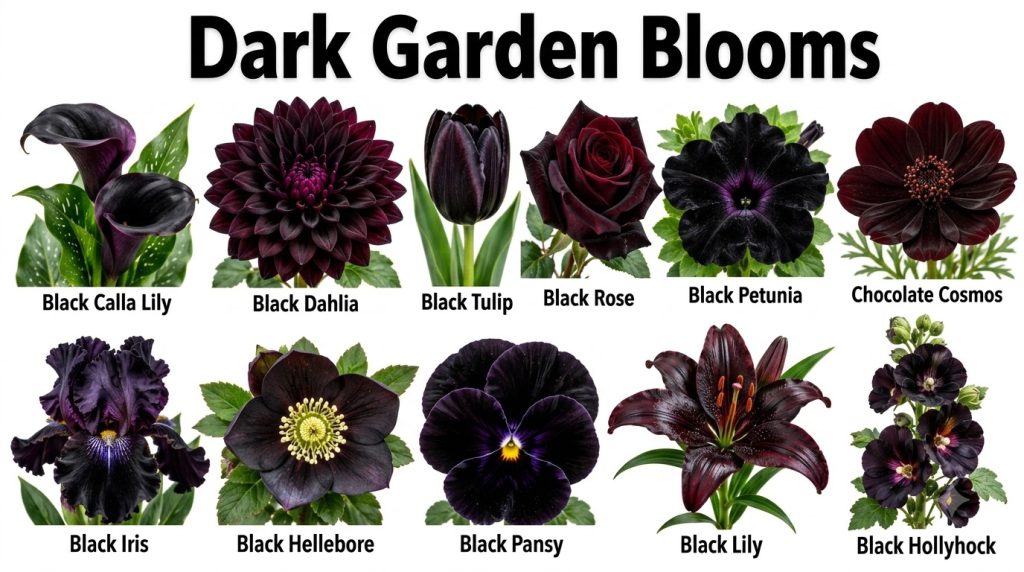
Imagine a garden where rich, velvety hues create a sense of mystery and sophistication. While truly black flowers are rare in nature, many plants boast such deep shades of maroon, purple, or blue that they appear black, adding incredible depth and drama to any landscape. These striking dark blooms aren’t just a novelty; they are an invitation to explore a new dimension of garden design, providing a stunning contrast to brighter colors and lush greens.
If you’ve ever felt your garden was missing that captivating ‘wow’ factor, introducing these enigmatic beauties might be exactly what you need. From elegant roses to whimsical pansies and exotic curiosities, there’s a dark bloom to suit every gardener and every space. Join us as we explore 11 mesmerizing plants that will transform your garden into a captivating oasis, offering practical tips to help them thrive.
The Magic of Dark Blooms in Your Garden
Dark-colored flowers and foliage plants serve multiple purposes in garden design. They create a focal point, draw the eye, and add a sense of intrigue. When paired with vibrant greens, silvers, or bright contrasting colors like lime green, fuchsia, or sunny yellow, their deep tones truly pop. They can make other colors appear more intense and rich, enhancing the overall visual impact of your planting scheme. Incorporating these plants allows you to play with light and shadow, giving your garden a more dynamic and sophisticated feel. Many dark blooms also boast unique textures and forms that contribute significantly to the garden’s character.
Discovering 11 Striking Dark Flowers for Your Landscape
Let’s dive into some of the most captivating dark-hued plants you can grow, offering their specific needs and practical care advice.
Black Baccara Rose (Rosa ‘Black Baccara’)
This hybrid tea rose is renowned for its deep, velvety, almost black-red petals. It’s often favored by florists for its dramatic appearance and long vase life.
- Hardiness: USDA Zones 5-9
- Plant type: Deciduous shrub (perennial)
- Exposure: Full sun (at least 6 hours daily)
- Height: 3-5 feet
- Spread: 2-3 feet
Care Tip: ‘Black Baccara’ thrives in rich, well-draining soil. Provide consistent moisture, especially during dry spells, and fertilize regularly during the growing season. Prune in early spring to encourage new growth and maintain shape. For the darkest blooms, some afternoon shade can prevent petal scorching in hot climates.
Black Calla Lily (Zantedeschia)
While often called ‘Black Calla Lily’, these striking flowers are typically an intensely dark purple, appearing black in many light conditions. Cultivars like ‘Black Star’ or ‘Black Magic’ offer a sleek, modern aesthetic.
- Hardiness: USDA Zones 8-10 (perennial); grown as an annual or potted plant elsewhere
- Plant type: Tender perennial (tuberous)
- Exposure: Full sun to partial shade (more sun for more blooms, partial shade in hot climates)
- Height: 1-3 feet
- Spread: 1-2 feet
Care Tip: Plant calla lily rhizomes in well-draining soil rich in organic matter. Keep the soil consistently moist but never waterlogged. In colder zones, dig up the rhizomes after the first frost and store them indoors for winter.
Black Pansy (Viola x wittrockiana)
These charming annuals, with cultivars like ‘Black King’ or ‘Black Accord’, feature velvety petals in shades of darkest purple or deep maroon, giving them a truly black appearance. They are excellent for cool-season planting.
- Hardiness: Typically grown as an annual; may overwinter in USDA Zones 6-8 with protection
- Plant type: Annual/Short-lived perennial
- Exposure: Full sun to partial shade
- Height: 6-10 inches
- Spread: 6-12 inches
Care Tip: Plant pansies in fertile, well-draining soil. They prefer cooler temperatures, so plant in early spring or fall. Deadhead spent blooms regularly to encourage continuous flowering and prevent self-seeding, which can dilute the ‘black’ trait over time.
Black Hollyhock (Alcea rosea ‘Nigra’)
This classic cottage garden favorite produces tall spires of single, deep maroon-black flowers that stand out dramatically against lighter backdrops. ‘Nigra’ is one of the darkest cultivars available.
- Hardiness: USDA Zones 3-8 (biennial/short-lived perennial)
- Plant type: Biennial/Short-lived perennial
- Exposure: Full sun
- Height: 5-8 feet
- Spread: 1-2 feet
Care Tip: Hollyhocks need full sun and well-drained soil. Due to their height, they often benefit from staking, especially in windy areas. Watch out for rust disease, a common issue, and ensure good air circulation. Plant from seed in late summer for blooms the following year.
Black Petunia (Petunia x hybrida)
Cultivars like ‘Black Velvet’ and ‘Phantom’ offer truly stunning, almost black flowers that are actually an incredibly deep, dark purple. They are fantastic for containers, hanging baskets, and front-of-border planting.
- Hardiness: Grown as an annual in all zones
- Plant type: Annual
- Exposure: Full sun
- Height: 8-12 inches (mounding/trailing varieties available)
- Spread: 12-24 inches
Care Tip: Petunias require full sun and consistently moist, well-draining soil. Fertilize regularly with a balanced liquid fertilizer to support their prolific blooming. Pinching back leggy stems will encourage a bushier plant and more flowers. ‘Black Velvet’ does not require deadheading.
Black Mondo Grass (Ophiopogon planiscapus ‘Nigrescens’)
While not a flower, this striking ornamental grass offers incredibly dark, almost black, strap-like foliage. It creates a bold contrast and unique texture in beds, borders, or containers.
- Hardiness: USDA Zones 5-10
- Plant type: Evergreen perennial (grass-like)
- Exposure: Full sun to partial shade (more sun for darkest color)
- Height: 6-12 inches
- Spread: 6-12 inches
Care Tip: Plant ‘Nigrescens’ in moist, well-draining soil. It’s relatively low-maintenance but benefits from division every few years to maintain vigor. Its slow spreading habit makes it an excellent groundcover or border plant.
Black Dahlia (Dahlia cultivars)
Many dahlia varieties, such as ‘Arabian Night’ or ‘Black Satin’, produce magnificent, fully double flowers in shades of deep burgundy, chocolate, or darkest red that appear black. Their intricate petals create a luxurious texture.
- Hardiness: USDA Zones 8-11 (perennial); grown as an annual from tubers elsewhere
- Plant type: Tender perennial (tuberous)
- Exposure: Full sun
- Height: 2-4 feet (variable by cultivar)
- Spread: 1-3 feet
Care Tip: Plant dahlia tubers in spring after the last frost in rich, well-draining soil. Provide consistent watering and support taller varieties with stakes. Deadhead regularly to encourage more blooms until the first hard frost. In colder zones, lift tubers in fall and store indoors.
Chocolate Cosmos (Cosmos atrosanguineus)
This exquisite flower offers a unique combination: deep maroon-brown, almost black petals and a delightful scent reminiscent of vanilla or cocoa. It’s a true conversation starter in any garden.
- Hardiness: USDA Zones 7-10 (perennial); grown as an annual from tubers elsewhere
- Plant type: Tender perennial (tuberous)
- Exposure: Full sun
- Height: 1-2 feet
- Spread: 1-1.5 feet
Care Tip: Chocolate Cosmos prefers full sun and well-drained soil. They are somewhat drought-tolerant once established but appreciate consistent moisture. Protect tubers from winter wet and cold in marginal zones, or lift and store them like dahlias.
Bat Flower (Tacca chantrieri)
For the adventurous gardener, the Bat Flower is an extraordinary tropical plant with intricate, almost black, bat-like flowers and long ‘whiskers’. It’s a spectacular houseplant or outdoor annual in warm climates.
- Hardiness: USDA Zones 10-11 (perennial); houseplant elsewhere
- Plant type: Tropical perennial
- Exposure: Partial shade (indoors: bright, indirect light)
- Height: 1.5-3 feet
- Spread: 1-2 feet
Care Tip: Bat Flowers require high humidity, consistent warmth, and very well-draining, rich soil. Avoid direct, harsh sunlight. Indoors, use a humidifier or pebble tray. Water when the top inch of soil feels dry, but do not allow it to dry out completely.
Black Scabiosa (Scabiosa atropurpurea ‘Black Knight’)
Also known as ‘Pincushion Flower’, ‘Black Knight’ produces striking, deeply colored, dark maroon to black flowers with prominent white stamens. It’s a magnet for pollinators and adds a whimsical touch to borders.
- Hardiness: USDA Zones 3-7 (perennial); often grown as an annual in hotter climates
- Plant type: Perennial (short-lived)
- Exposure: Full sun
- Height: 2-3 feet
- Spread: 1-1.5 feet
Care Tip: Plant ‘Black Knight’ in well-drained soil. Deadhead spent flowers to prolong blooming and prevent excessive self-seeding. It’s an excellent cut flower, and its dark color pairs beautifully with brighter garden staples.
Black Lily (Lilium cultivars)
While no lily is truly black, many Asiatic and Oriental lily cultivars, such as ‘Night Rider’ or ‘Black Beauty’, feature incredibly deep, dark purple-red petals that appear black in the garden. They add a touch of regal elegance.
- Hardiness: USDA Zones 3-8 (perennial)
- Plant type: Perennial (bulb)
- Exposure: Full sun to partial shade (shading roots is beneficial)
- Height: 2-5 feet (variable by cultivar)
- Spread: 1-2 feet
Care Tip: Plant lily bulbs in well-draining, fertile soil in fall or early spring, burying them about 6-8 inches deep. They prefer their ‘feet in the shade and head in the sun,’ so consider planting low-growing groundcovers around their base. Provide consistent moisture, especially during bloom time, and stake taller varieties.
Common Pitfalls and How to Avoid Them
When growing dark-colored plants, a few considerations can make all the difference:
- Insufficient Light: While some dark plants tolerate partial shade, many require ample sunlight for their colors to truly deepen and become intense. Too much shade can result in greener or lighter-toned foliage and fewer blooms.
- Overwatering: Most of these plants, especially those grown from tubers or bulbs, are susceptible to root rot if the soil remains waterlogged. Always ensure excellent drainage.
- Lack of Contrast: Planting dark flowers alone can make them disappear into the landscape. Pair them with plants that have chartreuse foliage, silver leaves, or bright, bold flowers to maximize their dramatic impact.
- Pest and Disease Visibility: Dark foliage can sometimes make it harder to spot pests like aphids or spider mites early. Regularly inspect the undersides of leaves and stems.
Tailoring to Your Climate: USDA Zones and Beyond
Understanding USDA hardiness zones is crucial for success. For plants listed as perennials (e.g., Black Baccara Rose, Black Mondo Grass), the zone indicates their ability to survive winter cold outdoors. If you live in a colder zone than a plant’s listed range (e.g., growing a ‘Black Calla Lily’ in Zone 6), you’ll likely need to grow it as an annual, bring it indoors for winter, or treat it as a houseplant (like the Bat Flower).
Always check your local frost dates before planting tender annuals or setting out perennials in spring. Soil temperature is often a better indicator than the calendar month. For summer planting, consider your region’s heat and humidity; some plants that thrive in full sun in cooler northern climates might appreciate afternoon shade in the scorching heat of the South or Southwest. Your local university extension service is an invaluable resource for specific regional guidance.
Embrace the Enigma in Your Garden
Incorporating these magnificent dark-hued plants into your garden is more than just a planting choice; it’s an artistic statement. They invite a sense of wonder and sophistication, transforming ordinary spaces into extraordinary displays. With a little attention to their specific needs for sunlight, soil, and water, you can cultivate a garden that not only flourishes but also captivates. Dare to explore the dramatic side of gardening and watch your landscape come alive with the mesmerizing allure of these stunning dark blooms!