Winter Wonders: Nurturing Cold-Tolerant Houseplants for a Vibrant Home
As the days grow shorter and the temperatures plummet, many indoor gardeners worry about their beloved houseplants. The shift from bright, warm conditions to cooler, drier air and reduced sunlight can be a challenging transition for tropical flora. However, you don’t have to pack away your green thumb just because winter arrives. With the right plant choices and a few thoughtful adjustments to your plant care routine, your home can remain a vibrant oasis, even through the chilliest months.
The secret lies in selecting houseplants that are naturally more resilient to the typical conditions of an indoor winter environment. These are the plants that can gracefully handle cooler room temperatures, lower humidity, and decreased light, allowing you to maintain a thriving indoor garden with confidence and ease. Let’s explore some of these robust beauties and discover how to keep them flourishing when it’s cold outside.
Thriving Indoors: Understanding “Cold-Hardy” Houseplants
When we talk about “cold-hardy” houseplants, we aren’t suggesting they can withstand freezing temperatures outdoors. Instead, we’re referring to plants that adapt well to the cooler indoor environments common during winter, typically between 55-65°F (13-18°C), and can tolerate the reduced natural light and often lower humidity found in heated homes. These plants are less prone to stress from drafts, temperature fluctuations, and the general dimness that accompanies winter.
Successful winter houseplant care often involves a slight shift in your usual routine. Think less water, as plants grow slower in cooler, lower-light conditions, and be mindful of humidity levels. Providing consistent, albeit reduced, care will help these resilient plants not just survive, but truly thrive, bringing life and color to your indoor spaces.
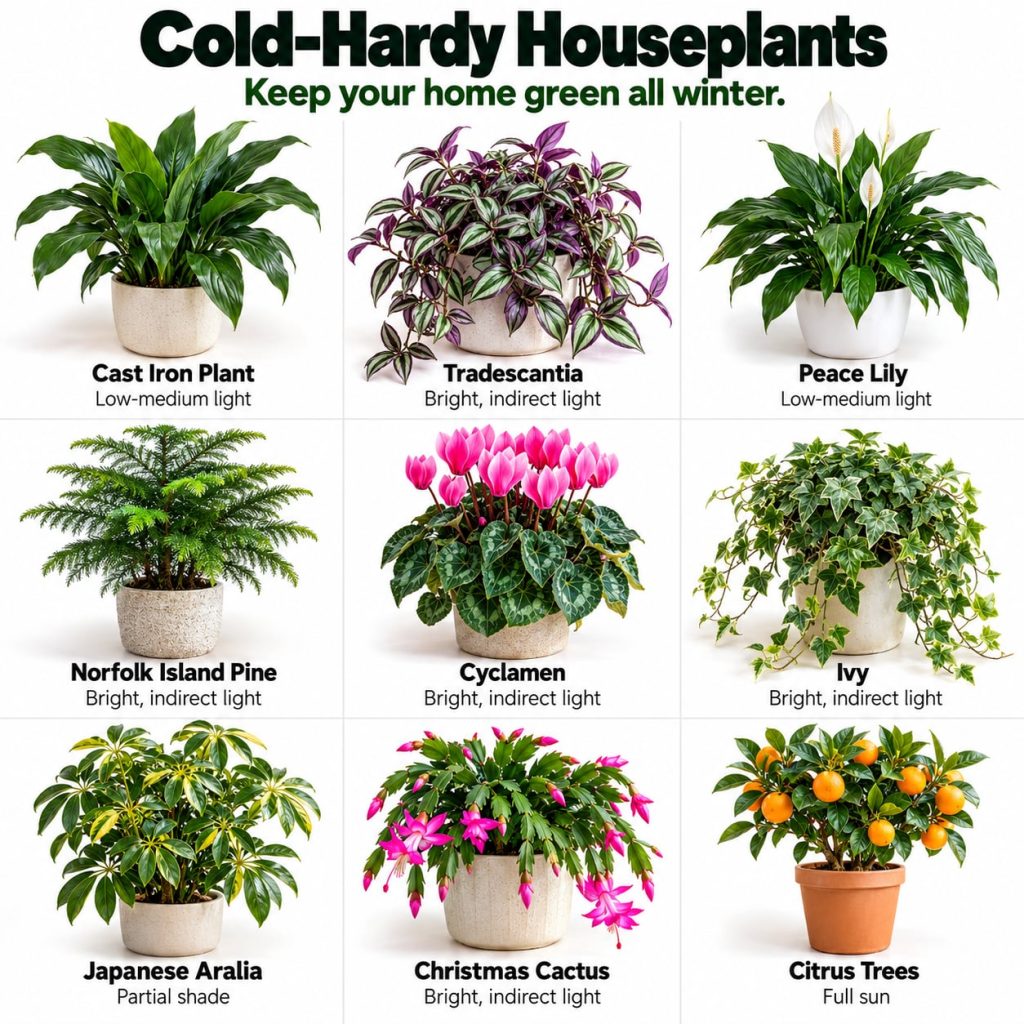 Discover nine resilient houseplants perfect for winter indoor conditions.
Your Guide to Resilient Indoor Greens
Let’s delve into the specific needs of nine fantastic houseplants that will brighten your home through the cold season.
1. ZZ Plant (Zamioculcas zamiifolia)
- Hardiness: Excellent tolerance for a range of indoor temperatures, typically 60-75°F (15-24°C), and very forgiving of dry air.
- Plant type: Tropical perennial, grown as a houseplant. Known for its waxy, dark green leaves.
- Exposure: Low to medium indirect light. It can even tolerate very low light conditions, making it perfect for dimmer winter rooms or offices. Avoid direct sun, which can scorch leaves.
- Watering: Infrequent. The ZZ plant stores water in its thick rhizomes, making it highly drought-tolerant. Allow the soil to dry out completely between waterings, especially in winter when growth slows. Overwatering is the quickest way to kill this plant.
- Soil: Well-draining potting mix, such as a mix formulated for succulents or general houseplants with added perlite.
- Practical Tip: If your ZZ plant is receiving very low light, water it even less frequently. A good rule of thumb is to wait until the top two inches of soil feel dry, then wait another week before watering.
2. Snake Plant (Sansevieria trifasciata)
- Hardiness: Very adaptable to indoor conditions, thriving in temperatures between 65-80°F (18-27°C) but tolerating cooler temps down to 50°F (10°C) for short periods.
- Plant type: Succulent perennial, forming upright, sword-like leaves.
- Exposure: Low to medium indirect light. While it tolerates low light, brighter indirect light will encourage faster growth and more vibrant variegation. Avoid harsh, direct sun.
- Watering: Infrequent. Like the ZZ plant, the Snake Plant is succulent and stores water in its leaves. Water only when the soil is completely dry, which might be every 2-4 weeks in winter.
- Soil: Well-draining cactus or succulent mix is ideal to prevent root rot.
- Practical Tip: Ensure excellent drainage. Choose a pot with a drainage hole and empty any excess water from the saucer promptly to prevent soggy roots.
3. Peace Lily (Spathiphyllum)
- Hardiness: Prefers consistent indoor temperatures of 65-80°F (18-27°C) and can tolerate moderate humidity. Avoid cold drafts.
- Plant type: Evergreen perennial, known for its elegant white spathes (modified leaves) that resemble flowers.
- Exposure: Bright, indirect light. While it tolerates medium light, consistent indirect light promotes better blooming. Direct sun can scorch its delicate leaves.
- Watering: Keep the soil consistently moist but never soggy. Peace Lilies are dramatic and will droop when thirsty, but quickly perk up after a good drink. Reduce frequency slightly in winter.
- Soil: Rich, well-draining potting mix.
- Practical Tip: If your Peace Lily starts to droop, it’s a clear sign it needs water. However, don’t let it sit in standing water. Test the soil moisture by inserting your finger about an inch deep; if it feels dry, it’s time to water.
4. Christmas Cactus (Schlumbergera)
- Hardiness: Thrives in average room temperatures (60-70°F or 15-21°C) but needs cooler nighttime temperatures (50-55°F or 10-13°C) and short daylight hours to set buds and bloom in late fall or winter.
- Plant type: Epiphytic cactus with segmented, flattened stems.
- Exposure: Bright, indirect light. Direct sun can scorch the stems.
- Watering: Water thoroughly when the top inch of soil feels dry. Reduce watering slightly after it finishes blooming, but don’t let it dry out completely.
- Soil: A loose, well-draining mix, such as a cactus mix with added peat or coco coir, is preferred.
- Practical Tip: To encourage blooming, ensure your Christmas Cactus gets at least 12-14 hours of uninterrupted darkness each night for 6-8 weeks, starting in early fall. Cooler temperatures during this period also help.
5. Cyclamen (Cyclamen persicum)
- Hardiness: Prefers cool indoor temperatures, ideally 50-65°F (10-18°C) during the day and even cooler at night. Warm rooms will shorten its bloom time.
- Plant type: Tuberous perennial, often grown as a seasonal houseplant.
- Exposure: Bright, indirect light. Direct sun will scorch leaves and hasten dormancy.
- Watering: Water from the bottom or carefully around the edge of the pot when the soil feels dry to the touch, avoiding the central crown of the plant to prevent rot.
- Soil: Light, well-draining potting mix, rich in organic matter.
- Practical Tip: After blooming, Cyclamen will typically go dormant. Reduce watering as leaves yellow and die back. Store the pot in a cool, dark place and resume watering when new growth appears in the fall.
6. Kalanchoe (Kalanchoe blossfeldiana)
- Hardiness: Tolerates average indoor temperatures (60-85°F or 15-29°C). Prefers dry conditions and is susceptible to rot in high humidity or cold, wet soil.
- Plant type: Succulent perennial, grown for its colorful, long-lasting flowers.
- Exposure: Full sun. Kalanchoe needs bright light to bloom prolifically. A south-facing window is ideal.
- Watering: Water thoroughly only when the soil is completely dry. Less frequent watering is required in winter.
- Soil: Well-draining cactus or succulent potting mix.
- Practical Tip: To encourage reblooming, Kalanchoe needs short day lengths (14-16 hours of darkness) for about 6 weeks. After the plant finishes flowering, prune spent blooms and place it in a spot with long nights to prepare for the next bloom cycle.
7. Citrus Trees (e.g., Meyer Lemon, Calamondin Orange)
- Hardiness: Tropical to subtropical plants (USDA Zones 9-11 outdoors). Indoors, they need protection from freezing and prefer consistent temperatures around 60-70°F (15-21°C).
- Plant type: Small evergreen trees or shrubs.
- Exposure: Full sun. Citrus trees require at least 8 hours of direct sunlight daily, even indoors. A south-facing window or supplemental grow lights are often necessary in winter.
- Watering: Keep the soil consistently moist but never soggy. Water when the top inch of soil feels dry. Reduce frequency slightly in winter, but do not let it dry out completely.
- Soil: Well-draining, slightly acidic potting mix formulated for citrus or palms.
- Practical Tip: Humidity is crucial for indoor citrus. Mist daily, use a pebble tray, or place a humidifier nearby to prevent leaf drop and pest infestations like spider mites, which thrive in dry conditions.
8. Tradescantia (Tradescantia zebrina, commonly “Inch Plant”)
- Hardiness: Thrives in typical indoor temperatures (60-75°F or 15-24°C) and can tolerate average to slightly lower humidity.
- Plant type: Trailing perennial, often grown as an annual outdoors or houseplant indoors, admired for its colorful, often striped foliage.
- Exposure: Bright, indirect light. Good light is essential to maintain vibrant leaf coloration. Too little light can make the plant leggy and dull its colors.
- Watering: Keep soil consistently moist but not waterlogged. Water when the top inch of soil feels dry. It’s more forgiving of slight underwatering than overwatering.
- Soil: Standard well-draining potting mix.
- Practical Tip: Pinch back leggy stems regularly to encourage bushier growth and propagate the cuttings to create new plants or fill out the existing pot. This helps maintain a compact, attractive shape.
9. Orchids (Phalaenopsis, “Moth Orchid”)
- Hardiness: Prefers consistent indoor temperatures between 65-80°F (18-27°C) during the day and slightly cooler at night. Protect from cold drafts.
- Plant type: Epiphytic perennial, popular for its long-lasting, elegant blooms.
- Exposure: Bright, indirect light. A north or east-facing window is often ideal. Too much direct sun can scorch leaves, while too little light inhibits blooming.
- Watering: Water thoroughly when the growing medium is nearly dry. For most Phalaenopsis in bark, this means every 7-10 days, but frequency depends on humidity and pot size. Avoid getting water in the crown of the plant.
- Soil: Specialized orchid potting mix, typically bark chips, sphagnum moss, or a blend that provides excellent aeration and drainage.
- Practical Tip: Observe the roots and growing medium. Healthy Phalaenopsis roots are plump and green when wet, silvery when dry. When the roots turn silvery, it’s usually time to water. Increase humidity with a pebble tray or humidifier, especially when heaters are running.
Common Winter Houseplant Mistakes to Avoid
Even with resilient plants, winter presents unique challenges. Being aware of common pitfalls can save your plants from unnecessary stress:
- Overwatering: This is the most common killer of houseplants in winter. Reduced light and cooler temperatures mean plants use less water. Always check soil moisture before watering.
- Insufficient Light: Even “low-light tolerant” plants need *some* light. Winter’s weak sun and shorter days mean plants near windows get less light than in summer. Consider moving plants closer to a window or using a supplemental grow light if your home is particularly dim.
- Lack of Humidity: Central heating systems drastically dry out indoor air. Many houseplants, especially tropical varieties, suffer. Use humidifiers, pebble trays, or group plants to create microclimates.
- Neglecting Pest Checks: Stressed plants are more vulnerable to pests. Dry air, in particular, can encourage spider mites. Regularly inspect your plants, especially the undersides of leaves, and address any infestations quickly with insecticidal soap or neem oil.
- Drafts and Temperature Extremes: Keep plants away from cold, drafty windows or heat vents that can cause sudden temperature fluctuations and stress.
Adapting Your Care Across U.S. Climates (Indoor Focus)
While USDA hardiness zones primarily apply to outdoor gardening, the interior climate of your home can still vary greatly depending on your region. In colder northern states (like those in Zones 3-5), your heating system might run more frequently, leading to drier air, and natural light levels will be significantly lower. Conversely, in warmer southern states (Zones 9-11), you might have less intense heating and more consistent natural light, but humidity levels could still drop in dry winter spells.
The key is to observe your indoor environment. If your home is consistently warm and dry, focus on increasing humidity. If it’s cooler and dimmer, prioritize light and reduce watering frequency. Always remember that each plant is unique; observe its leaves, growth, and soil to determine its specific needs, rather than following a rigid schedule.
Embrace the Winter Garden Indoors
Winter doesn’t have to mean a lull in your gardening passion. By choosing the right plants and adjusting your care to match the season, you can enjoy lush, green companions that bring life and warmth to your home when the world outside is gray. These cold-tolerant houseplants are not just survivors; they are thriving testaments to nature’s resilience, ready to bring beauty and joy into your everyday life. So go ahead, confidently cultivate your indoor sanctuary, and let these winter wonders inspire you through the colder months!