Tired of scrubbing away at stubborn soap scum and hard water stains on your shower doors and tiles? It’s a common bathroom battle, but getting that sparkling, streak-free finish doesn’t have to be an exhausting chore. This simple DIY foaming cleaner is designed to tackle grime effectively, allowing the suds to do much of the heavy lifting for you.
It’s an affordable and practical solution that uses common household ingredients, offering a satisfying clean without harsh chemicals or endless scrubbing.
What You’ll Need
- 1/2 cup white vinegar
- 1/2 cup water
- 1/4 cup liquid dish soap (like Dawn)
- An empty spray bottle
- A clean microfiber cloth or sponge
- A squeegee (optional, for streak-free drying)
- Measuring cups
Why This DIY Can Be Useful
This homemade cleaner combines the power of two household champions: white vinegar and dish soap.
White vinegar is an acidic solution that excels at dissolving mineral deposits like hard water spots and soap scum, which are common culprits behind cloudy shower doors. Its natural disinfectant properties also help in freshening up your bathroom.
Liquid dish soap, on the other hand, is a powerful degreaser. It cuts through oily residues and helps to lift away dirt and grime, while also creating the satisfying foam that helps the solution cling to vertical surfaces and work its magic.
How to Make It
- Carefully measure out 1/2 cup of white vinegar and pour it into your empty spray bottle.
- Add 1/2 cup of water to the spray bottle.
- Next, add 1/4 cup of liquid dish soap.
- Attach the spray nozzle firmly and gently swirl the bottle to combine the ingredients. Avoid shaking vigorously, as this can create too much foam inside the bottle, making it hard to spray.
How to Use It
This cleaner is perfect for glass shower doors, tiled walls, and even fiberglass tubs.
- Prepare the Area: If your shower is already wet, a quick rinse with warm water can help.
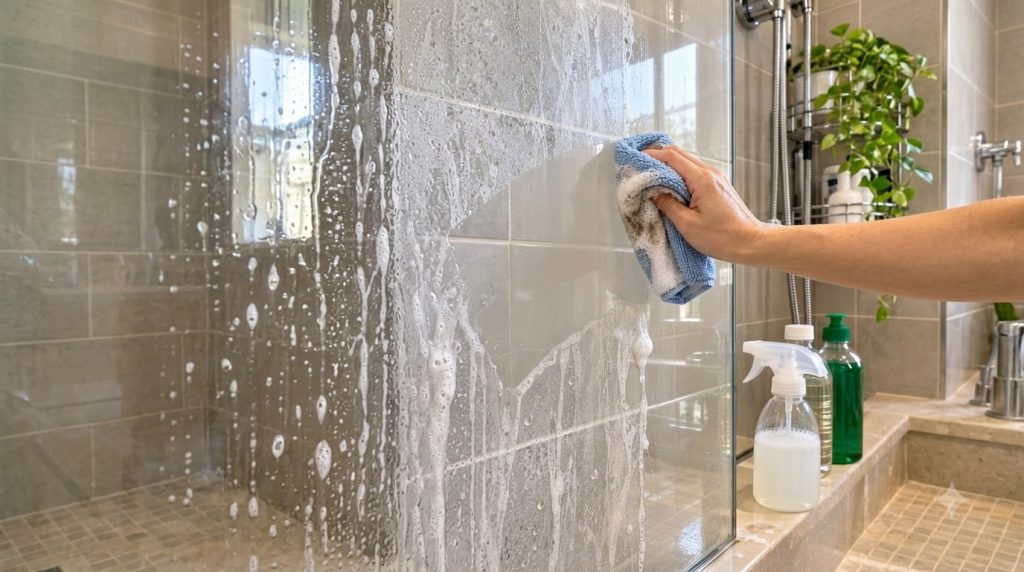
- Apply the Cleaner: Spray a generous amount of the DIY foaming cleaner directly onto your shower door, tiled walls, or other surfaces you want to clean. Ensure full coverage, especially on areas with heavy soap scum.
- Let It Work: Allow the solution to sit on the surfaces for at least 5-10 minutes. For tougher stains, you might extend this to 15-20 minutes. The foam will help the solution adhere and break down the grime.
- Light Scrub (if needed): After the waiting time, use a clean microfiber cloth or sponge to lightly wipe down and scrub any remaining stubborn spots. You should find that the grime comes off much more easily.
- Rinse Thoroughly: Rinse the cleaned surfaces thoroughly with warm water, making sure to wash away all the soap and loosened grime.
- Dry for Shine: For a streak-free finish on glass, use a squeegee to wipe down the doors immediately after rinsing. For tiles, a clean, dry cloth will do.
What to Expect
You can expect a noticeable reduction in soap scum, hard water stains, and general grime. Your shower doors and tiles should appear much clearer, shinier, and more refreshed. While it may not remove decades of built-up stains instantly, consistent use will maintain a sparkling bathroom with minimal effort.
Helpful Tips
- Regular Cleaning: For best results and to prevent heavy build-up, use this cleaner regularly, perhaps once a week.
- Warm Water Boost: If your shower is cold, you can run the shower for a minute or two before applying the cleaner. Warm surfaces can sometimes help the solution work more effectively.
- Squeegee After Every Shower: To drastically reduce soap scum and water spots, keep a squeegee in your shower and use it to wipe down glass doors after every use.
Important Notes / Safety
- Ventilation: Always ensure good ventilation when cleaning, especially when using vinegar-based solutions. Open a window or turn on the bathroom fan.
- Surface Compatibility: While generally safe for most bathroom surfaces, avoid using vinegar on natural stone like marble, granite, or travertine, as its acidity can etch the surface. Always patch test in an inconspicuous area if unsure.
- Storage: Store the cleaner in a cool, dry place, out of reach of children and pets.
- Do Not Mix: Never mix vinegar with bleach, as this can create dangerous chlorine gas.