Did you know that the secret to a thriving, vibrant garden might already be hiding in your kitchen? Just like we nourish our bodies with wholesome, natural foods and healthy drinks, our plants also benefit immensely from a little natural love. Choosing homemade plant food is not only eco-friendly and cost-effective but also a wonderful way to connect with your garden and practice sustainable living.
Why Go Natural? The Benefits for Your Garden
Opting for natural fertilizers derived from everyday household items offers a multitude of advantages for your plants and the environment:
- Gentle Nutrition: Natural remedies tend to release nutrients slowly, providing a steady, balanced diet for your plants without the risk of chemical burn or nutrient overload.
- Soil Health: These natural ingredients often improve soil structure, fostering beneficial microorganisms that are vital for long-term soil fertility and plant resilience.
- Eco-Friendly: By repurposing kitchen scraps, you reduce waste and avoid introducing synthetic chemicals into your garden, protecting local ecosystems and pollinators.
- Cost-Effective: Many ingredients are free or very inexpensive, turning potential waste into valuable resources for your green friends.
6 Simple Homemade Plant Foods to Try
Ready to give your garden the natural boost it deserves? Here are six easy, effective, and natural plant food recipes you can make right at home!
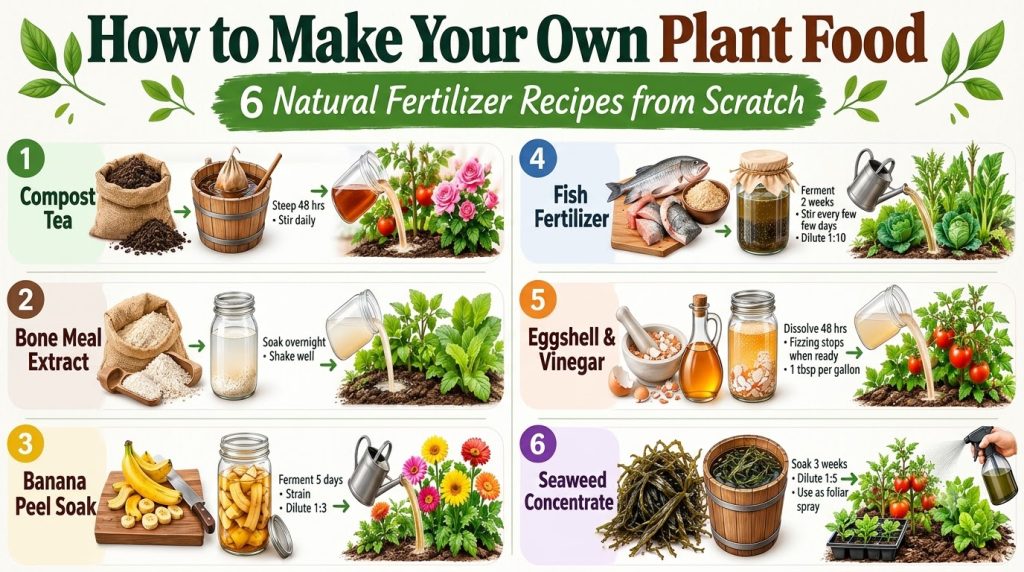
1. The Magic of Compost Tea
Compost tea is like a power-packed elixir for your plants, brimming with beneficial microbes and nutrients. It enhances nutrient absorption and helps suppress plant diseases.
- Ingredients: Finished compost, non-chlorinated water (rainwater or filtered tap water is best).
- Preparation: Fill a porous bag (like a old pillowcase or burlap sack) with about 1-2 cups of compost. Submerge the bag in a 5-gallon bucket of non-chlorinated water. Let it steep for 24-48 hours, stirring occasionally.
- Application: Dilute the tea until it looks like weak iced tea. Use it to water your plants or as a foliar spray directly on leaves.
2. Banana Peel Power
Banana peels are a fantastic source of potassium, phosphorus, and calcium – essential nutrients that promote strong root growth, healthy fruit development, and overall plant vigor.
- Ingredients: Ripe banana peels, water.
- Preparation (Tea Method): Chop banana peels into small pieces and soak them in water for a few days to a week. The water will absorb the nutrients.
- Preparation (Direct Method): You can also chop peels and bury them directly in the soil around your plants, especially flowering and fruiting ones like tomatoes and roses.
- Application: Use the banana peel water to water your plants. If burying, ensure the peels are deep enough not to attract pests.
3. Coffee Grounds Boost
Used coffee grounds are a wonderful source of nitrogen, which encourages lush, green foliage. They also slightly acidify the soil, making them perfect for acid-loving plants like blueberries, azaleas, and hydrangeas.
- Ingredients: Used coffee grounds.
- Preparation: Simply collect your used coffee grounds.
- Application: Sprinkle a thin layer of coffee grounds around the base of your acid-loving plants. You can also add them to your compost pile.
4. Eggshell Calcium
Eggshells are rich in calcium carbonate, crucial for healthy plant cell walls and preventing issues like blossom end rot in tomatoes and peppers.
- Ingredients: Clean, dry eggshells.
- Preparation: Wash and dry eggshells thoroughly. Crush them into a fine powder using a blender or mortar and pestle.
- Application: Mix the powdered eggshells into the soil around your plants, especially those prone to calcium deficiency. You can also add them to your compost.
5. Epsom Salt Secret
While not a traditional kitchen scrap, Epsom salt (magnesium sulfate) is a common household item that provides a quick boost of magnesium and sulfur, vital for chlorophyll production and nutrient uptake.
- Ingredients: Epsom salt, water.
- Preparation: Dissolve 1 tablespoon of Epsom salt in 1 gallon of water.
- Application: Use this solution to water plants once a month, or as a foliar spray on struggling plants to give them a quick green-up.
6. Vegetable Cooking Water
Don’t pour that nutrient-rich water down the drain after boiling or steaming vegetables! It’s full of vitamins and minerals that your plants will love.
- Ingredients: Water used for boiling/steaming plain vegetables (without salt or excessive spices).
- Preparation: Allow the cooking water to cool completely.
- Application: Use the cooled water to hydrate your plants. It’s a simple, zero-waste way to provide a gentle nutrient boost.
Tips for Applying Your Natural Plant Food
- Observe Your Plants: Pay attention to what your plants are telling you. Yellowing leaves, slow growth, or poor flowering can indicate a need for nutrients.
- Start Small: When trying a new homemade fertilizer, start with a diluted amount and observe your plants’ reaction before increasing the concentration or frequency.
- Regularity: Most natural fertilizers are best applied every 2-4 weeks during the growing season, rather than in a single large dose.
- Avoid Overfeeding: Even natural nutrients can be too much if applied excessively. Stick to recommended frequencies.
Embrace Your Inner Green Thumb!
Nourishing your garden naturally is a rewarding experience that benefits your plants, your wallet, and the environment. By embracing these simple homemade remedies, you’re not just feeding your plants; you’re nurturing a healthier, more sustainable lifestyle. So go ahead, experiment with these kitchen treasures, and watch your garden flourish with vibrant life!
What are your favorite natural plant food hacks? Share your tips in the comments below!