Imagine the satisfaction of expanding your garden, not by buying new plants, but by creating them yourself, right from the comfort of your own backyard! Autumn is a magical season for gardeners, offering a unique opportunity to propagate many beloved shrubs from cuttings. As the temperatures cool and plants begin to prepare for dormancy, their semi-hardwood stems are at the perfect stage for successful rooting.
This method not only saves money but also connects you deeply with the life cycle of your plants, turning a single healthy shrub into many. Whether you dream of more vibrant flowers, privacy hedges, or simply sharing your green thumb with friends, learning to take autumn shrub cuttings is a rewarding skill. Let’s dive into how you can easily propagate nine fantastic shrubs this season and watch your garden flourish.
The Art of Autumn Shrub Cuttings
Propagation through semi-hardwood cuttings in autumn is a fantastic technique for many deciduous and some evergreen shrubs. Unlike softwood cuttings taken in spring, semi-hardwood cuttings are taken from stems that have matured and become slightly woody, but are not yet fully dormant or hard. This stage offers the best balance: the stems are firm enough to withstand the rooting process, yet still flexible enough to produce roots before the deep cold sets in.
The cooler temperatures of early to mid-autumn (typically September to early October in many regions, depending on your local frost dates) provide an ideal environment for cuttings to establish roots without the intense heat and rapid growth demands of summer. This period allows the cutting to focus its energy on root development, setting it up for robust growth come spring.
Preparing for Success
Before you begin, gather your tools: sharp, clean pruners or a knife, rooting hormone (powder or liquid, optional but highly recommended), a sterile, well-draining rooting medium (like a mix of perlite and peat or sand), and small pots or a propagation tray. Ensure your tools are sterilized with rubbing alcohol to prevent disease transmission.
Your Autumn Cutting Collection: 9 Shrubs to Propagate
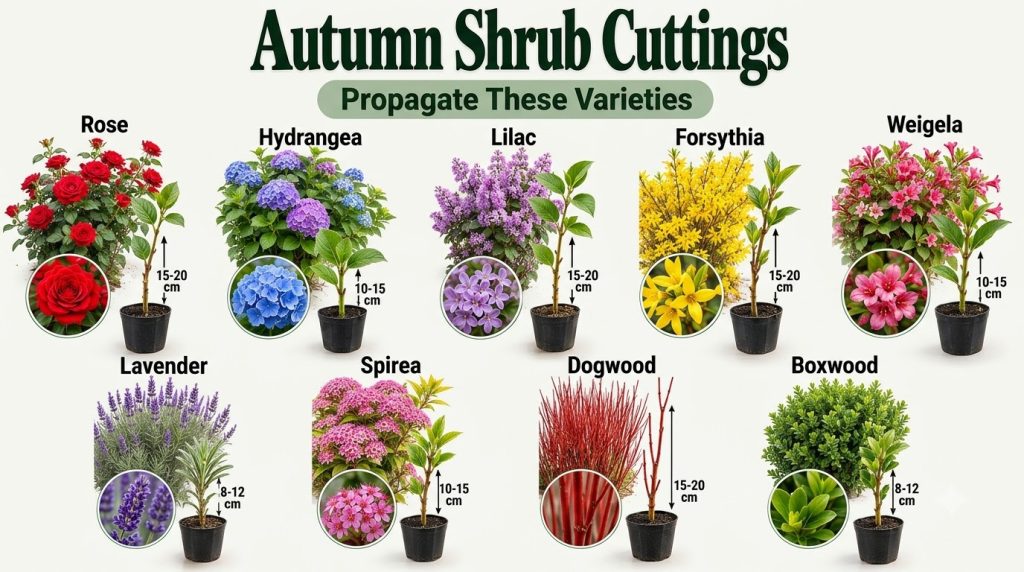
Here are nine excellent shrub choices for autumn propagation, along with tailored tips to help you succeed:
1. Hydrangea (Hydrangea macrophylla and similar species)
Hydrangeas are garden favorites known for their stunning blooms. Propagating them is wonderfully straightforward.
- Hardiness: USDA Zones 3–9, depending on the species and cultivar. Many bigleaf hydrangeas are hardy to Zone 5.
- Plant type: Deciduous shrub.
- Exposure: Partial shade to full sun (morning sun is ideal).
- Height: 3-6 feet.
- Spread: 3-6 feet.
Propagation Tip: Take 4-6 inch semi-hardwood cuttings from non-flowering stems. Remove all but the top two leaves, and if these are large, cut them in half horizontally to reduce moisture loss. Dip the cut end in rooting hormone and plant into a moist, sterile medium.
Practical Care: Keep the cuttings in a humid environment, perhaps under a clear plastic dome or bag, to encourage rooting. Avoid direct, intense sunlight while rooting.
2. Dogwood (Cornus sericea, Red Twig Dogwood)
Prized for its vibrant red winter stems, Red Twig Dogwood is a striking addition to any landscape and roots readily.
- Hardiness: USDA Zones 2–7.
- Plant type: Deciduous shrub.
- Exposure: Full sun to partial shade.
- Height: 6-10 feet.
- Spread: 6-10 feet.
Propagation Tip: Select 6-8 inch semi-hardwood cuttings from new growth that is starting to stiffen. As with hydrangeas, remove lower leaves and consider rooting hormone. These cuttings are quite robust.
Practical Care: Regular pruning of established plants encourages the brightest red stems; apply this principle to your new plants as they mature to maintain their vibrant color.
3. Forsythia (Forsythia spp.)
The harbinger of spring, forsythia bursts with bright yellow flowers before its leaves emerge. It’s a very forgiving plant for propagation.
- Hardiness: USDA Zones 4–8.
- Plant type: Deciduous shrub.
- Exposure: Full sun to partial shade.
- Height: 3-10 feet (can be quite vigorous).
- Spread: 3-10 feet.
Propagation Tip: Use 4-6 inch semi-hardwood cuttings. Forsythia often roots so easily that some gardeners find success even without rooting hormone, though it certainly helps speed things along.
Practical Care: Once established, forsythia benefits from pruning immediately after flowering to maintain shape and encourage next year’s blooms.
4. Weigela (Weigela florida)
Weigela offers beautiful trumpet-shaped flowers, often in shades of pink, and sometimes variegated foliage.
- Hardiness: USDA Zones 4–8.
- Plant type: Deciduous shrub.
- Exposure: Full sun for best flowering.
- Height: 3-6 feet.
- Spread: 3-6 feet.
Propagation Tip: Take 4-6 inch semi-hardwood cuttings. Look for stems that are firm but still green and flexible at the tip. Remove any spent flowers or buds.
Practical Care: Weigela appreciates consistent moisture and well-drained soil. In very hot climates, some afternoon shade can prevent leaf scorch.
5. Ninebark (Physocarpus opulifolius)
Known for its attractive peeling bark, diverse foliage colors (from green to dark purple), and clusters of white or pink flowers, ninebark is a resilient shrub.
- Hardiness: USDA Zones 2–8.
- Plant type: Deciduous shrub.
- Exposure: Full sun to partial shade (full sun brings out best foliage color).
- Height: 5-10 feet.
- Spread: 4-8 feet.
Propagation Tip: Prepare 4-6 inch semi-hardwood cuttings. Its tough nature makes it a good candidate for beginners. Ensure the rooting medium is moist but not waterlogged.
Practical Care: Ninebark is quite drought tolerant once established, but young cuttings need consistent moisture to root successfully.
6. Deutzia (Deutzia spp.)
Deutzia offers delicate, often white or pink, bell-shaped flowers in late spring to early summer, and is relatively low-maintenance.
- Hardiness: USDA Zones 5–8.
- Plant type: Deciduous shrub.
- Exposure: Full sun to partial shade.
- Height: 1-6 feet, depending on the cultivar.
- Spread: 1-6 feet.
Propagation Tip: Use 4-6 inch semi-hardwood cuttings. Choose healthy, disease-free stems. It’s often helpful to make a small vertical slice (about 1/2 inch) at the base of the cutting to expose more cambium for rooting.
Practical Care: Deutzia is adaptable to various soil types but thrives in well-drained soil. Prune after flowering to shape and remove old wood.
7. Spirea (Spiraea spp.)
Spireas are versatile shrubs with various forms, from mounding to upright, and lovely white or pink flower clusters. Many are very easy to root.
- Hardiness: USDA Zones 3–8.
- Plant type: Deciduous shrub.
- Exposure: Full sun for best flowering.
- Height: 2-8 feet, depending on species.
- Spread: 2-8 feet.
Propagation Tip: Take 4-6 inch semi-hardwood cuttings. The timing is crucial here; ensure the stems are firm but still slightly flexible.
Practical Care: Deadhead spent flowers on some varieties to encourage a second flush of blooms, and prune in late winter or early spring for shape.
8. Viburnum (Viburnum spp.)
Viburnums are a diverse group, offering beautiful flowers, often fragrant, attractive berries, and sometimes excellent fall color. Many species root well from cuttings.
- Hardiness: USDA Zones 2–9, highly variable by species.
- Plant type: Deciduous or evergreen shrub/small tree.
- Exposure: Full sun to partial shade.
- Height: 2-20 feet, highly variable.
- Spread: 2-15 feet.
Propagation Tip: Use 6-8 inch semi-hardwood cuttings. Choose stems with healthy leaves and no signs of stress. Viburnums can sometimes take a bit longer to root than other shrubs on this list, so patience is key.
Practical Care: Provide consistent moisture, especially in the first year after rooting. Protect young plants from harsh winter winds in colder zones.
9. Boxwood (Buxus sempervirens)
Boxwoods are classic evergreen shrubs, essential for formal gardens, hedges, and topiaries, known for their dense, small foliage.
- Hardiness: USDA Zones 5–8, though some cultivars extend this range.
- Plant type: Evergreen shrub.
- Exposure: Full sun to partial shade.
- Height: 2-15 feet, depending on cultivar and pruning.
- Spread: 2-15 feet.
Propagation Tip: Take 4-6 inch semi-hardwood cuttings, preferably from the tips of branches. Remove foliage from the bottom 1-2 inches of the cutting. Boxwood benefits greatly from rooting hormone and a slightly warmer soil temperature for rooting.
Practical Care: Ensure good air circulation around boxwood plantings to deter fungal diseases. Protect from strong winter winds, which can cause ‘winter burn’ on foliage.
Essential Steps for Success with Cuttings
For all your autumn shrub cuttings, a few general principles will dramatically increase your success rate:
Choosing the Right Parent Plant
Always select cuttings from a healthy, vigorous, disease-free parent plant. Avoid stems that are spindly, discolored, or show any signs of pests or disease. New growth from the current season that has begun to firm up is ideal.
Preparing Your Cuttings
Make a clean cut just below a leaf node (the point where a leaf attaches to the stem). This area contains cells that are more likely to develop into roots. Remove all leaves from the bottom third to half of the cutting to prevent them from rotting in the rooting medium. If desired, lightly scrape a small strip of bark from the very base of the cutting to expose more cambium before dipping in rooting hormone.
Rooting Medium and Environment
Use a sterile, well-draining medium. A mix of equal parts peat moss and perlite or coarse sand works wonderfully. Plant your cuttings deep enough so that at least one node is buried. Keep the medium consistently moist but not soggy, which can lead to rot. High humidity is crucial for cuttings to prevent wilting, so consider covering your pots with a plastic bag or dome, ensuring some ventilation to prevent mold.
Providing the Right Conditions
Place your cuttings in a location with bright, indirect light. Avoid direct, harsh sun, which can scorch the leaves and dry out the cuttings. Maintain a consistent temperature, ideally between 65-75°F (18-24°C). Rooting can take anywhere from a few weeks to several months, depending on the species.
Transplanting Young Plants
Once roots are well-developed (you’ll usually see them peeking out of the drainage holes or feel resistance when gently tugging the cutting), gradually acclimate your new plants to lower humidity before potting them into slightly larger containers with regular potting mix. Grow them on in a protected area for their first year before planting them into the garden.
Common Mistakes to Avoid
- Using Unhealthy Cuttings: Weak cuttings produce weak plants, if they root at all.
- Insufficient Humidity: Cuttings lack roots to absorb water, so humidity is vital to keep them from drying out.
- Overwatering the Medium: Soggy soil deprives roots of oxygen and leads to fungal diseases.
- Planting Out Too Soon: New roots are fragile; give your plants plenty of time to strengthen before exposing them to outdoor elements.
- Improper Timing: Taking cuttings too early (softwood) or too late (hardwood) in the season for semi-hardwood method can reduce success.
Regional Considerations for Autumn Propagation
While autumn is generally ideal for semi-hardwood cuttings across the U.S., the exact timing varies by region and USDA hardiness zone. In colder zones (3-5), aim to take cuttings in early September to give them ample time to root before the first hard frost. You might need to bring rooted cuttings indoors for winter protection. In temperate zones (6-8), you have a broader window, from mid-September through October. For warmer zones (9-11), where frosts are rare or nonexistent, you can often take semi-hardwood cuttings later into autumn or even early winter, though consistent warmth can still be beneficial for rooting. Always keep an eye on your local weather forecast and soil temperatures.
Grow Your Garden, One Cutting at a Time
There’s immense joy in nurturing new life from a simple stem. Autumn propagation of shrubs is a rewarding garden skill that empowers you to multiply your favorite plants, experiment with new varieties, and share the bounty with others. With sharp tools, a little rooting hormone, and consistent care, you’ll be well on your way to a more abundant, self-sustaining garden. Embrace the season, get your hands dirty, and watch your garden dreams take root!