Ever notice how much dirt and grime can accumulate in your window sills and tracks? These often-overlooked spots can become surprisingly dirty, trapping dust, pollen, and even moisture, which can make your windows look neglected and even affect air quality inside your home. While it might seem like a daunting task, a simple DIY deep clean can make a significant difference, transforming those dingy sills into sparkling clean surfaces.
This method uses common household ingredients to effectively break down stubborn grime, making it easier to scrub away the buildup. It’s a practical and budget-friendly way to refresh your home and bring a little more sparkle to your living spaces.
What You’ll Need
- 1/2 cup baking soda
- 1/4 cup white vinegar (distilled)
- A few drops of dish soap
- Small bowl
- Old toothbrush
- Microfiber cloth
- Spray bottle (optional, for vinegar)
- Small vacuum or brush
Why This DIY Can Be Useful
This cleaning concoction harnesses the power of readily available, non-toxic ingredients to tackle tough dirt:
- Baking Soda: A mild abrasive that helps scrub away hardened grime without scratching surfaces. It’s also a natural deodorizer.
- White Vinegar: An acidic liquid that cuts through grease, dissolves mineral deposits, and acts as a natural disinfectant. When combined with baking soda, it creates a fizzing action that helps lift and loosen stubborn dirt.
- Dish Soap: A powerful degreaser that breaks down oily residues and helps the other ingredients penetrate and clean more effectively.
How to Make It
Preparing your cleaning solution is quick and easy:
- In your small bowl, combine the 1/2 cup of baking soda with a few drops of dish soap.
- Add just a tablespoon or two of warm water to the mixture. Stir well to form a thick paste. The paste should be consistent and easily spreadable, not too watery.
How to Use It
Follow these steps to deep clean your window sills and tracks:
- Remove Loose Debris: Before applying any cleaning solution, use a small vacuum attachment or a stiff brush to remove any loose dust, dirt, or debris from the window tracks. This prevents turning the dry dirt into muddy sludge.
- Apply the Paste: Generously spread the baking soda and dish soap paste along the window sill tracks, paying extra attention to corners and heavily soiled areas.
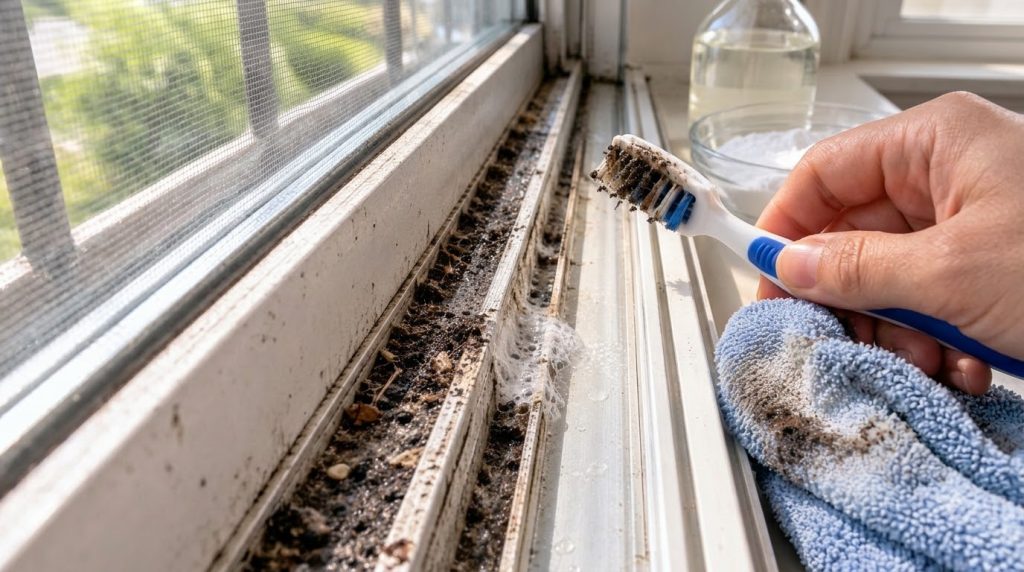
- Activate with Vinegar: If you’re using a spray bottle, spray the white vinegar directly onto the paste you’ve applied. If not, carefully pour a small amount of vinegar over the paste. You’ll notice a fizzing reaction as the baking soda and vinegar combine; this helps to lift and break down grime.
- Let it Sit: Allow the mixture to sit and work its magic for about 5-10 minutes. For very stubborn grime, you can let it sit a bit longer.
- Scrub: Use your old toothbrush to vigorously scrub the tracks. The bristles will help you get into all the tight corners and grooves, dislodging the softened dirt and grime.
- Wipe Clean: Dampen a microfiber cloth with clean water and wipe away the paste and loosened dirt. Rinse the cloth frequently and repeat until all residues are gone.
- Dry: Finish by wiping the tracks dry with a clean, dry cloth to prevent water spots.
What to Expect
You can expect a significant improvement in the cleanliness of your window sills and tracks. Most of the accumulated dirt and grime should be lifted and wiped away, leaving them looking much brighter and fresher. For extremely neglected sills, you might need to repeat the process, especially if the stains are deeply embedded or very old. While this method is highly effective, it may not remove discoloration from long-term sun exposure or permanent staining.
Helpful Tips
- Regular Maintenance: To prevent heavy buildup, aim to wipe down your window sills and vacuum the tracks every few weeks.
- Cotton Swabs for Tight Spots: For extremely narrow crevices, cotton swabs can be excellent tools to reach dirt that even a toothbrush might miss.
- Wear Gloves: While these ingredients are natural, wearing gloves can protect your hands from prolonged exposure to cleaning agents and dirt.
- Ventilation: Ensure good ventilation by opening your windows while cleaning, especially when using vinegar.
Important Notes / Safety
- Always test any new cleaning solution on an inconspicuous spot first, especially if your window sills are made of a sensitive material, though this combination is generally safe for most common sill materials like vinyl, painted wood, or aluminum.
- Avoid getting the vinegar solution on natural stone sills (like marble or granite) as the acid can etch the surface.
- Ensure thorough rinsing to prevent any residue buildup that could attract more dirt over time.

