Welcome to Garden – L. Quyên! If you’ve ever dreamt of harvesting your own juicy apples, sweet peaches, or crisp pears, mastering the art of fruit tree pruning is your secret weapon. Pruning might seem daunting at first, but it’s an essential practice that ensures your trees are not just surviving, but thriving, year after year. It’s about nurturing your plants to produce healthier, more abundant, and higher-quality fruit.
Think of pruning as giving your tree a regular health check and a stylish haircut. It helps shape the tree, promotes strong growth, and directs the tree’s energy into fruit production rather than excessive leafy growth. Plus, it improves air circulation and sunlight penetration, which are vital for preventing diseases and pests.
Why Prune Fruit Trees? The Benefits Are Bountiful!
Proper pruning isn’t just about cutting branches; it’s about strategic care that yields incredible results. Here are the main reasons why it’s a game-changer for your home orchard:
- Increased Fruit Production: By removing unproductive branches, the tree can channel its energy into developing more and larger fruits.
- Improved Fruit Quality: Better air circulation and sunlight exposure lead to sweeter, more uniformly ripened fruit.
- Tree Health and Vigor: Removing dead, diseased, or damaged wood prevents the spread of pathogens and encourages robust new growth.
- Pest and Disease Control: Open canopies reduce humidity, making it harder for pests and fungal diseases to take hold.
- Manageable Size and Shape: Pruning helps maintain a tree size that’s easy to harvest from and integrate into your garden design.
- Structural Integrity: Stronger branch architecture can support heavy fruit loads without breaking.
When to Prune: Timing is Everything
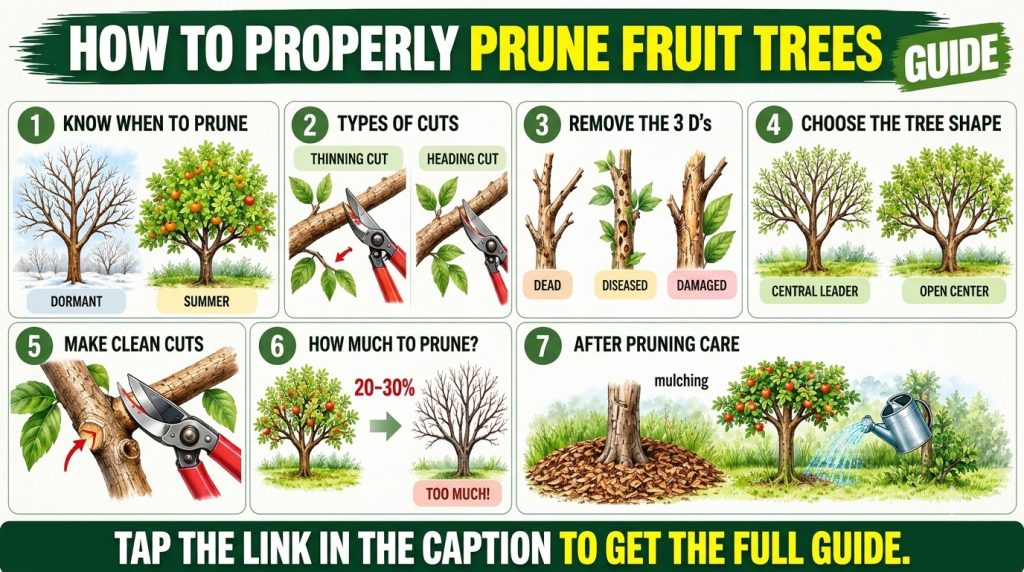
The best time to prune fruit trees largely depends on the type of tree and your specific goals. Generally, there are two main seasons for pruning:
Dormant Season Pruning (Late Winter to Early Spring)
This is the most common time for significant pruning. Why?
- Tree is Dormant: There are no leaves, making it easier to see the tree’s structure and identify branches that need removal.
- Reduced Stress: The tree is not actively growing or fruiting, so it experiences less stress.
- Stimulates Growth: Pruning during dormancy encourages vigorous growth in the spring, which is ideal for shaping young trees and promoting new fruiting wood.
Aim for late winter or early spring, after the coldest temperatures have passed but before bud break.
Summer Pruning (Late Spring to Mid-Summer)
Summer pruning is typically for lighter maintenance and serves different purposes:
- Controls Vigor: It can slow down growth in overly vigorous trees or branches.
- Improves Light Penetration: Removing excess foliage allows more sunlight to reach ripening fruit and encourages development of next year’s fruit buds.
- Removes Water Sprouts and Suckers: These energy-sapping growths are easier to spot and remove in summer.
Be cautious not to over-prune in summer, as excessive leaf removal can stress the tree and reduce its ability to photosynthesize.
Essential Pruning Cuts: Heading vs. Thinning
Understanding the two basic types of cuts will make your pruning efforts more effective:
Thinning Cuts
A thinning cut involves removing an entire branch back to its point of origin (to the trunk, a main scaffold branch, or a side branch). These cuts:
- Open up the canopy for better light and air circulation.
- Reduce overall tree size without stimulating much regrowth in that specific spot.
- Are excellent for managing the density of your tree.
Heading Cuts
A heading cut involves removing only a portion of a branch, cutting back to a bud or a smaller side branch. These cuts:
- Stimulate growth from the remaining bud(s), making the branch bushier.
- Are often used to stiffen long, weak branches or to encourage branching on young trees.
- Can create a denser canopy if not used judiciously.
Always make clean cuts with sharp, sterile tools to minimize damage and disease entry points.
Identifying and Removing Unhealthy Tree Parts
A crucial part of pruning is identifying and removing any parts that are detrimental to the tree’s health:
- Dead, Diseased, or Damaged Wood: These are often discolored, brittle, or have unusual growths. Remove them immediately to prevent disease spread.
- Crossing or Rubbing Branches: Branches that rub against each other create wounds that are entry points for pests and diseases. Remove one of the offending branches.
- Suckers: These are vigorous shoots that grow from the rootstock or base of the tree. They are unproductive and should be removed.
- Water Sprouts: Fast-growing, vertical shoots that appear on main branches. While a few can be trained, most should be removed as they shade lower branches and don’t typically bear fruit.
Common Fruit Tree Shapes
Pruning allows you to guide your tree into shapes that optimize fruit production and make harvesting easier. Some common forms include:
- Open Center (Vase Shape): Ideal for stone fruits like peaches and nectarines. It removes the central leader to create a vase-like shape with good light penetration.
- Central Leader: Common for apples and pears, where a single dominant trunk (central leader) is maintained with tiers of scaffold branches radiating outwards.
- Modified Leader: A hybrid that starts as a central leader but eventually allows several scaffold branches to take over, offering a balance of strength and light penetration.
- Espalier: Training trees to grow flat against a wall or trellis, often in decorative patterns. Great for small spaces!
After-Care for Your Pruned Trees
Once you’ve finished pruning, a little after-care goes a long way:
- Clean Up: Remove all pruned branches and debris from around the tree. This helps eliminate potential pest and disease habitats.
- Water: Ensure your tree receives adequate water, especially if pruning was extensive or during dry periods.
- Mulch: Apply a layer of organic mulch around the base of the tree (keeping it a few inches away from the trunk) to retain moisture, regulate soil temperature, and suppress weeds.
- Monitor: Keep an eye on your tree for any signs of stress, pests, or diseases in the weeks following pruning.
Tools of the Trade: Essential Pruning Equipment
Having the right tools makes the job easier and ensures clean, healthy cuts:
- Hand Pruners (Bypass Shears): For small branches (up to 3/4 inch).
- Loppers: For thicker branches (up to 2 inches).
- Pruning Saw: For larger branches (over 2 inches).
- Sterilizing Solution: Such as rubbing alcohol or a bleach solution, to clean your tools between cuts, especially if you suspect disease.
- Gloves: To protect your hands.
Always ensure your tools are sharp and clean before you start!
Cultivate Your Orchard, Reap the Rewards!
Pruning is an ongoing dialogue with your fruit trees, a practice that gets easier and more intuitive with experience. By understanding the ‘why’ and ‘how’ of fruit tree pruning, you’re not just maintaining a garden; you’re cultivating a source of fresh, delicious produce for years to come. So grab your pruners, step into your garden, and start shaping your way to a bountiful harvest!
Happy gardening!