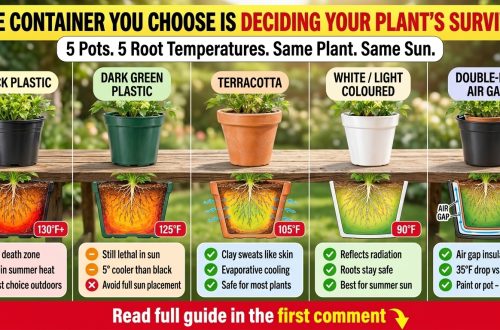
As passionate gardeners, we often spend hours meticulously planning our garden layouts, selecting the perfect plants, ensuring adequate sunlight, and choosing the right soil mix. We water diligently and feed our plants with care. Yet, sometimes, despite all our best efforts, our plants still seem to struggle, showing signs of stress or stunted growth. What if we told you there’s a hidden factor, often overlooked, that could be silently undermining your plants’ health, especially their roots?
Enter: Pot Color. Yes, the color of your plant pots plays a surprisingly significant role in determining the temperature of the soil and, consequently, the well-being of your plants’ root systems.
The Science Behind the Shade: How Pot Color Affects Soil Temperature
It’s basic physics: darker colors absorb more light and heat, while lighter colors reflect it. This principle applies directly to your garden pots. When a dark-colored pot sits under the sun, it acts like a heat sink, absorbing solar radiation and transferring that heat directly to the soil inside. Lighter pots, on the other T-shirt, reflect a significant portion of the sun’s rays, keeping the soil cooler.
This difference in temperature might seem minor, but for delicate root systems, it can be a matter of life or death.
Why Root Temperature is Critical for Plant Health
Plant roots are not just anchors; they are vital organs responsible for absorbing water, nutrients, and oxygen. They thrive within an optimal temperature range, typically between 65-75°F (18-24°C) for most common plants. When soil temperatures soar too high (e.g., above 85°F or 30°C), roots become stressed:
- Reduced Water Uptake: Hot roots struggle to absorb water efficiently, leading to wilting even when the soil is moist.
- Nutrient Imbalance: High temperatures can inhibit nutrient absorption and even damage beneficial soil microbes.
- Increased Disease Susceptibility: Stressed roots are more vulnerable to root rot and other fungal diseases.
- Stunted Growth: The plant diverts energy to cope with heat stress rather than growing foliage and flowers.
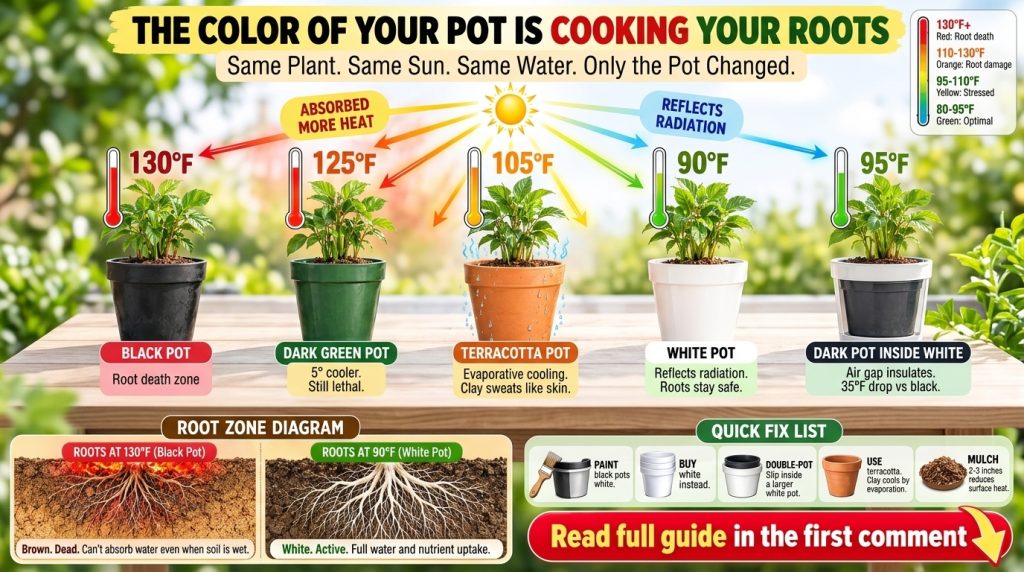
Our infographic clearly illustrates this impact: stressed roots appear sparse and unhealthy, while healthy roots are vibrant and abundant.
A Colorful Comparison: What Our Infographic Reveals
Let’s look at the temperature differences found in various pot colors when exposed to direct sunlight, as shown in our infographic:
- Black Pots: Reaching a scorching 130°F (54°C), black pots are the worst offenders. They absorb maximum heat, creating a hostile environment for roots.
- Dark Pots (e.g., Dark Brown, Dark Green): While slightly better than black, these still hit around 120°F (49°C), which is far too hot for most plants.
- Terracotta Pots: These classic pots often reach about 105°F (40°C). While porous and offering good aeration, their color still absorbs considerable heat.
- Light/White Pots: A much cooler 100°F (38°C), light-colored pots reflect more sunlight, keeping the soil at a more manageable temperature.
- White-Inside-Dark Pots: An innovative solution, these pots achieve the coolest temperature at 95°F (35°C). The dark exterior might absorb some heat, but the white interior reflects it back, creating a cooler microclimate for the roots.
Quick Fix List: Keeping Your Roots Cool and Happy
Understanding the problem is the first step; now, let’s explore practical solutions to protect your plants from overheating roots, drawing inspiration from our ‘Quick Fix List’:
1. Choose Your Pot Color Wisely
Whenever possible, opt for light-colored pots, especially if your plants will be in direct sun for most of the day. White, light grey, beige, or pastel-colored pots are excellent choices for heat reflection.
2. Strategic Placement and Shading
- Elevate Pots: Place pots on ‘pot feet’ or blocks to allow air circulation underneath, preventing heat absorption from hot surfaces.
- Group Plants: Clustered plants can shade each other’s pots.
- Provide Artificial Shade: Use shade cloth, umbrellas, or even taller companion plants to shade the pots during the hottest parts of the day, while still allowing the plant foliage to get light.
3. Mulch, Mulch, Mulch!
Applying a layer of organic mulch (like straw, wood chips, or shredded leaves) on top of the soil in your pots acts as an insulator. It helps regulate soil temperature, keeping roots cooler in summer and warmer in winter.
4. The Pot-in-Pot Method
This clever technique involves placing a smaller, darker pot (containing your plant) inside a larger, lighter-colored pot. Fill the gap between the two pots with insulating material like straw, peat moss, or even newspaper. This creates an air barrier that significantly reduces heat transfer to the inner pot’s soil.
5. Adjust Watering Habits
Plants in hot pots will dry out faster. Monitor soil moisture closely and water more frequently if needed, ensuring the water can drain freely to prevent root rot from overwatering. Watering early in the morning or late in the evening can also help the plant absorb water before the peak heat.
Cultivating Cooler Roots for a Bountiful Garden
It’s clear that pot color is far from a trivial choice; it’s a critical factor in the health and vitality of your container plants. By being mindful of the heat-absorbing properties of different pot colors and implementing a few simple strategies, you can prevent root stress and foster a thriving, resilient garden. Your plants will thank you with lush foliage, abundant blooms, and a bountiful harvest!
What are your favorite tricks for keeping potted plants cool in summer? Share your wisdom in the comments below!