Are you dreaming of a lush, vibrant garden that not only looks beautiful but also supports local wildlife and thrives with minimal fuss? One of the best ways to achieve this is by choosing native plants over invasive species, especially when it comes to ground covers. Invasive ground covers might seem like an easy solution for bare patches, but they often choke out native plants, harm local ecosystems, and can be incredibly difficult to remove once established.
Here at Garden – L. Quyên, we believe in gardening that’s both beautiful and responsible. That’s why we’re excited to share some easy, impactful native swaps for common invasive ground covers. By making these changes, you’ll be contributing to a healthier environment, attracting beneficial pollinators, and creating a garden that flourishes naturally.
Why Go Native? The Benefits Are Abundant!
Before we dive into the swaps, let’s quickly reiterate why native plants are the heroes of our gardens:
- Ecosystem Support: Native plants provide essential food and shelter for local wildlife, including pollinators like bees and butterflies, as well as birds and small animals.
- Low Maintenance: Once established, native plants are adapted to your local climate and soil conditions, meaning they require less water, fertilizer, and pest control.
- Water Conservation: Their deep root systems often make them more drought-tolerant than non-native species.
- Pest Resistance: They are naturally more resistant to local pests and diseases, reducing the need for chemical treatments.
- Biodiversity: They help maintain the natural balance of your local ecosystem, preventing the dominance of aggressive non-native species.
Easy Native Swaps for Invasive Ground Covers
Ready to transform your garden? Here are five common invasive ground covers and fantastic native alternatives that will make your garden sing!
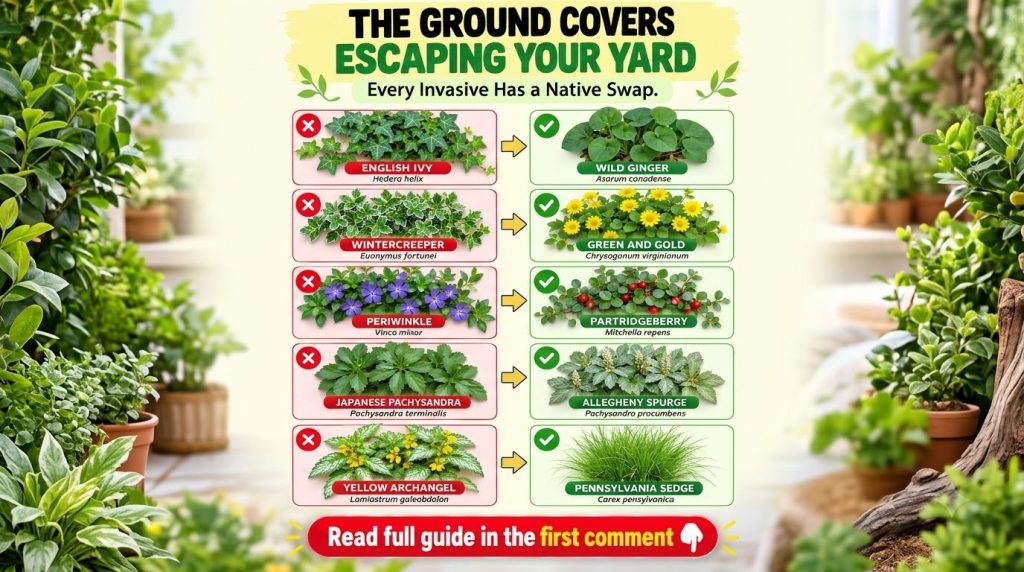
1. Instead of English Ivy (Hedera helix), Try Wild Ginger (Asarum canadense)
English Ivy is notorious for its aggressive growth, smothering other plants, climbing trees and structures, and creating dense monocultures. It can be incredibly difficult to remove once it takes hold.
Native Swap: Wild Ginger (Asarum canadense)
Wild Ginger offers beautiful, heart-shaped leaves and thrives in shady, moist conditions. It forms a lovely, dense ground cover that suppresses weeds effectively without being aggressive. Its subtle, maroon-colored flowers bloom at ground level, adding a unique charm to your woodland garden. It’s also a host plant for the Pipevine Swallowtail butterfly!
2. Instead of Periwinkle (Vinca minor), Try Foamflower (Tiarella cordifolia)
Periwinkle, while pretty with its blue flowers, can quickly escape cultivation and spread into natural areas, outcompeting native wildflowers and disrupting forest understories. It’s particularly problematic in woodland settings.
Native Swap: Foamflower (Tiarella cordifolia)
Foamflower is a truly delightful native perennial with delicate, foamy white flower spikes in spring and attractive lobed leaves that often develop bronzy hues in cooler weather. It prefers shade to partial shade and moist, well-drained soil, forming elegant clumps that spread gently without becoming invasive. It’s perfect for a shade garden!
3. Instead of Goutweed (Aegopodium podagraria), Try Pennsylvania Sedge (Carex pensylvanica)
Goutweed, also known as Bishop’s Weed, is a nightmare for many gardeners due to its extremely aggressive spreading rhizomes. It forms dense patches that are almost impossible to eradicate and can quickly take over entire garden beds.
Native Swap: Pennsylvania Sedge (Carex pensylvanica)
For a graceful, fine-textured ground cover in dry to moist shade, Pennsylvania Sedge is an excellent choice. This native grass-like plant forms soft, flowing clumps that create a beautiful, naturalistic carpet. It’s deer-resistant and provides important habitat for beneficial insects. It’s also relatively easy to establish and maintain.
4. Instead of Japanese Spurge (Pachysandra terminalis), Try Allegheny Spurge (Pachysandra procumbens)
Japanese Spurge is a common ground cover in shady areas, but it can be quite aggressive, spreading rapidly and displacing native understory plants. It offers little ecological value to local wildlife.
Native Swap: Allegheny Spurge (Pachysandra procumbens)
Meet its native cousin! Allegheny Spurge is a much better alternative, offering similar evergreen foliage and attractive white flower spikes in spring. It spreads at a much more polite pace, forming a beautiful, textured carpet in shade or partial shade. It’s a fantastic choice for woodland gardens and provides excellent year-round interest.
5. Instead of Creeping Jenny (Lysimachia nummularia), Try Wild Strawberry (Fragaria virginiana)
Creeping Jenny, with its bright chartreuse foliage, is often used in hanging baskets or as a ground cover. However, it can spread vigorously, especially in moist conditions, escaping gardens and colonizing wetlands and streambanks, outcompeting native plants.
Native Swap: Wild Strawberry (Fragaria virginiana)
This delightful native plant offers pretty white flowers in spring, followed by small, edible (and delicious!) strawberries. It forms a lovely, low-growing mat that tolerates a range of light conditions from full sun to partial shade. Wild Strawberry is excellent for erosion control and provides food for birds and other wildlife, making it a true garden multitasker.
Tips for Successful Native Ground Cover Planting
- Know Your Zone: Always choose plants native to your specific region and USDA hardiness zone.
- Site Selection: Match the plant’s light and soil requirements to your garden’s conditions.
- Preparation is Key: Remove existing invasive ground covers thoroughly before planting natives. This may require persistent effort over several seasons.
- Water Well Initially: Native plants need regular watering during their first year to establish a strong root system, even though they’ll be drought-tolerant later.
- Mulch: Apply a layer of organic mulch to conserve moisture, suppress weeds, and enrich the soil.
- Observe and Enjoy: Watch as your native garden attracts new birds, butterflies, and beneficial insects!
Making the switch to native ground covers is a rewarding journey that benefits both your garden and the wider ecosystem. It’s an easy way to create a more resilient, beautiful, and sustainable outdoor space. Which native swap are you excited to try first?