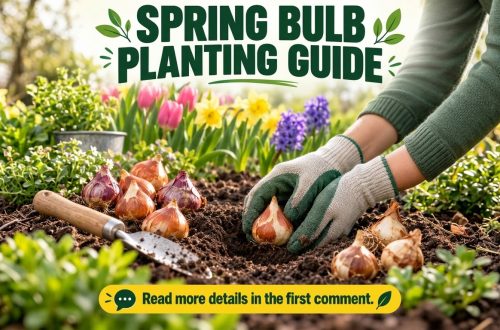
Unlock the Secret to a Spectacular Spring: Planting Bulbs Before Winter!
Imagine your garden bursting with vibrant colors and sweet fragrances as soon as the snow melts and spring officially arrives. That dream can easily become a reality with a little planning and planting in the fall! As gardeners, we know the anticipation of spring blooms is half the fun, and by planting flower bulbs before winter sets in, you’re essentially setting yourself up for a breathtaking show.
Many of us adore the sight of early spring flowers like tulips, daffodils, and hyacinths. But did you know the key to their dazzling display often lies in planting them months in advance? These beauties need a period of cold dormancy (known as vernalization) to prepare for their spectacular emergence. Planting them in the cooler soil of fall allows them to establish roots and undergo this crucial chilling process, ensuring a robust bloom come springtime.
Why Fall Planting is Essential for Spring Bulbs
Most spring-blooming bulbs are hardy perennials that need the chill of winter to trigger their flowering cycle. When you plant them in the fall, they develop a healthy root system before the ground freezes solid. This allows them to absorb nutrients and store energy, preparing them to sprout and bloom vigorously as soon as warmer temperatures return.
General Tips for Successful Bulb Planting
- Timing is Key: Plant bulbs when soil temperatures are consistently below 60°F (15°C) but before the ground freezes solid. This is typically from mid-fall to early winter, depending on your climate zone.
- Choose Healthy Bulbs: Look for firm, plump bulbs that are free from mold, soft spots, or cuts.
- Location, Location, Location: Most spring bulbs thrive in full sun (at least 6 hours of direct sunlight daily), though some tolerate partial shade.
- Well-Draining Soil: Bulbs hate wet feet! Ensure your soil drains well to prevent rot. Amend heavy clay soils with compost or sand to improve drainage.
- Planting Depth: A good rule of thumb is to plant bulbs two to three times as deep as their height. For example, a 2-inch tall bulb should be planted 4-6 inches deep.
- Pointy Side Up: Generally, bulbs should be planted with the pointy side facing upwards, as this is where the shoot will emerge.
- Water After Planting: Give the newly planted bulbs a good soak to settle the soil around them.
- Protect from Pests: If deer, squirrels, or other critters are an issue, consider using repellents or planting deer-resistant varieties.
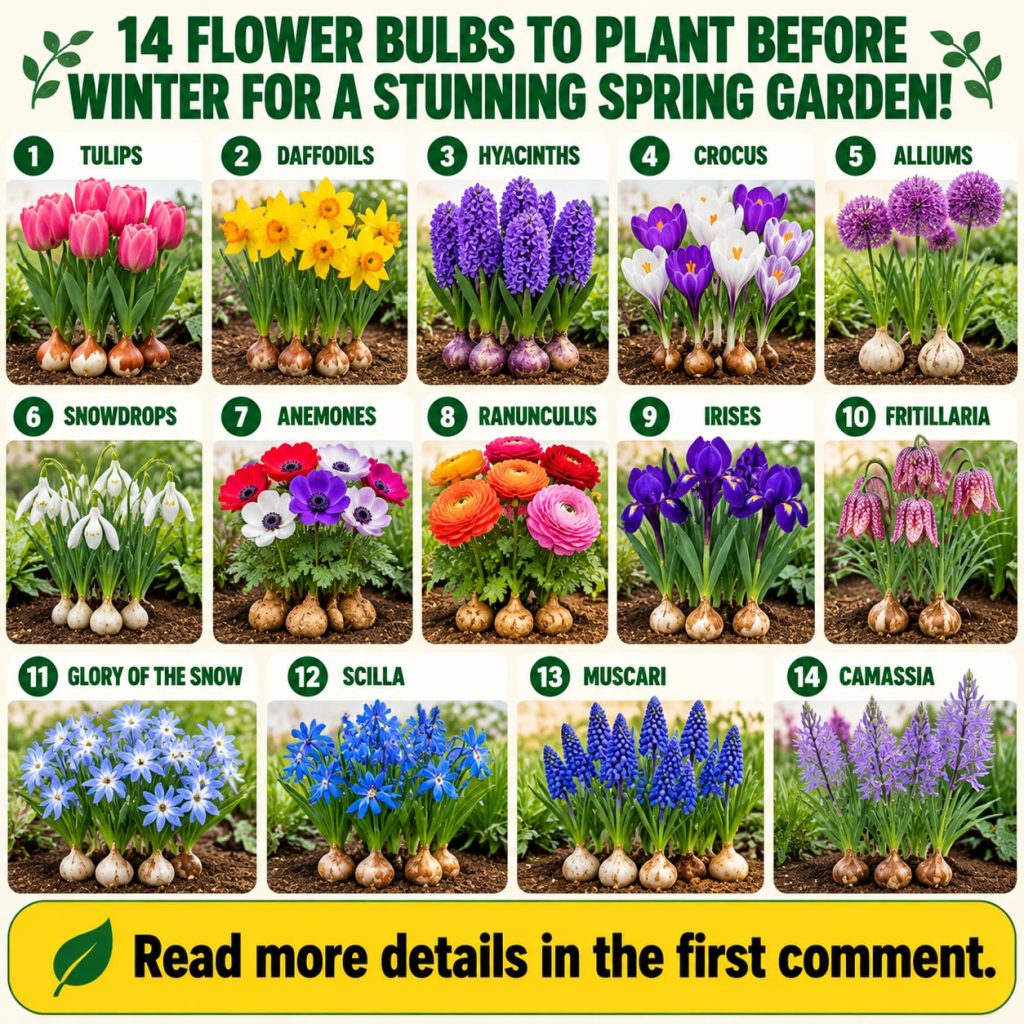
14 Flower Bulbs to Plant This Fall for a Stunning Spring
1. Tulips (Tulipa)
The quintessential spring flower, tulips come in an incredible array of colors, shapes, and sizes. From early to late spring bloomers, you can create a continuous show. They prefer full sun and well-drained soil. Consider planting them in large drifts for maximum impact.
2. Daffodils/Narcissus (Narcissus)
Cheery and bright, daffodils are a reliable sign of spring. They are also deer and rodent resistant, making them a fantastic choice for many gardens. They naturalize well, meaning they’ll come back year after year, often multiplying.
3. Hyacinths (Hyacinthus orientalis)
Known for their intensely fragrant, dense flower spikes, hyacinths are a delight for the senses. Plant them near walkways or windows where their perfume can be enjoyed. They come in stunning shades of blue, pink, purple, white, and yellow.
4. Crocus (Crocus)
These are some of the earliest flowers to emerge, sometimes even poking through a light layer of snow! Crocuses are small but mighty, perfect for naturalizing in lawns or under trees. They’re a vital early food source for bees.
5. Snowdrops (Galanthus nivalis)
True to their name, snowdrops are often the very first flowers to appear, sometimes in late winter. Their delicate white bells are a hopeful sight, signaling the impending end of winter. They thrive in shady or woodland settings.
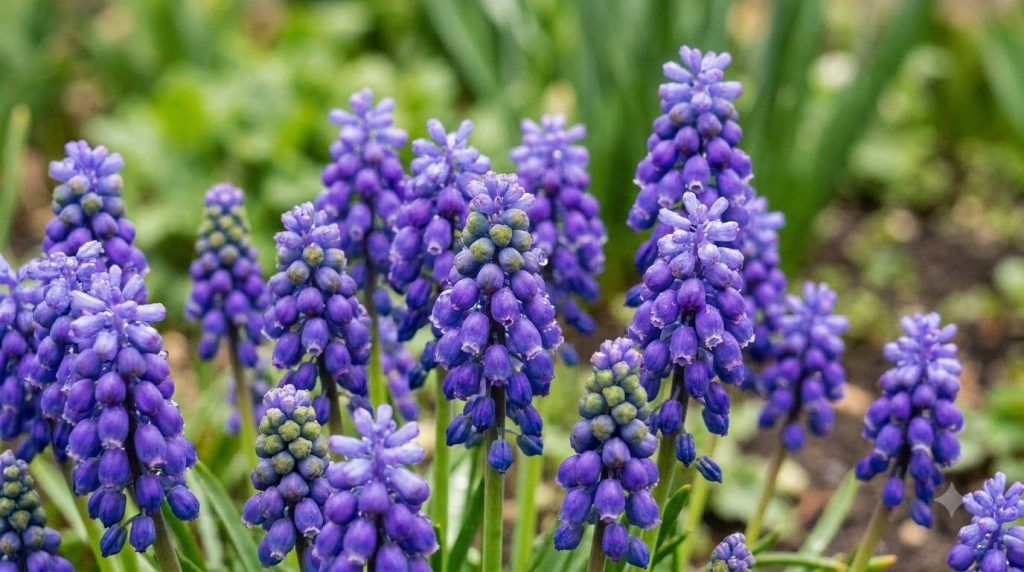
6. Grape Hyacinths (Muscari)
These charming, intensely blue (though also available in white or pink) flowers resemble miniature grape clusters. They are incredibly easy to grow, naturalize readily, and are perfect for borders, rock gardens, or underplanting other bulbs.
7. Alliums (Allium)
Adding a unique architectural element to the late spring garden, alliums produce globe-like flower heads on tall, sturdy stems. They range in size from small to dramatic and are excellent for cutting gardens. Plus, they are deer and rabbit resistant!
8. Fritillaria (Fritillaria)
Fritillaria offers a diverse range, from the dramatic, crown imperial (F. imperialis) with its bell-shaped flowers and strong scent (which can deter rodents) to the delicate checkered bells of Guinea Hen Flower (F. meleagris).
9. Scilla (Scilla siberica)
Also known as Siberian squill, Scilla produces brilliant blue, star-shaped flowers that create a stunning carpet of color in early spring. They are perfect for naturalizing in lawns, under deciduous trees, or in rock gardens.
10. Chionodoxa (Chionodoxa forbesii)
Commonly called ‘Glory-of-the-Snow,’ these tiny, star-like flowers in shades of blue, pink, or white are among the first to emerge. They are ideal for naturalizing and can create beautiful drifts of color in early spring.
11. Anemone Blanda (Anemone blanda)
Known as ‘Grecian Windflower,’ these delicate, daisy-like flowers bloom in shades of blue, pink, and white. They are perfect for dappled shade locations, spreading to form a colorful carpet beneath trees and shrubs in early spring.
12. Eranthis (Eranthis hyemalis)
Often called ‘Winter Aconite,’ Eranthis are tiny, cup-shaped yellow flowers surrounded by leafy bracts. They are one of the earliest bloomers, often appearing before snowdrops, adding a splash of cheerful color to the late winter/early spring landscape.
13. Camassia (Camassia quamash)
These North American natives produce tall, stately spikes of star-shaped blue, purple, or white flowers in late spring. They are excellent for naturalizing in meadows or damp areas and attract pollinators.
14. Dutch Iris (Iris x hollandica)
Offering elegant, orchid-like flowers on tall stems, Dutch Irises are fantastic for cutting gardens and adding sophistication to your late spring border. They come in a wide range of colors, often with contrasting markings.
Get Ready for a Blooming Good Spring!
There’s nothing quite like the anticipation and joy of seeing those first shoots emerge from the ground, knowing the glorious color of spring is just around the corner. By taking a little time this fall to plant these beautiful flower bulbs, you’re investing in months of beauty and a garden that will truly come alive. So, roll up your sleeves, grab your trowel, and start planning your most stunning spring garden yet!