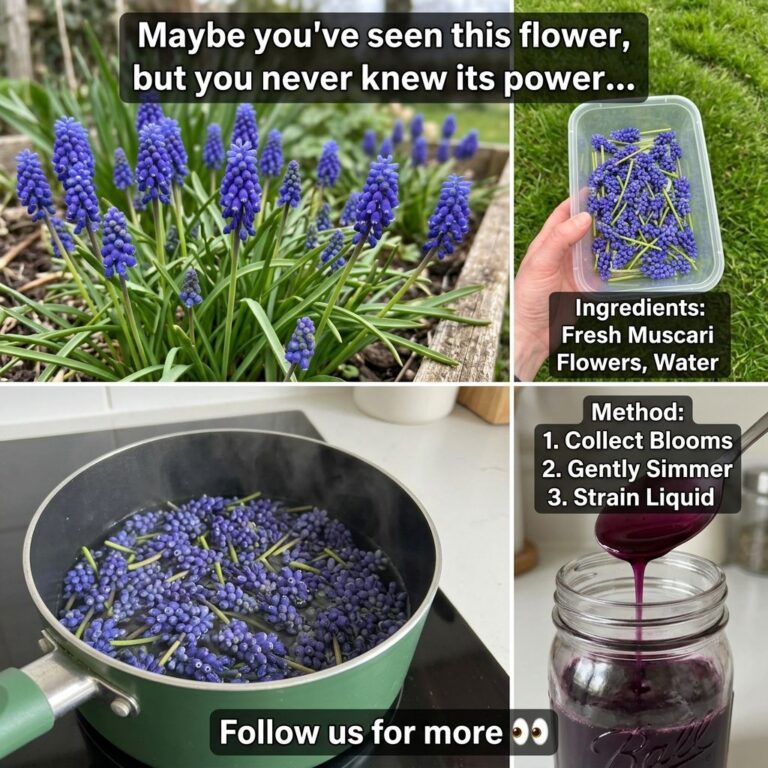
Maybe you’ve seen this flower, but you never knew its power…
It’s that time of year when delicate blue flowers emerge, often carpeting gardens and roadsides. Most people walk past them without a second glance, appreciating their beauty but oblivious to the gentle, natural power they hold. We’re talking about Muscari, commonly known as Grape Hyacinth. While they might look like simple garden accents, their vibrant pigments and mild properties make them perfect for a surprisingly practical homemade remedy: a botanical rinse.
Forget the broad, vague wellness claims. This guide is about transforming those charming blue blooms into a useful, natural extract you can actually make and use. If you’re looking for a natural, gentle way to add a subtle tint or a fresh botanical touch to your routine, this is the preparation you’ll want to master.
What It Is: Your Muscari Botanical Rinse
This remedy is a simple, water-based extract made from fresh Muscari flowers. The process captures the flower’s natural pigments and subtle botanical essence, resulting in a beautiful, often purple-hued liquid. It’s not a strong medicinal tonic, but rather a gentle preparation suitable for cosmetic use, primarily as a natural skin toner, hair rinse, or a light natural dye.
Ingredients
- Fresh Muscari Flowers (Grape Hyacinth): Approximately 1-2 cups, loosely packed. Ensure they are free from pesticides and pollution.
- Distilled Water: 2 cups. Using distilled water helps prevent mineral buildup and ensures a purer extract.
Approximate Measurements
For a standard small batch:
- 1 cup (approx. 25-30g) fresh Muscari blooms
- 2 cups (approx. 470ml) distilled water
Formula / Recipe Overview
The core formula involves a gentle decoction – simmering the fresh flowers in water to extract their compounds, followed by straining and cooling. This method is straightforward and maximizes the extraction of the vibrant color.
Step-by-Step Method
- Collect Your Blooms: In spring, carefully gather fresh Muscari flowers. Choose healthy, vibrant blooms that haven’t been sprayed with chemicals.
- Rinse Gently: Briefly rinse the flowers under cool water to remove any dirt or insects. Drain thoroughly.
- Combine & Simmer: Place the clean Muscari flowers in a non-reactive saucepan (stainless steel or enamel). Pour in the distilled water. Bring the mixture to a very gentle simmer over low-medium heat. Do not bring to a rolling boil.
- Low & Slow Extraction: Allow the mixture to simmer gently for about 15-20 minutes, or until the water has taken on a noticeable color (often a rich blue or purple).
- Cool & Steep: Remove the saucepan from the heat. Cover it and let the mixture cool completely, allowing the flowers to steep further. This can take 1-2 hours.
- Strain the Liquid: Once cool, strain the liquid through a fine-mesh sieve or cheesecloth into a clean glass jar or bottle. Press the spent flowers gently to extract all remaining liquid. Discard the flowers.
- Store: Transfer the finished Muscari botanical rinse into an airtight container.
Quick Tip: Color Intensity
For a deeper, more concentrated color, you can either use more flowers or simmer the mixture for a longer period (up to 30 minutes) and then reduce the liquid slightly, though be careful not to scorch it.
How to Use
- As a Skin Toner: After cleansing, apply a small amount to a cotton pad and gently swipe over your face. Its mild astringent properties can help refresh the skin.
- As a Hair Rinse: After shampooing, pour the cooled rinse over your hair. Massage it into your scalp and strands. For a very subtle tint on light hair, leave it in. Otherwise, rinse with cool water after a few minutes for added shine.
- As a Natural Dye: Use as a mild, natural dye for small fabric swatches (like cotton or linen) or paper. Test on an inconspicuous area first, as the color can vary.
How Often to Use
- Skin Toner: Once daily, or every other day, as part of your evening routine.
- Hair Rinse: 1-2 times per week.
- Natural Dye: As needed for your craft projects.
How to Buy / How to Choose Ingredients
The best Muscari for this remedy is freshly picked from a reliable source. If you don’t grow them yourself, ensure you forage from areas free from vehicle exhaust, pesticides, or other pollutants. Always identify plants correctly before use; Muscari (Grape Hyacinth) is distinct, but general foraging caution is advised.
Storage
Due to its fresh nature and water base, this Muscari botanical rinse has a limited shelf life. Store it in a clean, airtight glass bottle or jar in the refrigerator. It should last for about 5-7 days.
Practical Tips
- Patch Test: Always perform a patch test on a small area of skin before applying the rinse widely, especially if you have sensitive skin.
- Enhance Scent (Optional): For a pleasant aroma, you can add a few drops of a skin-safe essential oil (like lavender or rose, if using for skin/hair) *after* the rinse has cooled completely.
- Creative Dyeing: If using as a dye, experiment with different fabrics; natural fibers like cotton, linen, and silk tend to take natural dyes better than synthetics. Mordants can be used for colorfastness, but for a simple rinse, it’s not strictly necessary unless you want permanence.
| Feature | Fresh Muscari Flowers | Dried Muscari Flowers |
|---|---|---|
| Potency for Color | Higher, more vibrant color extraction | Lower, muted color potential |
| Aroma | Subtle, fresh floral notes | Minimal to none |
| Extract Yield | Good for immediate liquid preparations | Less ideal for fresh liquid extracts, better for potpourri or infusions |
| Availability | Seasonal (spring) | Year-round, if prepared properly |
| Best Use for This Remedy | Preferred for vibrant botanical rinse/dye | Not recommended for this specific recipe |
Common Mistakes
- Using Sprayed Flowers: Never use Muscari from areas treated with pesticides or herbicides, as these chemicals can contaminate your remedy.
- Boiling Too Vigorously: A hard boil can degrade delicate plant compounds and reduce the vibrancy of the color. Gentle simmering is key.
- Skipping the Strain: Bits of plant material left in the rinse can lead to quicker spoilage. Strain thoroughly.
- Improper Storage: Leaving the rinse at room temperature will cause it to spoil rapidly. Refrigeration is essential.
- Expecting Miraculous Results: This is a gentle, natural preparation. Don’t expect dramatic skin transformations or permanent hair color changes. Its beauty lies in its subtlety and naturalness.
Cautions / Who Should Avoid It
Muscari flowers are generally considered safe for external cosmetic use, but like all botanical ingredients, individual reactions can occur. Always perform a patch test first. Do not consume this rinse; Muscari is not typically used internally as food or medicine and some sources suggest mild toxicity if ingested in large quantities. If you have known allergies to plants in the Liliaceae family, consult with a healthcare professional before use.
Quick Summary
- Best Preparation: Gentle decoction of fresh Muscari flowers in distilled water.
- Best Use-Case: Natural skin toner, hair rinse for shine/subtle tint, or mild fabric/paper dye.
- Storage: Refrigerate in an airtight container for 5-7 days.
- When to Use: Seasonally, when Muscari is in bloom (spring).
- What to Avoid: Chemically treated flowers, vigorous boiling, improper storage, internal consumption.
FAQ
- Can I use dried Muscari flowers for this?
For optimal color and fresh botanical properties, fresh flowers are strongly recommended. Dried flowers will yield a much less vibrant color and less potent extract. - How long does the Muscari rinse last?
When stored in an airtight container in the refrigerator, it typically lasts for 5-7 days. - Can I freeze the rinse to make it last longer?
Yes, you can freeze it in ice cube trays. Once frozen, transfer the cubes to a freezer-safe bag. Thaw a cube as needed for use. - Will this dye my skin or hair permanently?
No, as a gentle botanical rinse, it will only impart a very subtle, temporary tint, especially noticeable on very light hair or skin. It’s not a permanent dye. - What part of the Muscari flower is best to use?
The entire blue flower head is used, including the small florets. - Is Muscari safe to eat?
No, Muscari is generally not recommended for internal consumption and can cause mild gastrointestinal upset if ingested. This remedy is strictly for external use. - Can children use this rinse?
It’s best to consult with a pediatrician for children, especially regarding skin applications. Always do a patch test.
Conclusion
The humble Muscari flower, often overlooked, holds a gentle secret in its vibrant blue pigments. By taking a few simple steps, you can create a beautiful and practical botanical rinse for your skin, hair, or even your craft projects. It’s a testament to the fact that sometimes, the most surprising remedies come from the places we least expect. So next spring, instead of just admiring those grape hyacinths, consider unlocking their natural power for yourself.
You may also like: DIY Rosewater Facial Toner: A Simple Guide
Read more: Natural Hair Rinses for Shine and Health