Welcome, fellow garden enthusiasts! If you’re looking for one of the simplest yet most impactful ways to transform your garden, you’ve come to the right place. Today, we’re diving deep into the world of mulch – nature’s unsung hero for a thriving, beautiful, and low-maintenance garden. Whether you’re a seasoned gardener or just starting out, understanding mulch can unlock a whole new level of garden success!
Think of mulch as a protective blanket for your soil. It’s not just about aesthetics; it’s a vital tool that nourishes, protects, and sustains your plants from the ground up. But with so many options out there, how do you choose the best one? That’s exactly what our ultimate guide is here to help you with!
Why Mulch Matters: The Benefits for Your Garden
Before we explore the different types, let’s understand why mulch is such a game-changer for your garden:
- Weed Suppression: A good layer of mulch blocks sunlight, preventing pesky weeds from sprouting and competing with your plants for nutrients and water. Fewer weeds mean less back-breaking work for you!
- Moisture Retention: Mulch acts as an insulator, reducing water evaporation from the soil. This means your plants stay hydrated longer, especially during hot, dry spells, and you’ll water less often.
- Temperature Regulation: It keeps soil cooler in the summer and warmer in the winter, protecting plant roots from extreme temperature fluctuations.
- Soil Health Improvement: Organic mulches break down over time, enriching your soil with valuable nutrients, improving its structure, and encouraging beneficial microbial activity.
- Pest Control: Certain mulches can deter specific pests, while others provide a habitat for beneficial insects.
- Erosion Control: Mulch prevents soil erosion caused by rain and wind, keeping your valuable topsoil in place.
- Aesthetics: A layer of mulch creates a tidy, finished look, making your garden beds pop!
Choosing Wisely: Mulch Categories
Not all mulches are created equal. Based on their properties and impact on your garden, we can categorize them to help you make informed decisions.
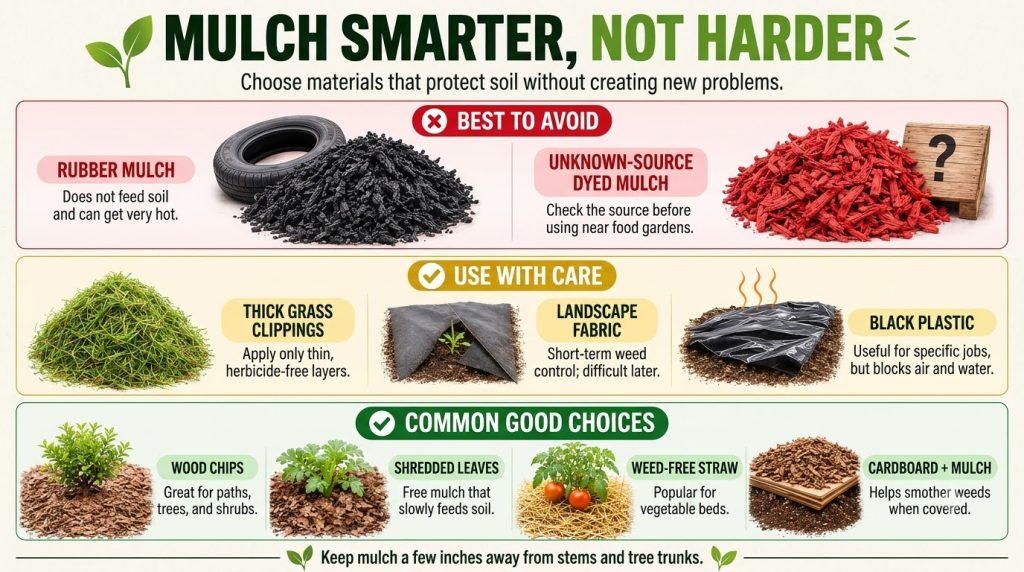
Best to Avoid
While some materials might seem like good candidates, they can actually harm your plants or the environment.
- Rubber Mulch: Often touted as a long-lasting, eco-friendly option made from recycled tires, rubber mulch has significant drawbacks. It doesn’t break down to improve soil, can leach chemicals into the soil, and heats up significantly in direct sun, potentially harming plant roots. It’s also flammable.
- Artificially Dyed Mulches (e.g., bright red or blue): These can contain harmful chemicals from the dyes that might leach into your soil and negatively impact plant health. While some natural dyes are available, highly vibrant, unnatural colors are often a red flag.
Use with Care
These mulches have their place but require specific conditions or careful application to be beneficial.
- Grass Clippings: A free and readily available option, grass clippings can be a great source of nitrogen for your soil. However, they must be used thinly (no more than 1-2 inches) and allowed to dry slightly before application to prevent matting, which can block air and water, and to avoid introducing weed seeds or herbicides if your lawn was treated.
- Fresh Wood Chips/Sawdust: While wood chips are excellent, fresh chips or sawdust can temporarily deplete nitrogen from the soil as they decompose, a process called ‘nitrogen draw-down.’ This can stunt plant growth. It’s best to compost them first or use them around established trees and shrubs rather than annuals or young plants.
- Newspaper/Cardboard: These can be excellent weed barriers and eventually break down. However, they need to be covered with a more attractive organic mulch. Avoid glossy paper or heavily colored inks, and ensure they are free of plastic tapes or labels.
Common Good Choices
These are the workhorses of the gardening world, offering a fantastic balance of benefits and ease of use.
- Shredded Leaves: One of the absolute best and cheapest mulches! They are readily available in autumn, decompose beautifully to enrich soil, attract beneficial earthworms, and provide excellent insulation. They should be shredded to prevent matting and allow for better water penetration.
- Straw (not hay): Straw is ideal for vegetable gardens, protecting tender plants, keeping fruits (like strawberries and tomatoes) off the soil, and providing good insulation. Make sure it’s straw (dried stalks) and not hay (which contains seeds and will sprout weeds).
- Aged Wood Chips/Bark Mulch: These are excellent for paths, around trees, and in perennial beds. They decompose slowly, provide good weed suppression, and offer a natural, attractive look. Ensure they are aged or composted to avoid nitrogen draw-down.
- Compost: This is a superstar mulch! It not only suppresses weeds and retains moisture but also directly feeds your soil with a rich array of nutrients, significantly improving soil structure and microbial life.
- Pine Needles: Great for acid-loving plants like blueberries, rhododendrons, and azaleas. They decompose slowly, don’t compact easily, and add a beautiful texture to garden beds.
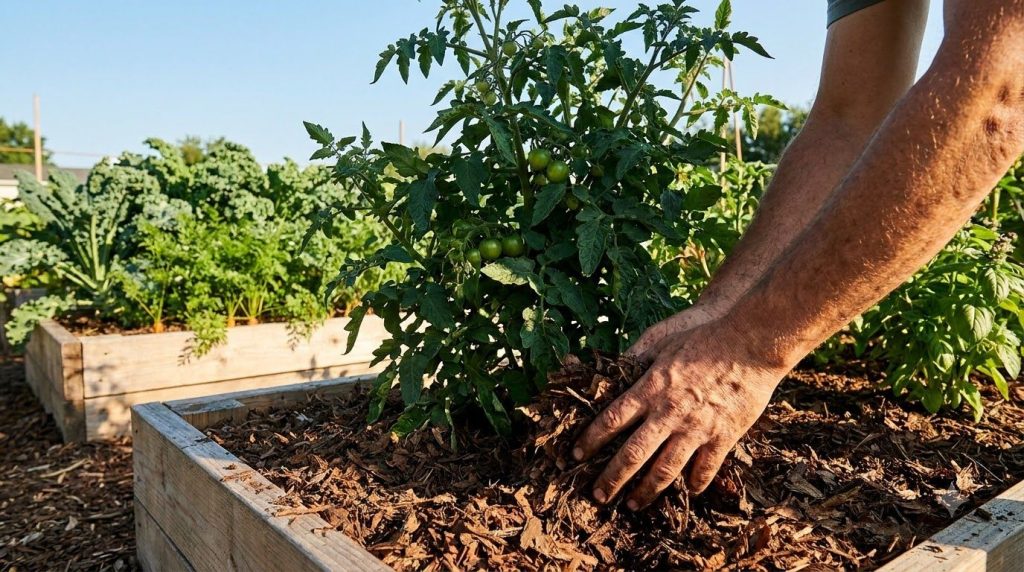
Tips for Applying Mulch
- Clean the Bed First: Remove all weeds before applying mulch for maximum effectiveness.
- Proper Depth: Aim for a 2-4 inch layer for most organic mulches. Too thin and it won’t be effective; too thick and it can suffocate plants or encourage pests.
- Keep it Away from Stems/Trunks: Create a ‘doughnut’ shape around the base of plants and trees, leaving a few inches of space. Piling mulch directly against stems or trunks can lead to rot, disease, and pest problems.
- Replenish Annually: Organic mulches decompose, so you’ll need to top them up each year to maintain their benefits.
- Water Before Mulching: Water your garden thoroughly before applying mulch to ensure the soil is moist.
Common Mulching Mistakes to Avoid
- Volcano Mulching: This is when mulch is piled high against the trunk of a tree, resembling a volcano. It’s detrimental, causing bark rot, providing shelter for rodents, and preventing water from reaching the roots.
- Applying Too Thinly: A sparse layer of mulch won’t effectively suppress weeds or retain moisture.
- Applying Too Thickly: Can suffocate plant roots, prevent water from reaching the soil, and create anaerobic conditions that promote fungal growth.
- Using Untreated Wood Products: Always ensure wood chips are aged or composted to avoid nitrogen draw-down.
- Not Considering Plant Needs: Some plants prefer drier conditions (e.g., succulents) and may not benefit from heavy mulching, while others, like acid-lovers, thrive with specific types of mulch (e.g., pine needles).
Mulching is truly one of the simplest yet most rewarding practices you can adopt in your garden. By choosing the right type and applying it correctly, you’ll save water, suppress weeds, improve soil health, and give your plants the best chance to flourish. So, roll up your sleeves, pick your favorite mulch, and get ready to enjoy a healthier, happier garden!