Are tiny ant intruders marching through your kitchen, invading your pantry, or just making themselves unwelcome in your home? It’s a common problem, but you don’t always need harsh chemicals to reclaim your space. This simple, natural DIY ant remedy offers an eco-friendly approach to deterring ants and disrupting their trails, helping you get back to a pest-free environment.
This homemade solution harnesses the power of common household ingredients to create an effective deterrent that’s easy to make and use. It’s a practical and cost-effective way to address ant problems without resorting to strong commercial sprays.
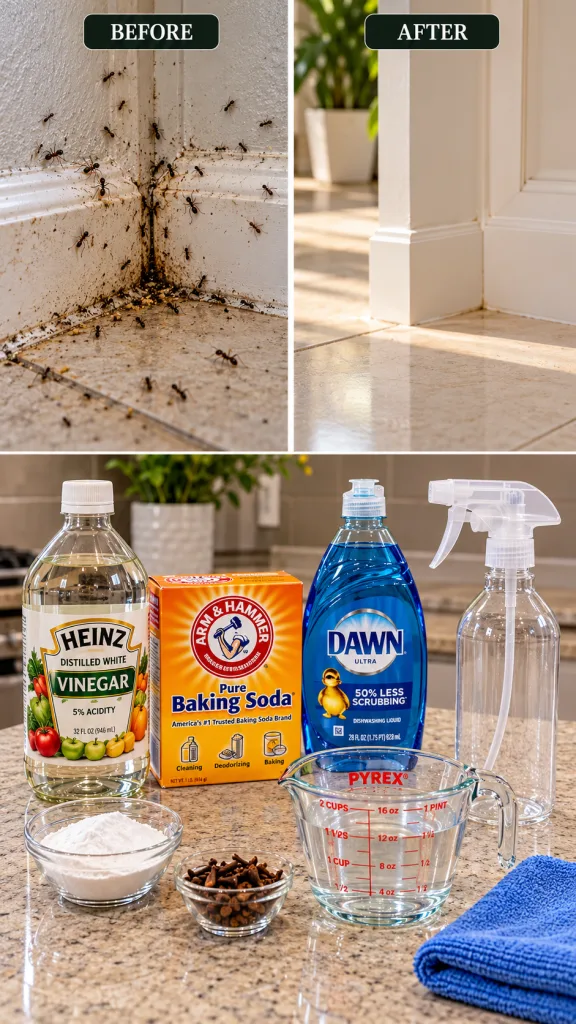 See how effective a natural DIY ant remedy can be in your home!
What You’ll Need
Ingredients:
- 1 cup White Distilled Vinegar
- 1 cup Water (preferably distilled or filtered)
- 1-2 teaspoons Dishwashing Liquid (like Dawn Ultra)
- 1 tablespoon Whole Cloves
- 1/4 cup Baking Soda (optional, for dry application)
Tools:
- Pyrex measuring cup or similar
- Small saucepan (for steeping cloves)
- Clear spray bottle
- Small glass bowls
- Microfiber cloth or paper towels
Why This DIY Can Be Useful
This remedy combines several natural elements, each playing a role in deterring ants:
- White Vinegar: Its strong acidic smell disrupts ant pheromone trails, making it difficult for ants to communicate and find their way to food sources. It also acts as a natural cleaning agent.
- Dishwashing Liquid: The soap breaks down the ants’ exoskeletons, dehydrating and killing them on contact. It also helps the liquid stick to surfaces and ants.
- Cloves: The strong scent of cloves acts as a natural repellent for many insects, including ants.
- Baking Soda: When used dry, baking soda can absorb moisture and is thought to disrupt ants’ digestive systems if ingested. It can also be used to create a physical barrier or absorb odors.
How to Make It
- Prepare the Clove Infusion: In a small saucepan, bring 1 cup of water to a simmer. Add the 1 tablespoon of whole cloves. Let it simmer gently for about 5-10 minutes, then remove from heat and let it steep until completely cool. This allows the clove essence to infuse into the water. Strain out the cloves once cooled.
- Mix the Spray Solution: Pour the cooled, strained clove water into your spray bottle. Add 1 cup of white distilled vinegar and 1-2 teaspoons of dishwashing liquid.
- Shake Well: Secure the spray bottle cap tightly and shake vigorously to combine all ingredients.
How to Use It
- Identify Ant Trails and Entry Points: Look for lines of ants, especially in kitchen corners, along baseboards, windowsills, and near food sources.
- Spray Directly: Shake the spray bottle again before each use. Spray the solution directly onto ants, ant trails, and suspected entry points. Ensure thorough coverage.
- Wipe Away: After a few minutes, use a microfiber cloth or paper towels to wipe away the dead ants and the residue. This also helps remove the ant pheromone trails.
- Repeat as Needed: For persistent infestations, you may need to reapply the spray several times a day for a few days until the ants disappear.
- Optional Dry Application: For an extra layer of deterrence, you can lightly sprinkle baking soda along baseboards, windowsills, or near entry points where you’ve seen ants. Be careful not to make it too visible if guests are coming over. You can also crush a few whole cloves and mix them with the baking soda for added repellent power.
What to Expect
This natural remedy works by deterring ants and disrupting their communication, rather than instantly wiping out an entire colony. You should expect to see a reduction in ant activity over a few days of consistent application. It’s effective for controlling minor to moderate ant issues and helps maintain an ant-free environment when used regularly. Don’t expect instant, magical results, but consistent effort will yield noticeable improvements.
Helpful Tips
- Consistency is Key: Regular application, especially during active ant seasons, will yield the best results.
- Cleanliness: Always keep your kitchen counters clean, store food in airtight containers, and promptly clean up spills and crumbs. Ants are primarily attracted by food and water.
- Find the Source: Try to locate where the ants are entering your home. Sealing these cracks or gaps can prevent future infestations.
- Test Surfaces: Before widespread application, especially on delicate or porous surfaces, test the spray on an inconspicuous area to ensure it doesn’t cause discoloration or damage.
Important Notes / Safety
- Ventilation: While natural, the strong smell of vinegar and cloves can be potent. Ensure good ventilation when spraying indoors.
- Eyes and Skin: Avoid contact with eyes. If contact occurs, rinse thoroughly with water.
- Pets and Children: While generally considered safe for household use, keep the spray bottle and ingredients out of reach of children and pets. Although natural, ingestion of large quantities could cause irritation.
- Not for Food Prep Surfaces: Avoid spraying directly on food preparation surfaces immediately before use without proper rinsing.
- Electrical Outlets: Never spray liquid directly into electrical outlets or near exposed wiring.