If you’ve ever rubbed your feet at the end of a long day and felt your whole body relax, you’ve already had a tiny taste of reflexology.
Reflexology is the idea that different areas of the feet correspond to different organs and systems. When you apply gentle pressure to those spots, it may help calm your nervous system, ease tension, and support overall balance.
Most people never realize how organized the foot is in this map—each organ has its own “address.” Let’s walk through the chart in the image and turn it into an easy self-massage routine you can try at home.
How To Use This Foot Reflexology Chart
- Work on bare, clean feet in a comfortable position.
- Use your thumb or knuckles and press in small circles or slow, steady strokes.
- Spend 30–60 seconds per area, breathing slowly.
- Always stay at a “good pain” level—never sharp pain or numbness.
You can do one foot or both. The chart in the image shows a single foot, but the same idea applies to the other side.
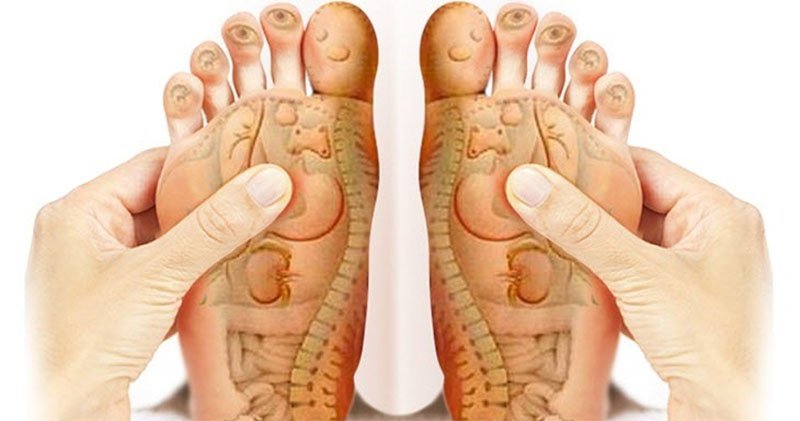
1. Upper Foot: Brain, Neck, Ear, Thyroid & Lungs
Brain
The tip of the big toe is labeled BRAIN.
Gently pinching and rolling this area may help you unwind when your mind feels busy.
Try this: Before bed, squeeze the top of your big toe between your thumb and index finger for 30 seconds on each side while taking slow breaths.
Neck & Ear
Just under and beside the big toe you’ll see NEC (neck) and EAR.
These spots are often tender if you hold tension in your neck or jaw.
Try this: Press along the base and side of the big toe, pausing on any tight points. This can pair nicely with simple neck stretches.
Thyroid
The chart shows THY / THYROID on the inner side of the big toe and slightly below on the inner edge of the foot.
In reflexology, this area is linked with energy and metabolism balance.
Try this: Use your thumb to trace small circles along the inner side of the big toe and just below it for about a minute.
Lungs
Across the upper middle of the foot you’ll see LUNG.
This broad area is great for anyone who feels tight in the chest or anxious.
Try this: Place your thumbs on the ball of the foot and press in rhythmic, gentle pushes while breathing in through your nose and out through your mouth.

2. Mid Foot: Heart, Stomach, Adrenal Gland, Pancreas, Kidney & Spleen
Heart
Two zones are labeled HEART across the upper and mid area of the foot.
Working here is often used for emotional tension and circulation support.
Try this: With your thumb, glide from the big-toe side of the ball of the foot outward, taking slow strokes across the “heart” zone.
Stomach
On the outer middle portion you’ll see STOMACH.
This spot is often targeted for bloating, stress-eating days, or general digestive discomfort.
Try this: Press your thumb into the stomach area in small circles, then gently stroke downward toward the arch.
Adrenal Gland
Near the center of the foot is ADRENAL GLAND.
These glands sit on top of your kidneys and help manage the stress response.
Try this: Press your thumb straight into this central zone, hold for 5–7 seconds, release, and repeat a few times as you exhale slowly.
Pancreas & Kidney
Toward the inner arch you’ll see PANCREAS KIDNEY.
Try this: Use your knuckles to make slow, broad strokes along the inner arch from top to bottom. Many people find this especially soothing after a heavy meal.
Spleen
The chart shows SPLEEN both toward the outer mid-foot and along the side.
Reflexology links this with immune and blood filtration support.
Try this: Press and roll your thumb along the outer arch, searching for tender spots and holding gentle pressure there for a few seconds.
3. Lower Foot: Intestines, Bladder, Rectum & Glutes
Small Intestine
In the middle of the sole you’ll see a detailed area labeled SMALL INTESTINE.
This is often massaged for digestion and nutrient-absorption support.
Try this: With lotion or oil, draw slow figure-eight motions over this whole central area.
Large Intestine
Along the side of the lower foot is LARGE INTESTINE.
It’s frequently used for sluggish bowels or that “backed up” feeling.
Try this: Press along the outer edge of the foot from mid-sole down toward the heel in short, firm strokes.
Bladder & Rectum
Near the inner heel you’ll find BLADDER and RECTUM.
These zones are often included in routines for pelvic tension and elimination support.
Try this: Press gently into the inner heel with your thumb, then drag down toward the base of the heel several times.
Glutes
The big padded area at the bottom of the heel is labeled GLUTES.
Massaging here can feel surprisingly relieving for people who sit a lot or have tight hips.
Try this: Use your knuckles to knead the heel in slow circles, as if you’re massaging your hip muscles from a distance.
What Results To Expect & When
Reflexology is considered a relaxation and wellness practice, not a cure or medical treatment. Evidence is still limited, but many people report:
- Within minutes: A sense of warmth, relaxation, or sleepiness.
- Over a few days of regular practice: Less tension in the feet and calves, and a calmer nervous system at bedtime.
- Over weeks: Some people notice softer digestion, steadier mood, or an easier time unwinding after stressful days.
If you feel pain, numbness, or worsening symptoms, stop and talk with a healthcare professional.
Safety Notes
- Avoid strong pressure if you have diabetic neuropathy, severe varicose veins, blood-clot history, or recent foot injury.
- Pregnant people should speak with their provider before doing intense reflexology sessions.
- Reflexology should never replace medical care for heart, lung, brain, thyroid, or digestive diseases. Think of it as a gentle add-on for relaxation.
Final Takeaway
Your feet quietly mirror your whole body, and a few minutes of mindful pressure can become a calming ritual that supports rest and body awareness.
Save this reflexology guide so you can follow the map next time you give yourself a foot massage, and share it with a friend who loves simple, relaxing wellness practices.