Get ready to fall in love with the ultimate soft and sweet treat: Korean Twisted Donuts, known as Kkwabaegi (꽈배기)! These delightful fried dough pastries are a staple in Korean bakeries and street food stalls, beloved for their irresistibly chewy texture and lightly sweet flavor. Often coated in a simple dusting of sugar, Kkwabaegi are perfect for satisfying your sweet tooth any time of day, whether as a breakfast pastry, an afternoon snack, or a delightful dessert.
While the classic sugar-coated version is a timeless favorite, we’re taking things up a notch by exploring six exciting flavor variations. Imagine a world of cinnamon sugar, delicate matcha glaze, rich chocolate drizzle, and more – all built upon the same perfectly twisted, airy dough. Making Kkwabaegi at home is a rewarding experience, yielding fresh, warm donuts that far surpass anything store-bought. It’s a wonderful project for bakers of all levels and a fantastic way to bring a taste of Korean comfort food into your kitchen.

Why You’ll Love These Korean Twisted Donuts
- Irresistibly Chewy & Soft: Kkwabaegi have a unique, bouncy texture that sets them apart from other donuts.
- Simple Ingredients: Made with basic pantry staples, these donuts are approachable for any home cook.
- Versatile Flavors: The base dough is a blank canvas for endless sweet coatings and glazes.
- Family-Friendly: A beloved treat by all ages, perfect for a weekend baking project.
- Fresh & Warm: Nothing beats a homemade donut, especially when it’s warm from the fryer.
- Impressive Presentation: The distinctive twisted shape makes them look professionally made, even for beginners.
Ingredients for Classic Korean Twisted Donuts (Kkwabaegi)
For the Dough:
- 1 cup (240 ml) warm milk (around 105-115°F / 40-46°C)
- 2 ¼ teaspoons (7 g) active dry yeast (one standard packet)
- ¼ cup (50 g) granulated sugar, divided
- 1 large egg, room temperature
- 2 tablespoons (28 g) unsalted butter, melted and cooled
- ½ teaspoon salt
- 3 cups (360 g) all-purpose flour, plus more for dusting
- Vegetable oil, for frying
For the Classic Sugar Coating:
- ½ cup (100 g) granulated sugar
Ingredient Notes
- Warm Milk: Ensure your milk is the correct temperature to activate the yeast. Too hot will kill it, too cold won’t activate it.
- Active Dry Yeast: Fresh yeast is key for a good rise. Check the expiration date. Instant yeast can be used, typically without proofing, but proofing it in warm milk ensures it’s active.
- Flour: All-purpose flour works perfectly for Kkwabaegi, giving them their characteristic chewiness.
- Butter & Egg: Bring these to room temperature for easier incorporation into the dough.
- Frying Oil: Choose a neutral oil with a high smoke point, like vegetable, canola, or sunflower oil.
Equipment You’ll Need
- Large mixing bowl
- Stand mixer with dough hook attachment (optional, but recommended for easier kneading)
- Measuring cups and spoons
- Whisk
- Kitchen towel or plastic wrap
- Large Dutch oven or deep pot for frying
- Thermometer for oil temperature (recommended)
- Slotted spoon or spider strainer
- Paper towels for draining
- Wire rack
- Shallow dishes for coatings
How to Make Korean Twisted Donuts (Kkwabaegi)
Follow these steps to create delicious, fluffy Kkwabaegi, ready for your favorite coatings!
- Activate the Yeast: In a large mixing bowl (or the bowl of a stand mixer), combine the warm milk with 1 teaspoon of the granulated sugar. Sprinkle the active dry yeast over the top. Let it sit for 5-10 minutes until foamy, indicating the yeast is active.
- Prepare the Dough Base: Add the remaining granulated sugar, egg, melted butter, and salt to the yeast mixture. Whisk well to combine.
- Add Flour and Knead: Gradually add the flour, about 1 cup at a time, mixing until a shaggy dough forms. If using a stand mixer, attach the dough hook and knead on low speed for 8-10 minutes, or knead by hand on a lightly floured surface for 10-15 minutes, until the dough is smooth, elastic, and no longer sticky.
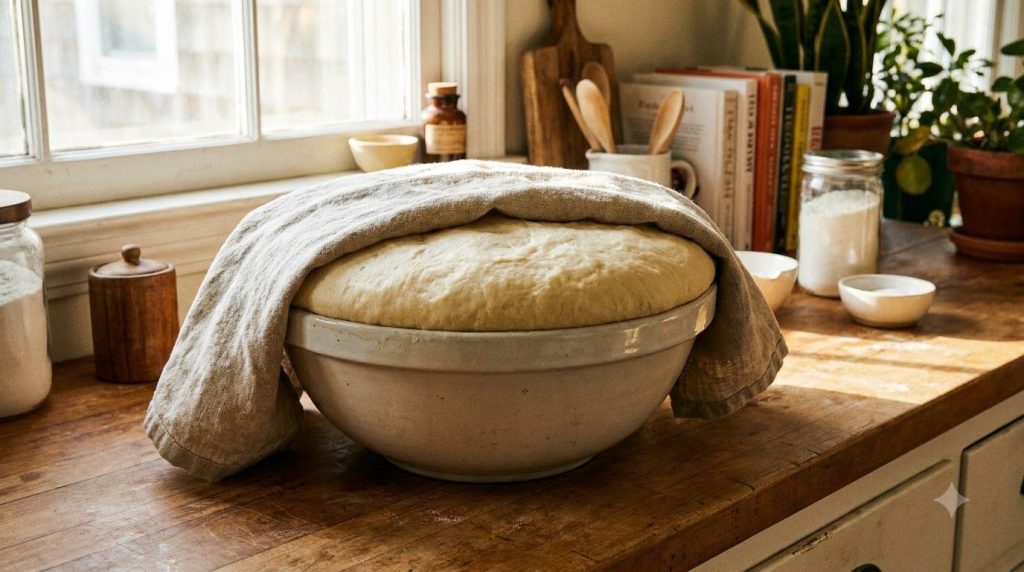
- First Rise: Form the dough into a ball and place it in a lightly oiled bowl, turning once to coat. Cover the bowl with plastic wrap or a clean kitchen towel and let it rise in a warm place for 1 to 1.5 hours, or until doubled in size.
- Punch Down and Divide: Gently punch down the risen dough to release the air. Transfer it to a lightly floured surface. Divide the dough into 16-20 equal pieces (about 30-40g each).
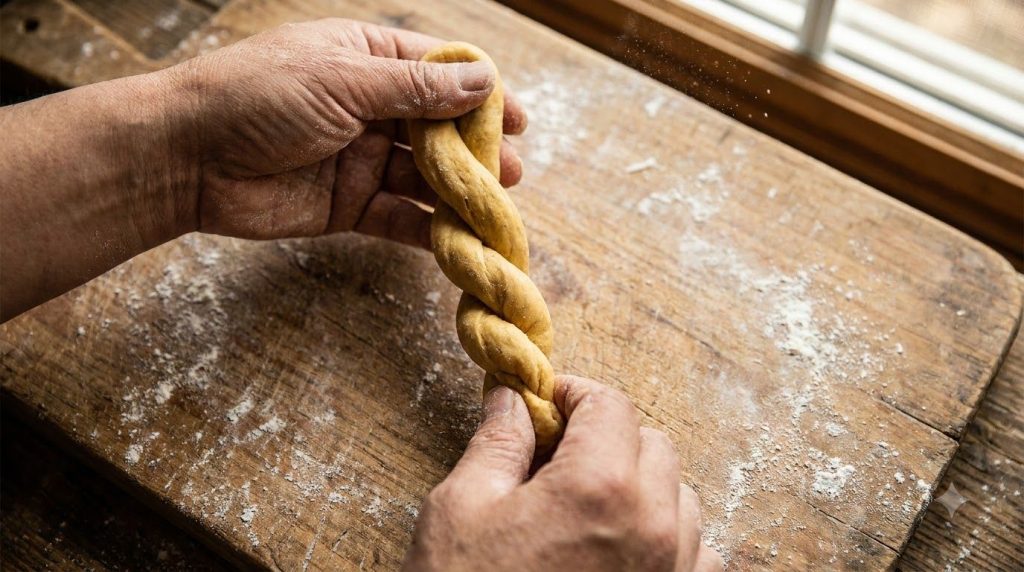
- Shape the Donuts: Take one piece of dough and roll it into a thin rope, about 10-12 inches (25-30 cm) long. Pick up both ends of the rope and twist it tightly around itself 2-3 times. Press the ends firmly together to seal and prevent unraveling during frying. Repeat with the remaining dough pieces.
- Second Rise: Arrange the shaped donuts on a parchment-lined baking sheet, leaving some space between them. Cover loosely with plastic wrap or a kitchen towel and let them rise again for 30-45 minutes, or until visibly puffy.
- Heat the Oil: While the donuts are doing their second rise, heat about 3-4 inches of vegetable oil in a large Dutch oven or deep pot over medium heat to 350°F (175°C). Use a thermometer to monitor the temperature.
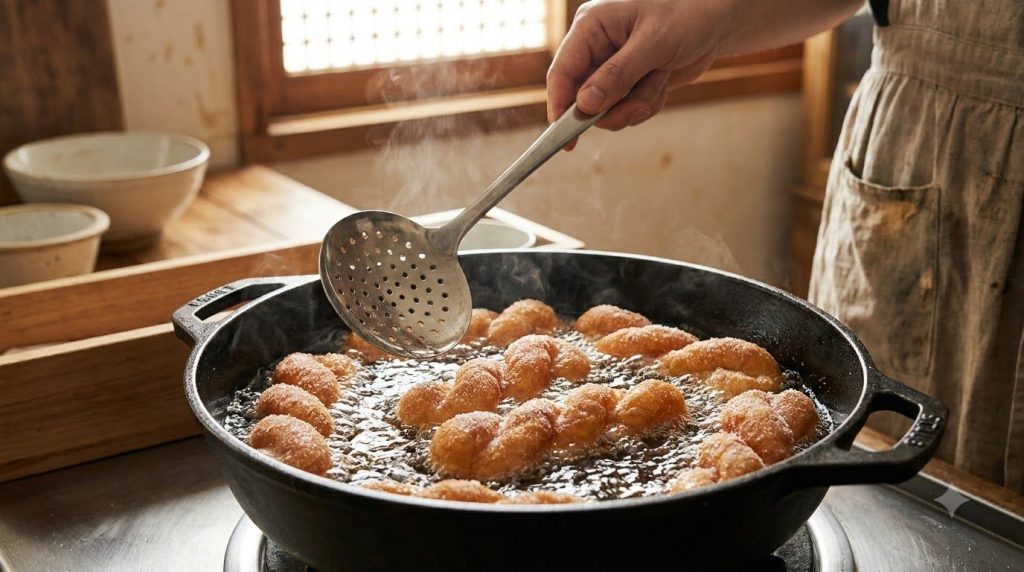
- Fry the Donuts: Carefully lower 3-4 donuts into the hot oil, ensuring not to overcrowd the pot. Fry for 1.5-2 minutes per side, or until golden brown and cooked through. The exact time may vary slightly.
- Drain and Coat (Classic): Remove the fried donuts with a slotted spoon and place them on a wire rack lined with paper towels to drain excess oil for about 30 seconds to 1 minute. While still warm, gently toss them in a shallow dish with granulated sugar to coat evenly.
6 Delicious Kkwabaegi Flavor Variations
Once your Kkwabaegi are freshly fried and drained, it’s time to get creative with these delicious coatings and glazes!
1. Classic Sugar-Coated Kkwabaegi
- Coating: ½ cup (100 g) granulated sugar.
- Method: While warm, toss the drained donuts in granulated sugar until evenly coated.
2. Cinnamon Sugar Kkwabaegi
- Coating: ½ cup (100 g) granulated sugar mixed with 1-2 teaspoons ground cinnamon.
- Method: Combine sugar and cinnamon in a shallow dish. Toss warm, drained donuts in the mixture until coated.
3. Matcha Glazed Kkwabaegi
- Glaze: 1 cup (120 g) powdered sugar, 2-3 tablespoons milk, 1-2 teaspoons matcha powder.
- Method: Whisk ingredients until smooth. Dip cooled donuts halfway into the glaze or drizzle over the top. Let set.
4. Chocolate Drizzled Kkwabaegi
- Topping: ½ cup (85 g) chocolate chips, melted (white, milk, or dark chocolate).
- Method: Melt chocolate chips in a microwave-safe bowl in 30-second intervals, stirring until smooth. Drizzle over cooled donuts. Allow to set.
5. Honey Glazed with Sesame Kkwabaegi
- Glaze: ¼ cup (60 ml) honey, 1 tablespoon (15 ml) hot water.
- Garnish: 1-2 tablespoons toasted sesame seeds (white or black).
- Method: Whisk honey and hot water until combined. Brush or dip warm donuts in the honey glaze, then immediately sprinkle with toasted sesame seeds.
6. Black Sesame Powder Coated Kkwabaegi
- Coating: ½ cup (60 g) black sesame powder (finely ground roasted black sesame seeds), 2-3 tablespoons powdered sugar.
- Method: Combine black sesame powder and powdered sugar in a shallow dish. Toss warm, drained donuts in the mixture until evenly coated.
Pro Tips for the Best Results
- Accurate Oil Temperature: Use a thermometer to maintain the oil temperature at 350°F (175°C). Too low, and the donuts will be greasy; too high, and they’ll brown too quickly on the outside while remaining raw inside.
- Don’t Overcrowd the Pot: Fry only 3-4 donuts at a time to keep the oil temperature stable and ensure even cooking.
- Proper Drainage: Immediately after frying, place donuts on a wire rack lined with paper towels to absorb excess oil. This prevents them from becoming soggy.
- Coat While Warm: For sugar or powder coatings, toss the donuts while they are still warm so the coating adheres well. For glazes and drizzles, allow them to cool slightly to prevent the coating from melting or sliding off completely.
- Lightly Flour Your Surface: When shaping the dough, use just enough flour to prevent sticking. Too much flour can make the donuts tough.
- Even Twisting: Try to make your dough ropes and twists as uniform as possible for consistent frying and a beautiful appearance.
- Let Dough Rise Fully: Don’t rush the rising process. A properly risen dough will yield light and airy donuts.
Common Mistakes to Avoid
- Under-proofing the Dough: If the dough hasn’t risen enough, your donuts will be dense and heavy. Always allow sufficient time for both rises.
- Over-kneading the Dough: While kneading is important for elasticity, over-kneading can result in tough donuts. Stop when the dough is smooth and elastic.
- Frying Cold Dough: Ensure your shaped donuts have had their second rise and are puffy before frying. Cold dough will absorb more oil and not cook properly.
- Uneven Frying: Flipping too early or too late, or having inconsistent oil temperature, can lead to unevenly browned donuts. Monitor them closely.
- Over-Coating Glazed Donuts: For glazes like matcha or chocolate, a thin, even coat is usually best. Too much can make them overly sweet or messy.
Serving Suggestions
Korean Twisted Donuts are a delightful treat on their own, but they also pair wonderfully with a variety of beverages and sides. Enjoy them with a cup of hot coffee or tea for a cozy snack. For a refreshing balance, serve them alongside a cold glass of milk. In Korea, they’re often enjoyed with a sweet and tangy rice punch called Sikhye, or a warm cup of barley tea. They’re also fantastic as part of a brunch spread or a casual dessert alongside fresh fruit.
Storage & Reheating
Kkwabaegi are best enjoyed fresh, ideally on the day they are made, for the best texture and flavor. However, if you have leftovers:
- Refrigerator: Store plain or sugar-coated Kkwabaegi in an airtight container at room temperature for up to 1-2 days. Glazed or drizzled donuts are best kept in the refrigerator in an airtight container for up to 2 days, as some glazes may soften at room temperature.
- Reheating: To refresh plain or sugar-coated donuts, you can gently warm them in a microwave for 10-15 seconds (be careful not to overheat, which can make them tough) or in a preheated oven (or air fryer) at 300°F (150°C) for 3-5 minutes until just warm. Glazed donuts are generally best eaten at room temperature or slightly chilled, as reheating can melt the glaze.
- Freezer: While not ideal, you can freeze plain, unfrosted Kkwabaegi for up to 1 month. Wrap them tightly in plastic wrap, then place them in a freezer-safe bag. Thaw at room temperature, then refresh in the oven or air fryer.
FAQ
Q: What is Kkwabaegi?
A: Kkwabaegi is a popular Korean twisted donut, characterized by its soft, chewy texture and typically coated in sugar.
Q: Can I make the dough ahead of time?
A: Yes, you can prepare the dough and let it have its first rise in the refrigerator overnight. Punch it down gently, then let it come to room temperature for about 30-60 minutes before shaping and proceeding with the second rise.
Q: Why are my Kkwabaegi greasy?
A: Greasy donuts are often a sign that your oil temperature was too low. The donuts absorbed too much oil instead of quickly cooking. Ensure your oil stays around 350°F (175°C).
Q: Can I bake Kkwabaegi instead of frying?
A: While you can bake them as a healthier alternative, the texture will be different. Baked Kkwabaegi will be softer and more bread-like, lacking the distinct chewy-crisp exterior of fried donuts. Bake at 375°F (190°C) for 10-15 minutes or until golden brown.
Q: What’s the best way to get a good twisted shape?
A: Roll the dough into a long, even rope, then pick up both ends and twist firmly. Don’t be afraid to give it a good twist to ensure it holds its shape during frying. Pinch the ends together well.
Q: Can I use different types of flour?
A: All-purpose flour is recommended for the traditional Kkwabaegi texture. Bread flour can be used for an even chewier donut, but it might make the dough slightly harder to work with. Whole wheat flour is generally not suitable for this recipe, as it will significantly alter the texture.
With these recipes, you’re all set to create a delightful array of Korean Twisted Donuts right in your own kitchen. Enjoy the process, and savor every soft, sweet bite!
Recipe Card: Classic Korean Twisted Donuts (Kkwabaegi)
Recipe Name: Classic Korean Twisted Donuts (Kkwabaegi)
Short Description: Delightfully soft, chewy, and lightly sweet fried dough pastries, perfect for a treat any time of day, with easy instructions for a classic sugar coating.
Prep Time: 40 minutes
Cook Time: 15 minutes
Total Time: 2 hours 30 minutes (includes rising time)
Servings: 16-20 donuts
Course: Dessert, Snack
Cuisine: Korean
Cooking Method: Deep Frying
Ingredients:
For the Dough:
- 1 cup (240 ml) warm milk (105-115°F / 40-46°C)
- 2 ¼ teaspoons (7 g) active dry yeast
- ¼ cup (50 g) granulated sugar, divided
- 1 large egg, room temperature
- 2 tablespoons (28 g) unsalted butter, melted and cooled
- ½ teaspoon salt
- 3 cups (360 g) all-purpose flour, plus more for dusting
- Vegetable oil, for frying
For the Classic Sugar Coating:
- ½ cup (100 g) granulated sugar
Instructions:
- Activate Yeast: In a large bowl, combine warm milk and 1 tsp sugar. Sprinkle yeast; let sit 5-10 minutes until foamy.
- Combine Wet Ingredients: Add remaining sugar, egg, melted butter, and salt to the yeast mixture. Whisk well.
- Knead Dough: Gradually add flour. Knead by hand for 10-15 minutes or with a stand mixer for 8-10 minutes until smooth and elastic.
- First Rise: Place dough in a lightly oiled bowl, turn to coat, cover, and let rise in a warm place for 1-1.5 hours until doubled.
- Punch Down & Divide: Gently punch down dough, transfer to a lightly floured surface. Divide into 16-20 equal pieces.
- Shape Donuts: Roll each piece into a 10-12 inch (25-30 cm) rope. Twist tightly 2-3 times and pinch ends to seal.
- Second Rise: Place shaped donuts on a parchment-lined sheet, cover loosely, and let rise for 30-45 minutes until puffy.
- Heat Oil: Heat 3-4 inches of oil in a deep pot to 350°F (175°C).
- Fry Donuts: Fry 3-4 donuts at a time for 1.5-2 minutes per side until golden brown.
- Drain & Coat: Remove to a paper-towel-lined wire rack for 30-60 seconds. While still warm, toss in granulated sugar.
Notes:
This recipe provides the base for delicious Kkwabaegi. For the other 5 variations mentioned in the article (Cinnamon Sugar, Matcha Glazed, Chocolate Drizzled, Honey Glazed with Sesame, Black Sesame Powder Coated), follow steps 1-9. Then, for step 10, instead of the classic sugar coating, follow the specific coating or glaze instructions provided in the “6 Delicious Kkwabaegi Flavor Variations” section above.
Storage:
Best fresh. Store plain/sugar-coated Kkwabaegi in an airtight container at room temperature for 1-2 days. Glazed/drizzled versions are best refrigerated for up to 2 days. Reheat briefly in microwave or oven if desired.
Nutrition:
Nutrition information is an estimate and may vary depending on the ingredients and brands used.