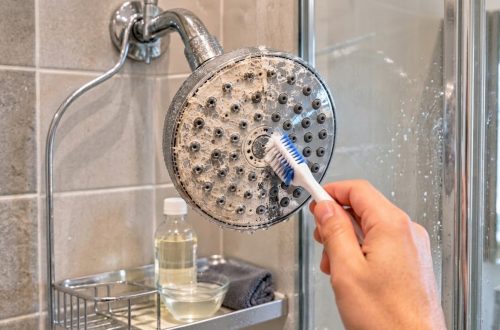
Restore Your Shower Spray: Easy DIY Showerhead Cleaning with Vinegar
Are you tired of a weak, sputtering shower that barely rinses the soap off? That annoying mineral buildup from hard water is often the culprit, clogging your showerhead’s nozzles and diminishing its performance. Before you think about replacing it, try this incredibly simple and effective DIY solution using a common household ingredient. This method is designed to dissolve the gunk, restoring your showerhead to its full powerful spray without harsh scrubbing, and it’s much more budget-friendly than commercial cleaners.
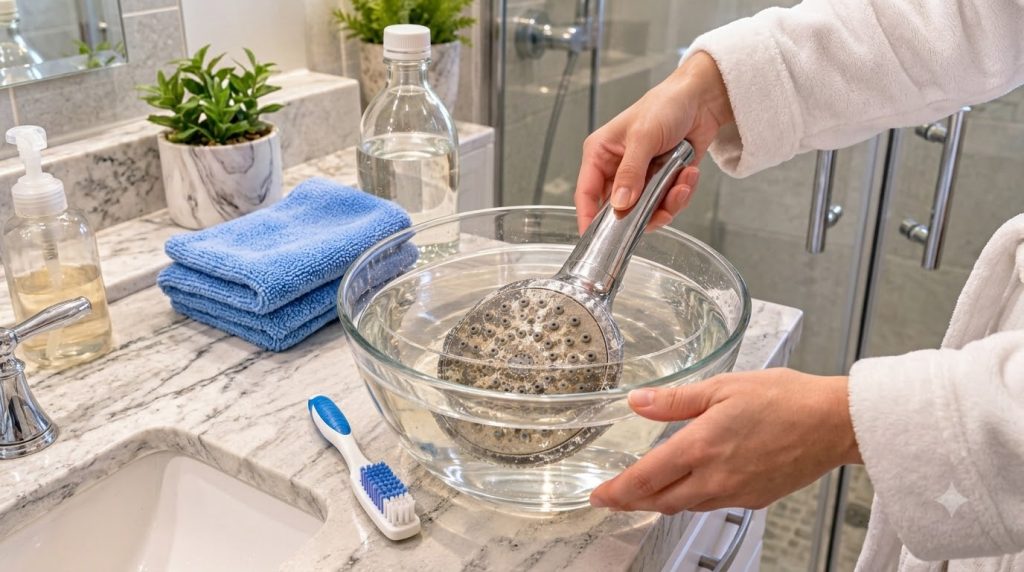
What You’ll Need
- White Vinegar: Enough to submerge your showerhead (typically 2-4 cups)
- Water: An equal amount to your vinegar
- The showerhead to be cleaned
- A large bowl or sturdy plastic bag
- An old toothbrush or a soft cloth
- A towel
Why This DIY Can Be Useful
The magic ingredient here is white vinegar, specifically its acetic acid content. Acetic acid is a mild acid that works wonders at breaking down and dissolving mineral deposits like calcium, lime, and rust, which commonly accumulate in showerheads due to hard water. Unlike abrasive cleaners that require vigorous scrubbing and can potentially damage finishes, vinegar gently eats away at the buildup, making it easy to rinse clean. It’s a natural, non-toxic, and incredibly affordable way to get your showerhead working like new again.
How to Make It
Making your cleaning solution is incredibly straightforward:
- Choose a large bowl or a sturdy plastic bag that is big enough to completely submerge your showerhead.
- Carefully pour equal parts white vinegar and water into your chosen container. For example, if you use 2 cups of vinegar, add 2 cups of water.
How to Use It
Once your solution is ready, follow these steps to clean your showerhead:
- Submerge the Showerhead: If your showerhead is detachable, remove it and place it directly into the vinegar-water solution in the bowl. If your showerhead is fixed, fill a sturdy plastic bag with the solution and secure it around the showerhead with a rubber band or twist tie, ensuring the entire showerhead is immersed.
- Let It Soak: Allow the showerhead to soak for at least 30 minutes. For showerheads with heavy mineral buildup, you can let it soak for several hours, or even overnight. The longer it soaks, the more time the acetic acid has to break down the deposits.
- Remove and Scrub: Carefully remove the showerhead from the solution. Using an old toothbrush or a soft cloth, gently scrub any remaining softened mineral deposits from the nozzles and surface. You should find they come off much more easily now.
- Rinse Thoroughly: Rinse the showerhead thoroughly under clean running water to remove any loosened debris and residual vinegar solution.
- Flush the System: Reattach your showerhead if you removed it. Turn on the hot water and let it run for a few minutes to flush out any remaining particles that might be inside the showerhead or pipes.
What to Expect
After this cleaning process, you should notice a significant improvement in your showerhead’s performance. The water flow should be stronger and more consistent, with fewer clogged nozzles leading to a better spray pattern. Your showerhead may also appear shinier and cleaner. While this method is highly effective for mineral deposits, it might not remove every single stain or type of grime, but it will dramatically enhance the functionality and appearance of your shower.
Helpful Tips
- Warm Solution: For tougher buildup, you can gently warm the vinegar before mixing it with water. Warm vinegar can sometimes be more effective at dissolving stubborn deposits.
- Regular Maintenance: To prevent heavy buildup, aim to clean your showerhead with this method every 1-3 months, depending on your water hardness.
- Use a Cloth: For delicate finishes, opt for a soft cloth over a toothbrush to avoid any potential scratching, even though a toothbrush is generally safe for most standard finishes.
Important Notes / Safety
- Ventilation: While vinegar is natural, ensure good ventilation when soaking, especially if you have a sensitive nose.
- Avoid Mixing: Never mix vinegar with bleach or any other cleaning chemicals, as this can create dangerous and toxic fumes.
- Surface Compatibility: While vinegar is generally safe, if your showerhead has a very unique or delicate finish (e.g., unsealed brass), it’s always wise to do a quick patch test on an inconspicuous area first, or limit soaking time. However, for most chrome, stainless steel, and standard plastic showerheads, this method is perfectly safe.
- Rinse Well: Always ensure the showerhead is thoroughly rinsed with clean water before use to remove any remaining cleaning solution.