Walking down the dairy aisle, you might grab a carton of almond milk, assuming they’re all pretty much the same. After all, they look identical on the outside! But as the saying goes, ‘one label changes more than you think.’ This small distinction can have a significant impact on your metabolic health, energy levels, and overall wellness goals. Let’s demystify the crucial difference between unsweetened and ‘original’ almond milk and why making an informed choice is so empowering.
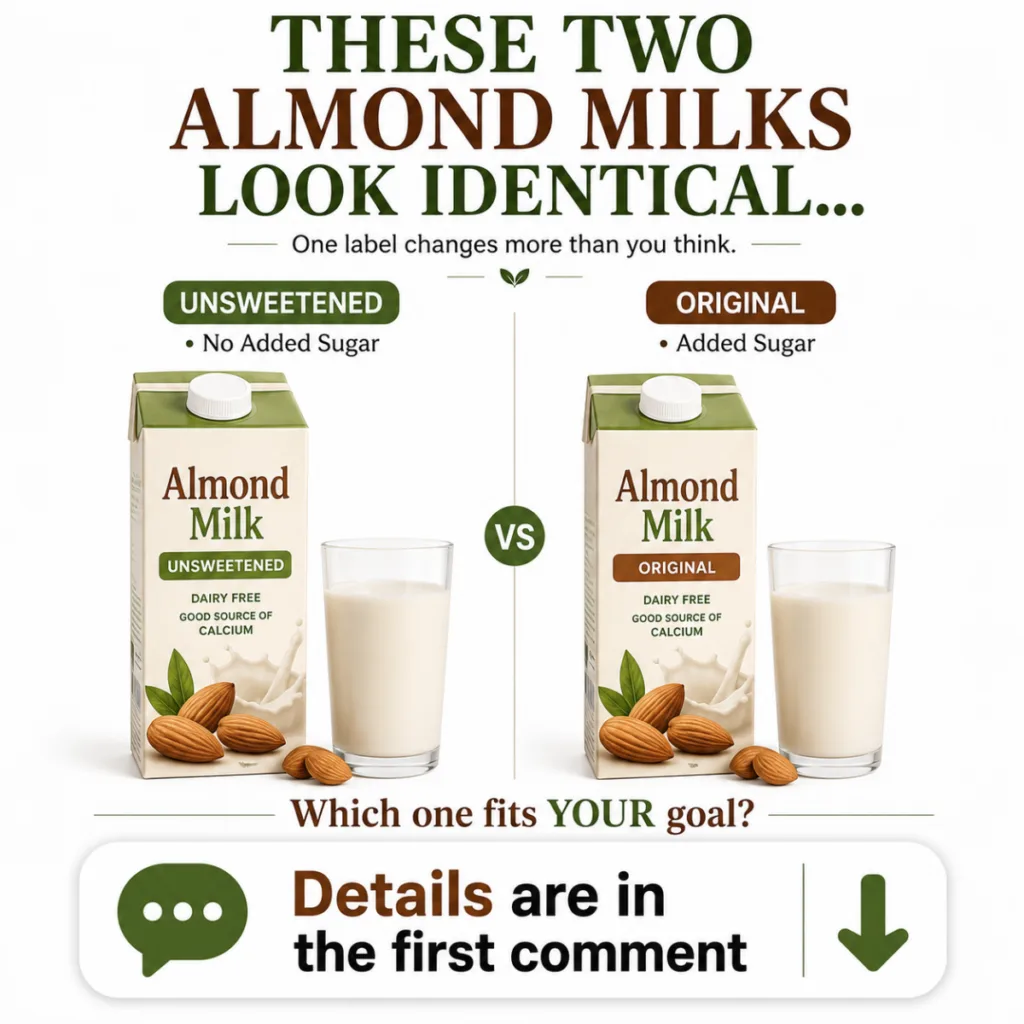 Spot the difference: Unsweetened (green) vs. Original (brown).
The Hidden Truth: Added Sugars
The primary difference between ‘unsweetened’ and ‘original’ (or sometimes labeled ‘sweetened’) almond milk lies in one simple ingredient: added sugar. While ‘unsweetened’ varieties typically contain just almonds and water (and perhaps a pinch of salt, vitamins, and thickeners), ‘original’ versions often come with a substantial amount of added sugars, such as cane sugar, evaporated cane juice, or corn syrup.
- Unsweetened Almond Milk: Usually contains 0-1 gram of sugar per serving (naturally occurring from almonds).
- Original/Sweetened Almond Milk: Can contain anywhere from 7-15 grams of added sugar per serving, sometimes even more. To put that into perspective, 4 grams of sugar is roughly equivalent to one teaspoon! So, a single glass could contain 2-4 teaspoons of added sugar.
Why Added Sugar Matters for Your Metabolic Health
For busy, health-conscious individuals focused on metabolic health, managing blood sugar levels is key. Regular consumption of added sugars, even in seemingly healthy beverages like almond milk, can contribute to:
- Blood Sugar Spikes: Added sugars cause a rapid rise in blood glucose, followed by an insulin response, which can lead to energy crashes and increased cravings. Consistent spikes can strain your metabolic system over time.
- Energy Fluctuations: That quick sugar rush is often followed by a slump, leaving you feeling tired and less productive, making it harder to stay active and focused throughout your day.
- Weight Management Challenges: Sugary drinks contribute ’empty calories’ without providing much satiety. Excess sugar intake can be stored as fat, impacting your weight and making it harder to achieve your health goals.
- Increased Cravings: The roller coaster of blood sugar highs and lows can perpetuate a cycle of sugar cravings, making it difficult to stick to a balanced eating plan.
Making the Smart Swap: Embrace Unsweetened Almond Milk
Choosing unsweetened almond milk is one of the easiest and most impactful swaps you can make for better metabolic health. It allows you to enjoy the creamy texture and nutty flavor without the hidden sugar load.
Practical Uses for Unsweetened Almond Milk in Your Kitchen
Unsweetened almond milk is incredibly versatile and can be used in a multitude of ways to support your healthy eating journey:
- Smoothies: The perfect base for nutrient-packed smoothies. It adds creaminess without overwhelming the flavors of your fruits and veggies.
- Oatmeal and Cereal: Use it to moisten your morning oats or breakfast cereal. You can always add a touch of sweetness with natural sources like berries, a sprinkle of cinnamon, or a tiny drizzle of pure maple syrup if desired.
- Coffee and Tea: A fantastic dairy-free creamer alternative. It froths well for lattes and adds a subtle nutty note.
- Baking: Replace dairy milk in most baking recipes. Just be mindful that it’s thinner than whole dairy milk, which might slightly alter textures in some cases.
- Savory Dishes: Ideal for creating creamy soups, sauces, gravies, or even mashed potatoes without adding unnecessary sugar.
Tips for Transitioning
If you’re accustomed to sweetened almond milk, the switch to unsweetened might taste different at first. Give your taste buds time to adjust! Many people find that after a week or two, they no longer miss the added sweetness.
- Start Gradually: Mix half unsweetened with half of your regular sweetened almond milk initially.
- Add Natural Flavor: Enhance with spices like cinnamon or nutmeg, or blend with vanilla extract in your coffee or smoothies.
- Focus on Whole Foods: Pair with naturally sweet fruits or other flavorful ingredients to balance the palate.
Beyond Sugar: Quick Label-Reading Tips
While added sugar is a major concern, it’s also good practice to glance at other ingredients. Look for brands with fewer additives, stabilizers, or gums if you have sensitivities, though for most, focusing on the ‘unsweetened’ aspect is the most critical first step towards improving metabolic health.
Empower Your Choices
Making smart, informed choices about what we consume is a powerful step towards building confidence in our healthy living journey. By choosing unsweetened almond milk, you’re actively reducing your intake of added sugars, supporting stable blood sugar, and empowering your body with a simple, effective tool for better metabolic health. It’s a small change with big benefits that aligns perfectly with a balanced, health-conscious lifestyle.