Walking down the milk aisle can feel overwhelming with the sheer number of options available today. From traditional dairy to a vast array of plant-based alternatives, each carton promises different benefits and flavors. But how do you know which one is truly the best fit for your unique health goals and lifestyle? As the infographic wisely points out, “There isn’t one perfect milk. Different goals. Different choices.”
This guide aims to demystify the milk selection process, empowering you to make informed decisions that support your metabolic health, energy levels, and overall well-being. We’ll break down the most popular choices, highlighting their nutritional profiles, benefits, and ideal uses.
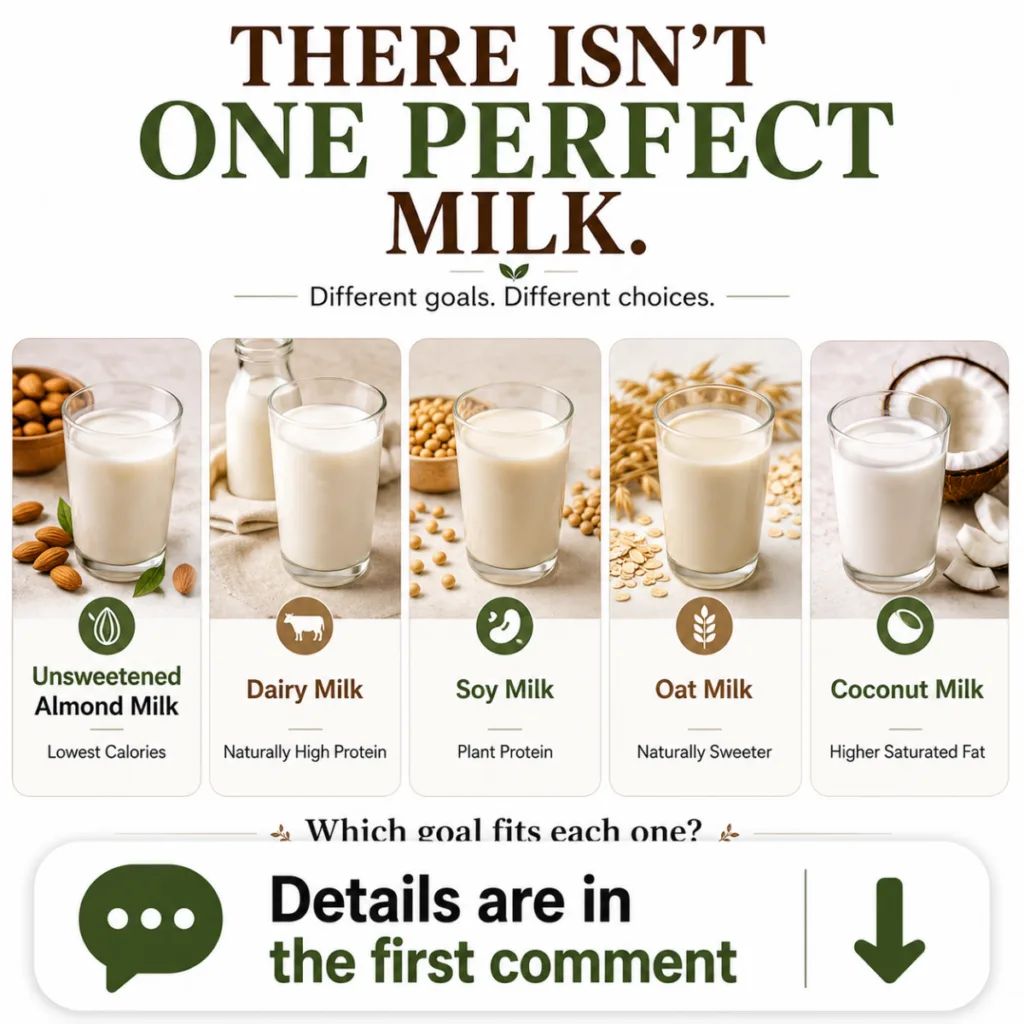 Explore the diverse world of milk options to find your perfect match.
Understanding Your Choices: A Look at Popular Milk Types
Let’s dive into the specifics of five popular milk types, helping you understand their core characteristics.
1. Unsweetened Almond Milk: The Low-Calorie Champion
- What it is: Made from ground almonds and water, often fortified with vitamins and minerals.
- Key Benefits: Known for being very low in calories and saturated fat, making it an excellent choice for those managing calorie intake. It’s naturally lactose-free and dairy-free.
- Ideal for: Smoothies, cereals, coffee, and as a light base in recipes where a neutral flavor is desired.
- Considerations: Naturally low in protein, so if you’re looking for a protein boost, combine it with other protein sources. Always choose unsweetened varieties to avoid added sugars.
2. Dairy Milk: The Protein Powerhouse
- What it is: Traditional milk from cows, rich in essential nutrients.
- Key Benefits: A naturally excellent source of high-quality protein, calcium, and vitamin D (often fortified). It contributes to strong bones and muscle maintenance.
- Ideal for: General consumption, supporting bone health, and providing a wholesome nutritional boost.
- Considerations: Contains lactose, which can be an issue for those with lactose intolerance. Fat content varies (skim, 1%, 2%, whole), impacting calorie and saturated fat levels.
3. Soy Milk: The Plant-Based Protein Leader
- What it is: Made from soybeans and water.
- Key Benefits: Offers a protein content comparable to dairy milk, making it a robust plant-based protein source. It’s often fortified with calcium and vitamin D, and many brands are a good source of omega-3 fatty acids.
- Ideal for: Those seeking a dairy-free, high-protein alternative. Great for cooking, baking, and general use.
- Considerations: Some individuals have soy allergies. As with other plant milks, opt for unsweetened versions to minimize added sugars.
4. Oat Milk: The Creamy & Gut-Friendly Option
- What it is: Produced from blended oats and water.
- Key Benefits: Known for its wonderfully creamy texture, making it a favorite for coffee and lattes. It contains soluble fiber (beta-glucans), which can support heart health and digestion. Naturally lactose-free.
- Ideal for: Coffee lovers, those looking for a creamy texture, and individuals seeking a fiber boost.
- Considerations: Generally higher in carbohydrates and lower in protein than dairy or soy milk. Again, prioritize unsweetened varieties.
5. Coconut Milk (Beverage Type): The Tropical Indulgence
- What it is: A thinner, beverage-style milk made from coconut cream and water (distinct from canned coconut milk used in cooking).
- Key Benefits: Offers a unique, slightly sweet tropical flavor and a creamy consistency. It’s naturally dairy-free and often contains medium-chain triglycerides (MCTs).
- Ideal for: Adding a tropical twist to smoothies, curries, or as a flavorful base in certain recipes.
- Considerations: Typically higher in saturated fat and lower in protein and carbohydrates compared to other milk alternatives. Always check the label for added sugars.
How to Choose the Best Milk for Your Metabolic Health and Goals
With so many options, how do you make the right choice for you? Consider these factors:
- Your Health Goals:
- For blood sugar balance: Opt for unsweetened varieties of any milk type. Almond milk and unsweetened dairy milk are often good choices due to lower carb content.
- For protein intake: Dairy milk and soy milk are excellent choices.
- For calorie management: Unsweetened almond milk typically has the lowest calorie count.
- For heart health: Unsweetened plant milks, especially those fortified with calcium and vitamin D, and oat milk with its fiber content, can be beneficial.
- Dietary Preferences & Needs: Are you vegan, lactose intolerant, or do you have specific allergies (nuts, soy, dairy)? This will significantly narrow down your choices.
- Taste & Texture: Experiment! What tastes great in your coffee might not be ideal for your oatmeal.
- Cooking & Baking Applications: Some milks hold up better in heat or provide desired creaminess (e.g., oat milk for lattes, coconut milk for savory dishes).
Always Check the Label!
This is perhaps the most crucial tip. Regardless of the milk type, always choose unsweetened versions to avoid unnecessary added sugars, which can negatively impact blood sugar levels and overall health. Also, check for fortification with essential nutrients like calcium and vitamin D, especially if you rely on milk as a primary source.
Making Healthy Choices Simple
The goal isn’t to find a “perfect” milk, but to find the best milk for your current needs and preferences. By understanding the nutritional nuances of each option and paying attention to labels, you can confidently navigate the milk aisle. Embrace the variety, experiment with different types in your recipes and daily routine, and enjoy the journey to better health!