Welcome, fellow garden enthusiasts! Are you ready to take your herb gardening to the next level? Harvesting herbs might seem straightforward, but did you know that using the right method can dramatically improve your plant’s health, encourage bushier growth, and yield a more abundant harvest? It’s true! Just like any living thing, herbs respond best to a little thoughtful care. Let’s dive into the essential techniques that will help you unlock your herb’s full potential.
Why Proper Harvesting Matters
Beyond simply getting fresh herbs for your kitchen, strategic harvesting plays a crucial role in your plant’s longevity and productivity. Incorrect cutting can stunt growth, lead to disease, or even kill your plant. On the other hand, proper techniques stimulate new growth, allowing your herbs to produce more flavorful leaves throughout the season. It’s all about understanding your plant’s growth habits and responding with the right touch.
The Four Essential Herb Harvesting Methods
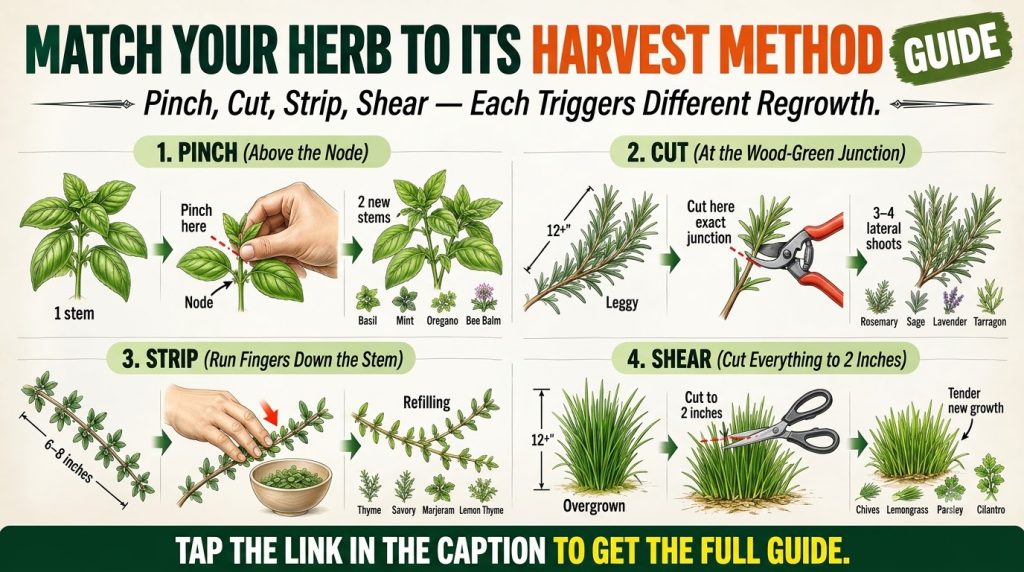
Different herbs require different approaches due to their unique growth patterns. Here are four common methods, each tailored for specific types of herbs:
1. The Pinch Method
What it is: This method involves simply using your thumb and forefinger to pinch off the top leaves or tender stems of a plant.
When to use it: Best for tender-stemmed herbs like basil, mint, and oregano. Pinching encourages the plant to branch out, becoming bushier and producing more leaves instead of growing tall and leggy.
How to do it: Locate a node (where leaves grow out from the stem) and pinch off the stem just above it. For basil, you can pinch off flower buds to prevent the plant from going to seed, which can make the leaves bitter.
2. The Cut Method
What it is: Using sharp scissors or pruning shears to snip off sections of the herb.
When to use it: Ideal for herbs with slightly thicker stems or woody growth, such as rosemary, sage, thyme, and even larger basil plants. It allows for more precise harvesting of larger quantities.
How to do it: Always use clean, sharp tools to make a clean cut, preventing damage to the plant. For most herbs, cut just above a leaf node or a set of leaves. For woody herbs like rosemary, avoid cutting into the old, woody parts of the stem, as they may not regrow.
3. The Strip Method
What it is: Removing leaves directly from a stem, typically by running your fingers down the stem.
When to use it: Perfect for herbs with small leaves that grow densely along a stem, such as thyme, rosemary (for cooking), and often oregano. This method is quick and efficient for gathering many leaves at once.
How to do it: Hold the stem at the top with one hand. With the other hand, gently but firmly grasp the stem just below the leaves and slide your fingers downwards, stripping the leaves off. Be gentle enough not to damage the stem if you intend for it to continue growing.
4. The Shear Method
What it is: Using scissors or shears to cut off clumps of leaves or the tops of plants in a less precise, more general manner.
When to use it: Commonly used for grass-like herbs like chives and cilantro. It’s also suitable for leafy greens or when you need a large quantity of herbs for a recipe where individual leaf picking isn’t practical.
How to do it: Gather a bunch of chives or cilantro leaves and snip them off a few inches above the soil line. For cilantro, you can also shear off outer leaves to encourage continuous production. Ensure you don’t cut too low, as the plant needs leaves to photosynthesize and regrow.
Tips for a Bountiful Herb Harvest
- Harvest Regularly: Most herbs benefit from frequent harvesting. It encourages new growth and prevents plants from becoming leggy or going to seed too soon.
- Harvest in the Morning: The best time to harvest herbs is in the morning after the dew has dried but before the heat of the day. This is when their essential oils are most concentrated, leading to maximum flavor.
- Don’t Take Too Much: Never remove more than one-third of the plant at once, especially for younger plants. This allows the plant to recover and continue growing vigorously.
- Clean Tools: Always use clean, sharp pruning shears or scissors to make precise cuts and prevent the spread of diseases.
- Know Your Herb: Research specific harvesting instructions for each herb, as some may have unique needs (e.g., harvesting basil from the top vs. chives from the base).
Start Harvesting Like a Pro!
With these methods in your gardening toolkit, you’re now equipped to harvest your herbs like a seasoned pro. You’ll not only enjoy fresher, more flavorful herbs but also foster healthier, more productive plants in your garden. Experiment with these techniques, observe how your plants respond, and soon you’ll have a thriving herb patch that keeps on giving. Happy gardening!